Get Full Government Meeting Transcripts, Videos, & Alerts Forever!
Get email alerts on the Regulatory Reform topic
No spam. Unsubscribe anytime.
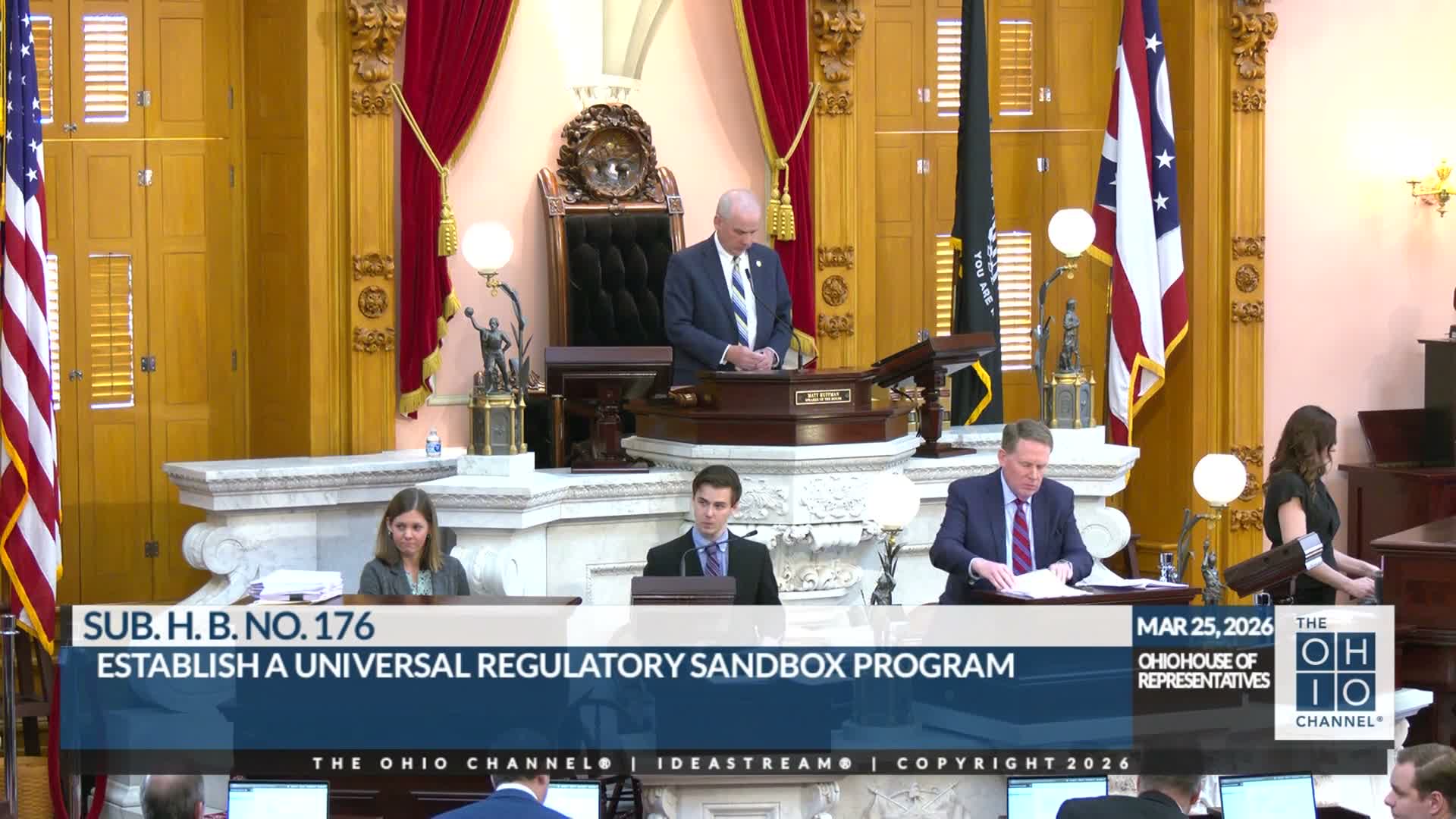
Ohio House unanimously approves universal regulatory sandbox to spur business testing
Summary
Lawmakers passed substitute House Bill 176, creating a regulatory relief division and a universal regulatory sandbox intended to let businesses test products under oversight with consumer protections and annual reporting; proponents said it boosts innovation and transparency.
The Ohio House on March 24 approved substitute House Bill 176, a measure creating a regulatory relief division with a universal regulatory sandbox to allow businesses to test products and services under structured oversight. Supporters framed the measure as a way to reduce costly regulatory barriers and attract investment to the state.
Representative Fisher, a sponsor on the floor, said the bill would let companies gain limited market access "with disclosure and oversight requirements," while avoiding the cost of full regulatory compliance that can keep innovations from launching. "This will not only create a better regulatory environment for Ohio businesses," Fisher said, urging colleagues for a "yes" vote.
Representative Lorenz added that the bill is about fairness and compensating people for work done, arguing it "restores common sense" and ensures those who have done the work are not penalized by rigid statutory deadlines. Representative Humphrey highlighted consumer protections and annual reporting to maintain oversight and transparency.
The bill passed with a recorded tally of 96 affirmative votes and 0 negatives. The House then agreed to the bill's title without objection. With the governor’s signature it will establish the new office and program described in the bill text.
Supporters said the change is carefully limited and preserves consumer protections through agency review and reporting, while critics (on the record during committee) pressed for clarity and safeguards that sponsors said are included. Next steps will include final technical drafting and the administrative setup of the regulatory relief division.