Providers and advocates urge pause on new hospice licensing amid co‑location and billing red flags
Loading...
Summary
Hospice leaders and OIG witnesses told the Senate interim hearing that Texas has seen a sharp increase in hospice licensure since 2020, many with co‑located addresses and high live discharge and cap exceedance rates; speakers urged targeted licensing reviews and a temporary moratorium.
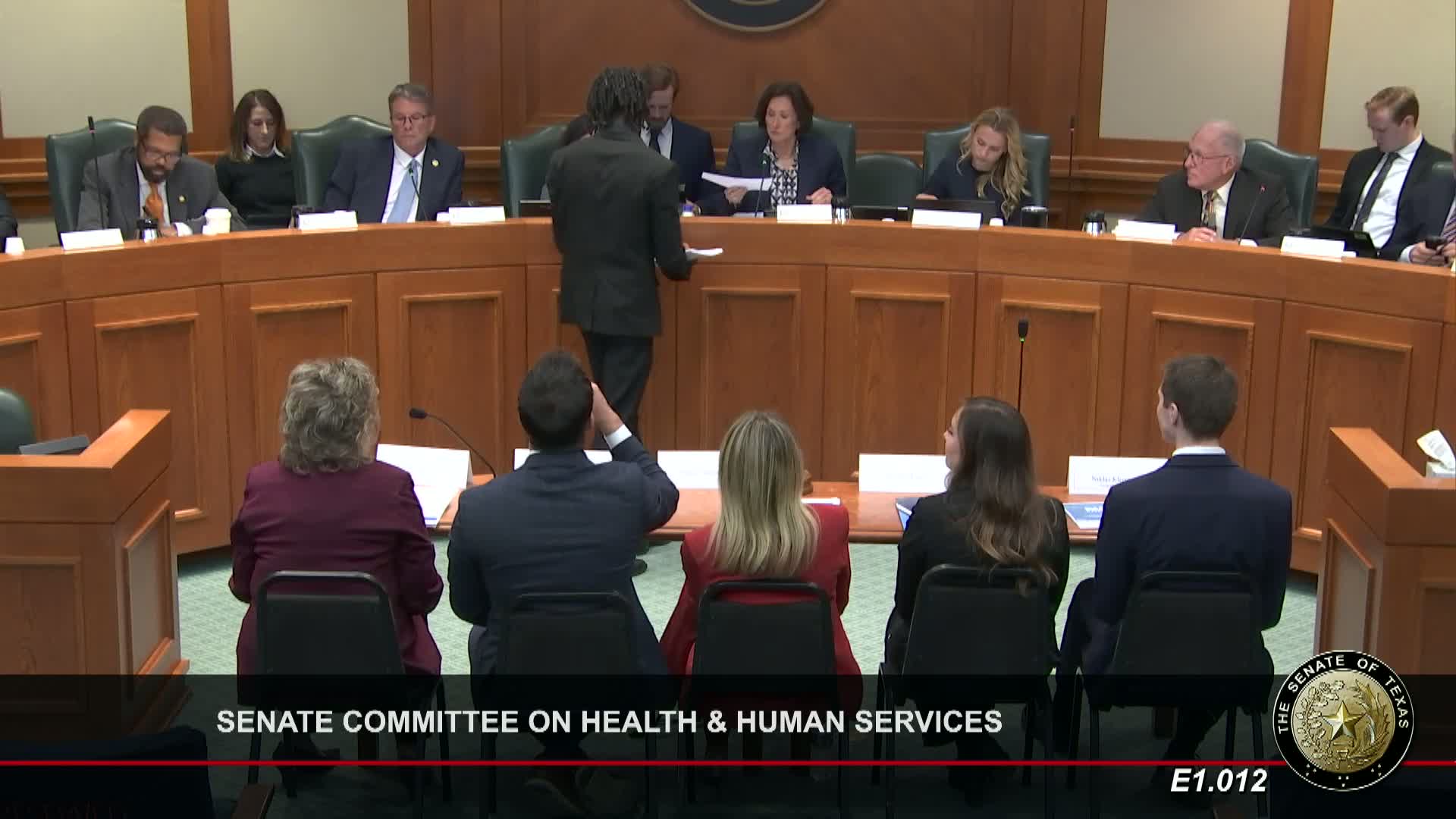
A coalition of hospice providers and nonprofit hospice leaders told the Senate Committee on Health and Human Services that rapid growth in hospice licenses warrants targeted licensing and Medicaid oversight.
Lisa McNair, president of Hospice Brazos Valley, told the committee she and colleagues pulled Medicare and state data and found 1,366 hospice licenses in Texas as of March 2026 — a near doubling since 2020. McNair said many new licenses are co‑located at the same street address, share administrators or medical directors across multiple licensed entities, and in many cases report very high "live discharge" rates and exceed Medicare cap rates. "If you don't serve more than 11 patients, you don't have to report any type of quality data," she said, summarizing the way small hospices can remain under federal reporting thresholds.
Inspector General staff and HHSC witnesses acknowledged the concerns and described data and licensing checks in progress. OIG representatives noted that some Medicare recoveries and dental solicitation cases resolved recently demonstrate how coordinated civil and criminal enforcement can follow data leads; they described recent settlements in dental marketing cases that coordinated with the Attorney General. Representatives of HHSC and regulatory staff said they already share licensure and survey data with TWC and have tools to flag co‑located operations and other outliers, and they asked for targeted resources to add site visits and analytic capacity.
Public commenters reinforced the urgency: hospice association and community providers called for a short licensing moratorium and for HHSC to verify ownership, shared administrators and quality reporting for small providers. Agency officials said some targeted moratoria or licensing holds are among the tools they can use during investigations and that they will present data and potential administrative options to the committee.
Next steps: The committee asked HHSC and OIG to provide a written run‑down of licensing patterns (addresses, shared administrators, cap exceedances) and to outline what administrative steps — site visits, temporary holds, focused audits — could be taken without immediate statutory changes.