Get Full Government Meeting Transcripts, Videos, & Alerts Forever!
Get email alerts on the Surveillance Fleet topic
No spam. Unsubscribe anytime.
Waterford trustees approve three-year Flock OS Plus video-integration agreement despite public privacy concerns
Summary
The Waterford Township Board of Trustees voted unanimously Jan. 26 to spend $60,000 in restricted drug-forfeiture funds over three years to implement Flock OS Plus video integration in the township 911 center after extensive public comment raising privacy, data-sharing and security concerns.
The Waterford Township Board of Trustees voted Jan. 26 to approve a three-year agreement for Flock OS Plus, authorizing the township to spend $60,000 in restricted drug-forfeiture funds ($20,000 per year) to integrate existing video and license-plate-reader (LPR) feeds into the township’s 911 emergency operations center.
Police Chief Scott Underwood told trustees the request seeks only Flock’s video-integration software and does not add static surveillance cameras or purchase AI-enabled search features. “We are before the board seeking approval to expend a total of $60,000 in restricted use drug forfeiture funds — $20,000 per year over three years — to implement the Flock OS video integration in our 911 emergency operation center. That is it. Period,” Underwood said during the presentation. He said the system will integrate existing feeds — patrol vehicle video, body-worn cameras, township campus cameras and school video — and that images from LPRs are retained for 30 days.
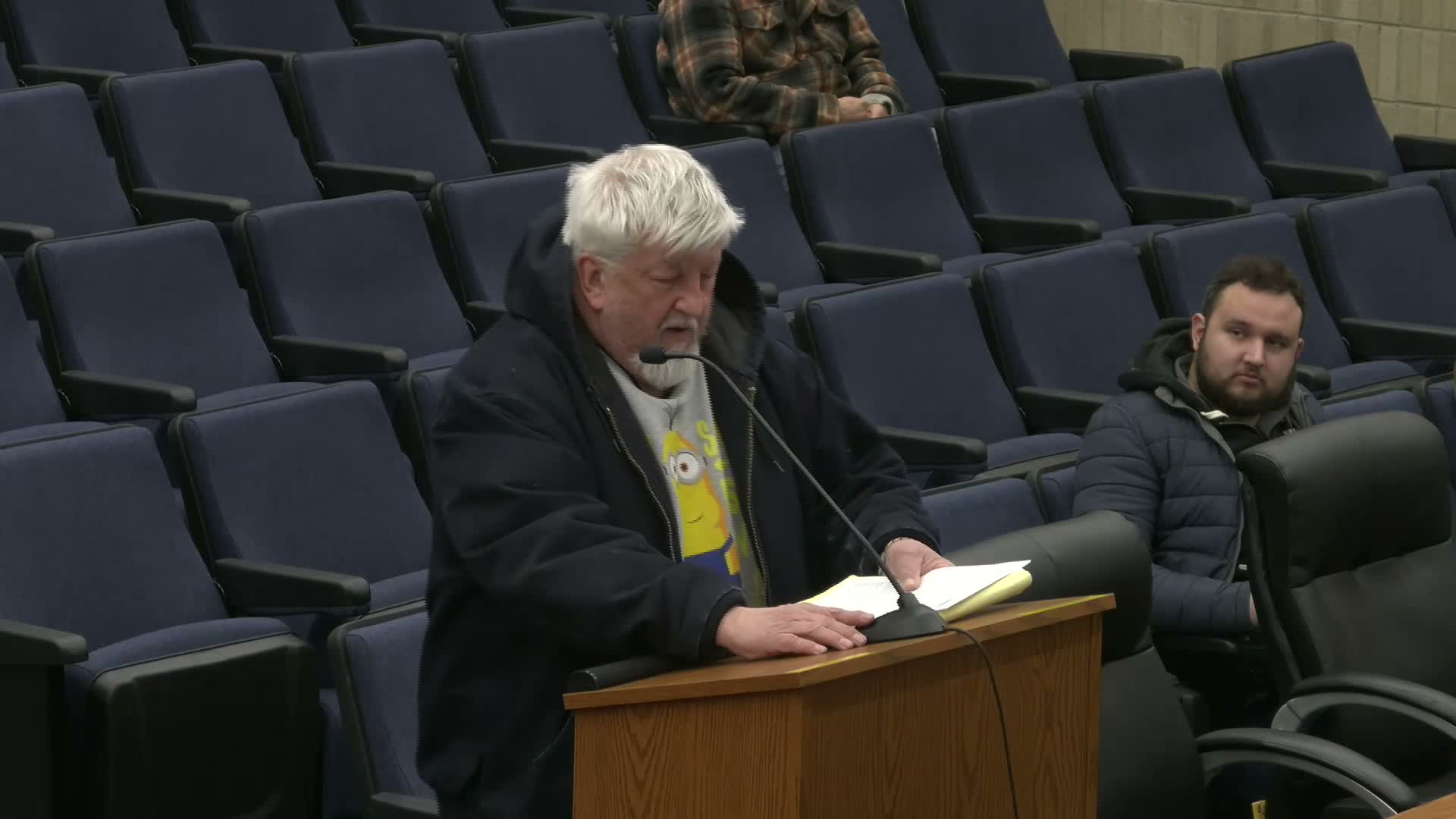
Residents urged trustees to reject or pause the contract, saying LPR technology and related integrations risk mass surveillance and data misuse. “Flock's network of roadside cameras do not discern between criminals and law-abiding citizens. They take pictures of every license plate that drives by,” said Drew Marcheski, who told the board removing Flock systems should be the end goal rather than merely rejecting future contracts. Several other speakers cited studies and reports and raised cybersecurity concerns after a resident noted publicly disclosed CVEs (common vulnerabilities and exposures) affecting some Flock-associated hardware.
Trustees pressed the chief on cost, scope and governance. Underwood said no additional LPRs were requested as part of this contract; the department currently has 16 LPRs (four added in 2025 and in permitting/installation), and the drones approved in 2025 are moving forward under separate approvals. He emphasized audit logs exist and that the LPR images are purged after 30 days. Underwood also stated that Flock Safety “does not share or resell data” and that data transmission is completed via secure protocols and CJIS-compliant controls.
Board discussion acknowledged strong public opposition and technical concerns, but trustees who spoke in favor cited operational efficiency and officer safety benefits from consolidating multiple video platforms into a single interface. After discussion the board approved the three-year Flock OS Plus agreement by roll call vote with all trustees voting yes.
The next steps include administration of the software integration within the 911 center and coordination with existing LPR and drone deployments; the chief said implementation and any future optional features (such as AI-enabled searches) would be brought forward separately and could require additional funding.