Get Full Government Meeting Transcripts, Videos, & Alerts Forever!
Get email alerts on the School Budget topic
No spam. Unsubscribe anytime.
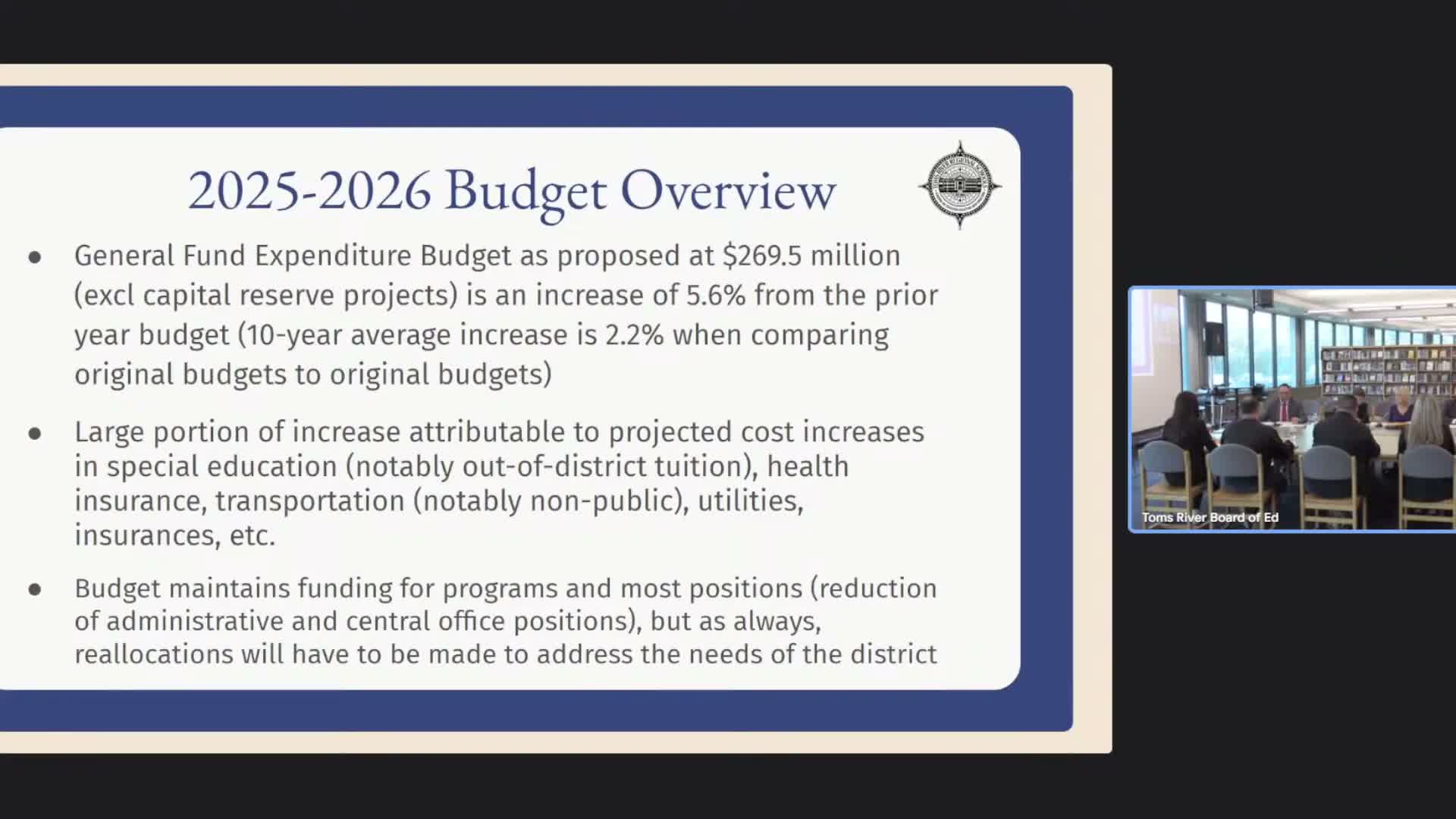
Toms River school leaders present $269.5M budget, warn of $22.3M shortfall and program cuts if state aid isn’t restored
Summary
District administrators told a citizens advisory meeting the proposed $269.5 million general‑fund budget for 2025–26 carries a $22.3 million structural gap driven by rising special‑education costs, higher insurance and utility expenses, and a sharp drop in state aid; they said options are limited to state aid relief, a tax‑levy incentive application or selling assets.
TOMS RIVER, N.J. — The Toms River Regional School District on Monday presented a proposed $269.5 million general‑fund budget and warned the district faces a $22.3 million structural shortfall for 2025–26 unless additional state relief arrives or the district pursues extraordinary measures.
“After reducing our state aid by nearly 60% over the last seven years, we are looking at a $22.3 million issue in the 2025–26 school year,” Superintendent Mr. Sitta said in a presentation to the Board of Education’s citizens budget advisory meeting.
That shortfall stems from multiple pressures, administrators said: special‑education enrollment and costs have surged, health‑insurance and pension expenses are rising, transportation and utilities are up, and state aid has fallen from about $68.3 million in 2017–18 to roughly $29.8 million in the district’s revenue projection. Property taxes make up about three‑quarters of the district’s revenue; Doering reported property levy funding of roughly $201.6 million for the general fund.
“The budget maintains most of our programs, but we are having to abolish some positions and consolidate administrative roles to get as close to balanced as possible,” Mr. Sitta said, adding that the proposed plan includes eliminating an assistant‑superintendent position and other director posts through attrition and consolidation.
Why special education is driving costs
Special‑services director Thomas Sidha said special‑education costs account for a large share of the increase: the district’s special‑service budget is projected near $57 million — about a $6 million (≈12%) increase year over year — driven by more students entering the district already classified, higher out‑of‑district tuition and expanded in‑district programming. Sidha said special‑education students now represent roughly 21–23% of enrollment.
“Out‑of‑district tuition increased by about $2.8 million, and some added district placements can cost between $65,000 and $120,000 per student,” Sidha said. He also said the district is adding autism and multiple‑disabled classes for 2025–26 to meet demand.
Transportation, utilities and benefits
Business Administrator Mr. Doering described transportation as a roughly $20 million item projected to rise 6.5% next year. He noted a multi‑year increase in the number of nonpublic students the district transports (from about 702 to 3,334 over nine years) and said the state reimburses more than 90% of nonpublic transportation costs, but that the October 15 count used for reimbursement timing creates annual mismatches.
Doering also flagged health insurance (about $5.4 million of the year’s cost increases), pension volatility and workers’ compensation as significant budgetary pressures. Utilities rose after the district completed a referendum that brought HVAC and other upgrades to most buildings, increasing energy usage even as energy‑efficiency measures continue to generate savings over time.
Options and next steps
Administrators told the advisory meeting there are three constrained, legally available options to balance the budget: 1) request an advanced state‑aid payment or loan, 2) seek legislative or Department of Education adjustments to the state funding guardrails that reduced adjustment aid, or 3) apply for a state tax‑levy incentive aid program (an application the board said may require executive session action next week).
Sitta cautioned that the $22.3 million gap cannot be closed by straightforward program cuts without undermining what New Jersey law defines as a thorough and efficient education. He said, for example, that the shortfall would equate to roughly 297 teaching positions at an average salary of about $72,000 and could eliminate full‑day kindergarten, most electives and advanced courses, career academies and extracurricular activities if enacted purely as cuts.
Asset sales and reserves
The administration noted the district intends to continue limited asset liquidation where financially prudent; Sitta described the sale of building 1144 as a transaction the administration believes is economically sensible now, while also cautioning that relying on surplus or maintenance reserve to balance recurring expenses is unsustainable because those funds must be replaced annually.
Public questions, board review
Board members pressed administrators on details during a Q&A: how quickly newly arriving classified students can be reevaluated (Sitta: reevaluation within a year), the composition of per‑pupil costs (general‑education averaged about $15,000; self‑contained placements roughly $28,000–$30,000; some out‑of‑district placements significantly higher), and the bus reimbursement timing that produces lagged aid. A public commenter asked about shifts to special‑education hubs and whether an autism program move from North Dover was donation‑funded; administrators said hubs are a staffing and efficiency strategy and urged parents to contact the child‑study team for placement specifics.
What the board will do next
Sitta said the administration will continue daily communications with the Department of Education and that the board plans an executive session next week to consider whether to apply for the tax‑levy incentive program; any application would require subsequent board action. The meeting concluded with a motion to close; the voice vote is not recorded in the provided transcript excerpt.
The district packet distributed at the meeting includes line‑by‑line detail behind the lead sheets and the tentative board‑approved budget the administration submitted to the county on March 19.
(Reporting note: Quotes and figures in this story are drawn from the Toms River Regional Schools citizens budget advisory meeting presentation and public Q&A as recorded in the meeting transcript.)