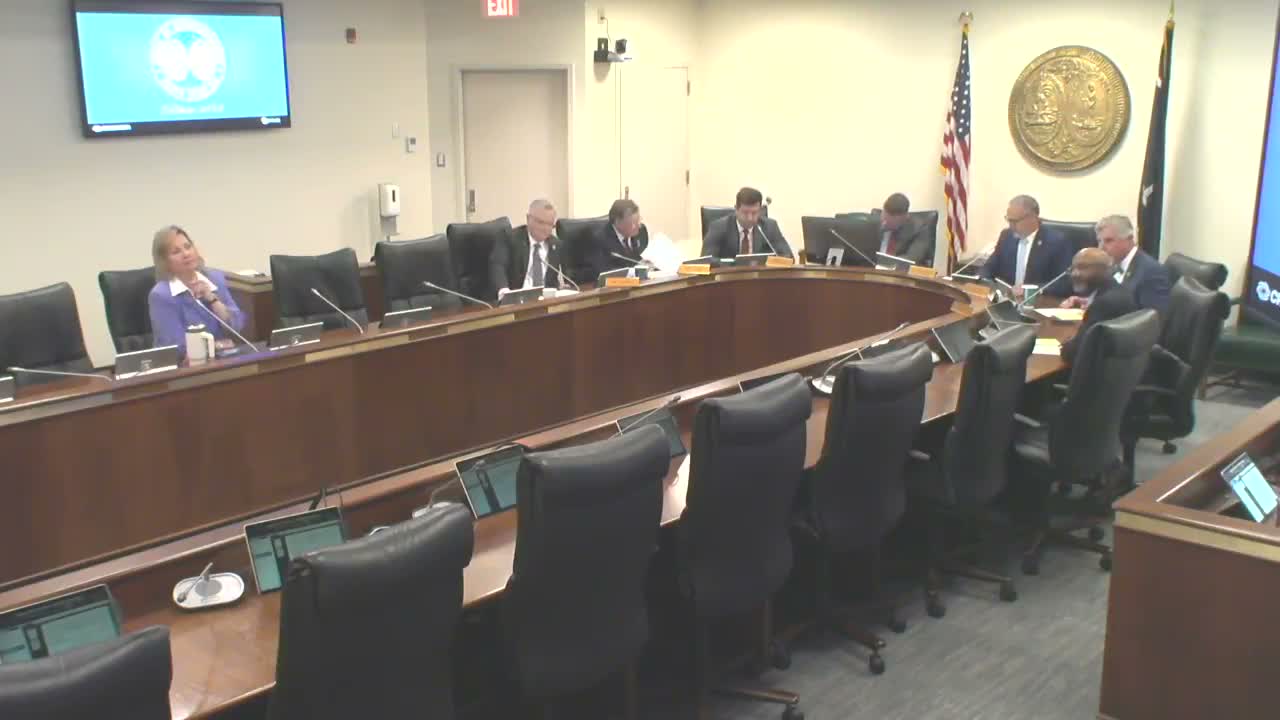
Committee adopts compromise on HB 4,103 to expand optometrists' non‑surgical scope while excluding three laser procedures
Loading...
Summary
The committee adopted a strike‑all amendment to House Bill 4,103 that expands several non‑surgical optometry practices while excluding three laser procedures (YAG capsulotomy, SLT and LPI); witnesses from both sides described the package as a negotiated compromise prioritizing patient safety and access.
The committee approved a compromise amendment to House Bill 4,103 and then adopted the bill as amended. The amendment removes three named laser procedures from the optometrists’ requested scope while permitting other non‑surgical expansions that supporters say will increase access to care.
The chair summarized the negotiations as a strike‑all amendment that both parties—optometrists and ophthalmologists—had reviewed. ‘‘The compromise…continues to make sure that the ophthalmologists are the only ones doing the laser surgeries,’’ the chair said while describing the amendment.
Jondra McNeely, representing the South Carolina Optometry Association, said the package will expand care access, particularly in rural communities, and cited national trends: she told the committee that 14 states earlier in the debate had laser privileges for optometrists and that the number had recently increased to 15–16, with Kansas and Tennessee cited as recent examples. McNeely also cited a figure presented in testimony of 146,000 laser procedures performed by doctors of optometry with a 0.001 percent complication rate.
Dr. Michael Zollman, a past president of the optometric physicians association, said the exclusion of specific lasers was a tactical compromise, not an admission of incompetence, and urged the committee to move the bill forward to modernize practice and reduce care delays.
Speakers for ophthalmology, including Dr. Wade Reardon, Dr. Caleb Sen and Dr. Carl Sloan, said they had safety concerns with the original proposal but praised the negotiated amendment that prioritized patient safety and limited the procedures to ophthalmologists. Dr. Reardon said the amended bill ‘‘represents a dedication to patient safety and the integrity of safe eye surgery within our state.’’
After brief discussion and confirmation of some minor wording adjustments, the chair moved the strike‑all amendment to become the bill. Members raised hands and the chair declared both the amendment and the bill as amended adopted unanimously; no roll‑call vote was recorded.
Committee members asked staff to review specific line edits mentioned late in the process to ensure statutory language matched the intended scope and to prepare follow-up technical clarifications as the bill advances.
The adopted amendment excludes specific laser procedures identified in testimony (YAG capsulotomy, selective laser trabeculoplasty (SLT) and laser peripheral iridotomy (LPI)); the committee record shows the parties agreed to continue discussion about laser privileges at a later date rather than include them in this bill.