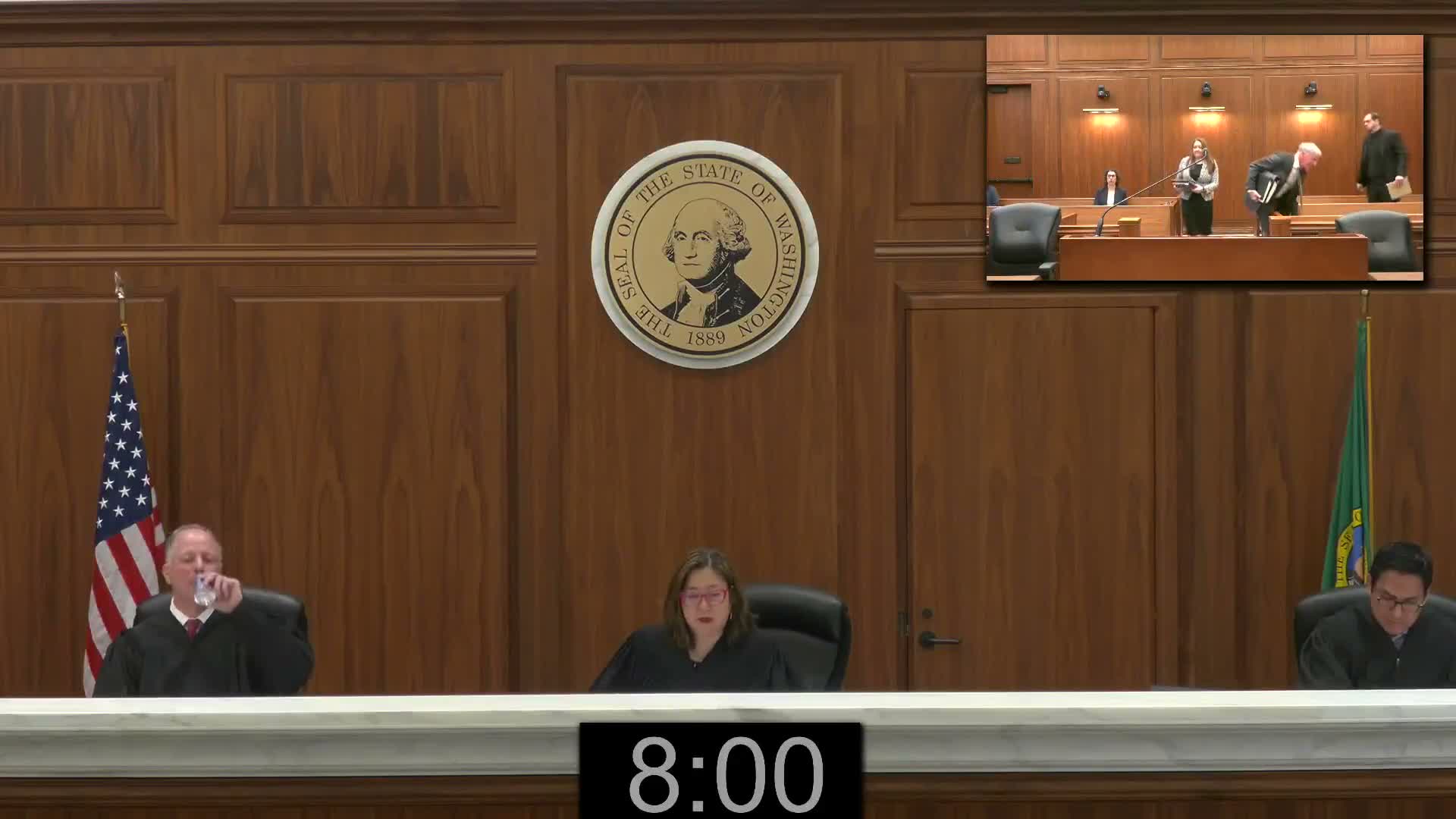
Appellate panel hears arguments over whether former RCW 9.41.040 vested firearm-restoration rights
Loading...
Summary
At oral argument in Macaulay v. State, appellant counsel Vitali Kerchin argued that former RCW 9.41.040 vested a right to restoration of firearm privileges once statutory conditions were met; state counsel Carrie Carrillo countered that eligibility is tested at the time a petition is filed and urged affirmance of the superior court denial.
Vitali Kerchin, counsel for appellant Jerry McCauley, told an appellate panel that "Mister McCauley has a vested right to the restoration of his firearm rights under the former statute," and urged the court to reverse the superior court and remand.
Kerchin told the panel the case turns on whether the precipitating event that triggers application of the statute is the meeting of statutory conditions or the later filing of a petition. He argued the restoration statute contains explicit, ministerial "shall" language and operates the same way as juvenile-sealing statutes the Supreme Court has treated as creating vested rights.
The State, represented by Carrie Carrillo, urged the opposite reading. "The precipitating event that triggers the analysis of eligibility for firearm restoration is the filing of the petition," Carrillo said, and she told the panel that this court previously held rights under former RCW 9.41.040 could not vest. Carrillo noted that the post-Dennis amendments to the statute indicate the legislature intended eligibility to be assessed looking back from the petition date.
A member of the panel posed a three-step framework—(1) identify the precipitating event, (2) determine whether the statute expresses retroactive intent, and (3) assess whether retroactive application would deprive a vested right—and asked counsel to apply it. Counsel and the panel debated whether State v. Dennis, later statutory amendments, and the opinions of prior panels (variously referenced in the argument as Arendt/Arends/Aaron's and TK) require the court to treat eligibility as fixed when conditions are satisfied or to test eligibility at the time of petition filing.
Kerchin emphasized that both the sealing statute at issue in prior cases and the firearm-restoration statute set out explicit criteria and a ministerial duty to grant relief once conditions are met, arguing those similarities counsel in favor of recognizing a vested right. Carrillo countered that the plain language of the current and amended firearm statute examines the defendant's status at the moment the petition is filed and that Aaron's and related authority support denying vesting here.
The argument concluded with Kerchin reserving two minutes for rebuttal and repeating his request that the panel reverse and remand. The court recessed without issuing a ruling.
The case will return when the court issues an opinion or further scheduling order.