Get Full Government Meeting Transcripts, Videos, & Alerts Forever!
Get email alerts on the Natural Resources topic
No spam. Unsubscribe anytime.
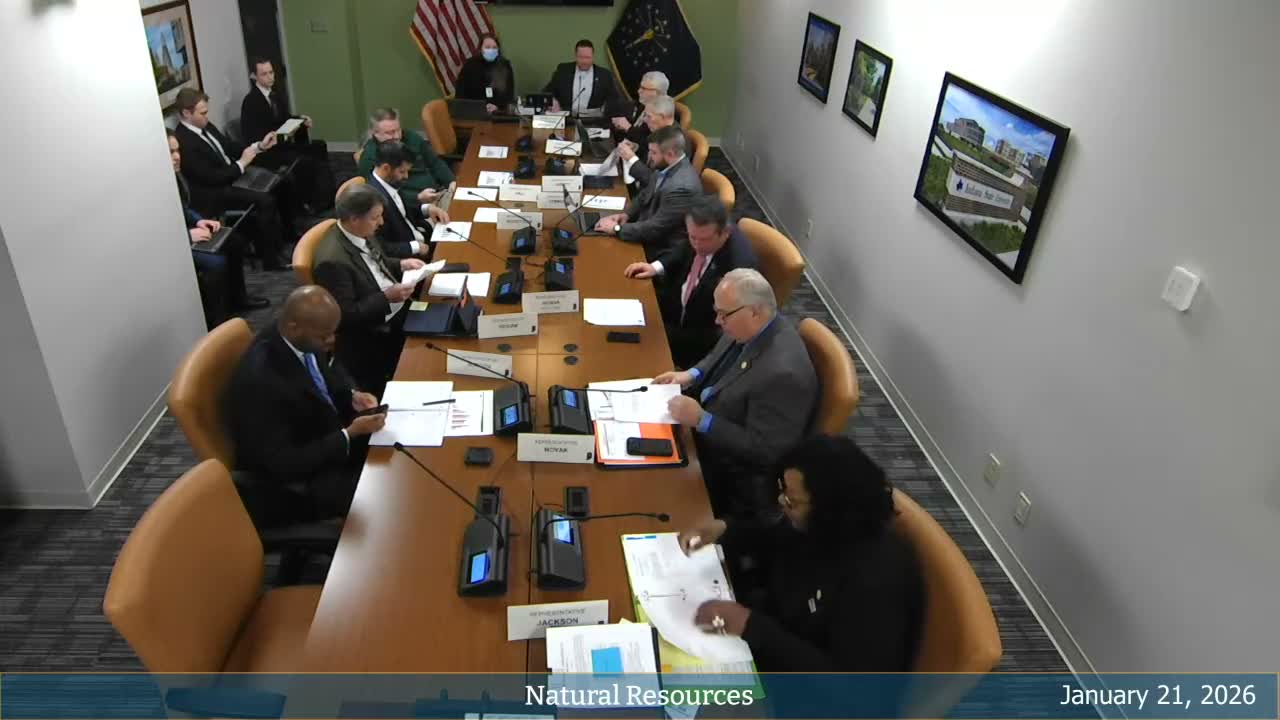
House Natural Resources committee passes bill directing DNR to set age targets, recreation fees for state forests
Summary
The committee passed HB 1414, which would require the Division of Forestry to maintain at least 10% of state forest acreage at 100 years or older and 10% at 20 years or younger and direct recreation fees to the forestry fund; supporters cited funding shortfalls and forest health, while opponents warned numeric mandates could incentivize logging. The bill passed 8–3.
House Natural Resources Committee members voted 8–3 to pass House Bill 14 14 as amended after a half-day of testimony from foresters, conservation groups and recreation advocates. The legislation requires the Department of Natural Resources Division of Forestry to ensure at least 10% of state forest acreage consists of stands 100 years or older and at least 10% consists of stands 20 years or younger, and it directs proceeds from new recreational fees to a dedicated forestry fund.
The bill’s sponsor told the committee the measure is intended to “make sure that the environmental, economic, recreational, and health benefits” of forests are preserved for future generations, and that any revenue raised on state forest lands should remain available to manage those lands. The sponsor also said the bill “does not mandate logging,” but instead seeks ways to secure funding and to protect a baseline of older forest.
Supporters said the measure addresses a longstanding funding gap at the Division of Forestry and would restore staffing that helps private woodland owners and supports forest health work. Perry Seitzinger, a consulting forester involved with the bill’s drafting, said the division has been “critically underfunded” for more than 20 years and that dedicating recreation revenues to the forestry fund would allow the agency to fill vacant district forester positions and expand services.
“Additional funds going into the forestry fund will allow them to fill empty positions,” Seitzinger said during questioning from the committee. Will Haynes, legislative director for DNR, told members the agency is presently neutral on the bill and that DNR already has the administrative capacity to institute user fees, but the bill would explicitly direct some proceeds to the forestry fund.
Opponents — including forest scientists, conservation groups and many residents who testified — said the bill’s strict numeric targets risk unintended consequences. Greg Grant, a longtime forest volunteer, testified the bill as written would protect only trees 100 years and older, not the 150-year threshold some experts associate with old growth, and that the wording could lead to cutting maturing trees to meet the 10% target.
“If you write an immunity, it’s immunity, you know, and then you get to the court and there they shut the door,” Grant said in his testimony, arguing the bill’s current wording could produce the opposite effect of preserving older stands.
Nicole Snyder of the Sierra Club’s Hoosier chapter warned the DNR estimate that 28% of state forest currently consists of trees 100 years or older means the 10% figure could be interpreted as a cap rather than a minimum. “Why would we not want all of our remaining 28% of state forests to keep their mature trees?” she asked.
Several testifiers and some committee members urged an amendment changing the language to read “at least 10%” so the targets are minimums rather than strict ceilings. A number of conservation and forestry organizations — including the Nature Conservancy and the Indiana Forest Alliance — supported portions of the bill, such as protections for nonprofits that open land to public trails, while opposing the rigid age quotas.
Ray Meissner and other supporters emphasized the bill’s fiscal purpose, citing a sharp reduction in division funding following property tax reform in 2008 and presenting analyses that timber sales and user fees could contribute to a self-sustaining forestry fund. Meissner told the committee HB 14 14 would help the Division of Forestry restore services to private landowners without necessarily increasing harvest volumes.
During the roll call, the committee recorded votes as follows: Cheryl Lindauer — Yes; Representative Genda — Yes; Representative Abbott — Yes; Representative Hall — No; Representative Hostetler — Yes; Representative Karakoff — Yes; Representative Commons — Yes; Representative Yoakam — Excused; Representative Westcoff — Yes; Representative Burton — No; Representative Novak — No; Representative Jackson — Yes. The committee clerk announced the bill passed 8–3.
The committee’s passage sends HB 14 14 to the next legislative stage; several members asked that the bill’s language be further refined on second reading to clarify whether the 10% figures are minimums and to tighten definitions about how acreage is measured and where recreation fees apply. The committee adjourned following the vote.