Get Full Government Meeting Transcripts, Videos, & Alerts Forever!
Get email alerts on the Local Government Township Reform topic
No spam. Unsubscribe anytime.
House committee approves township modernization bill after hours of testimony; amendment clears some concerns
Summary
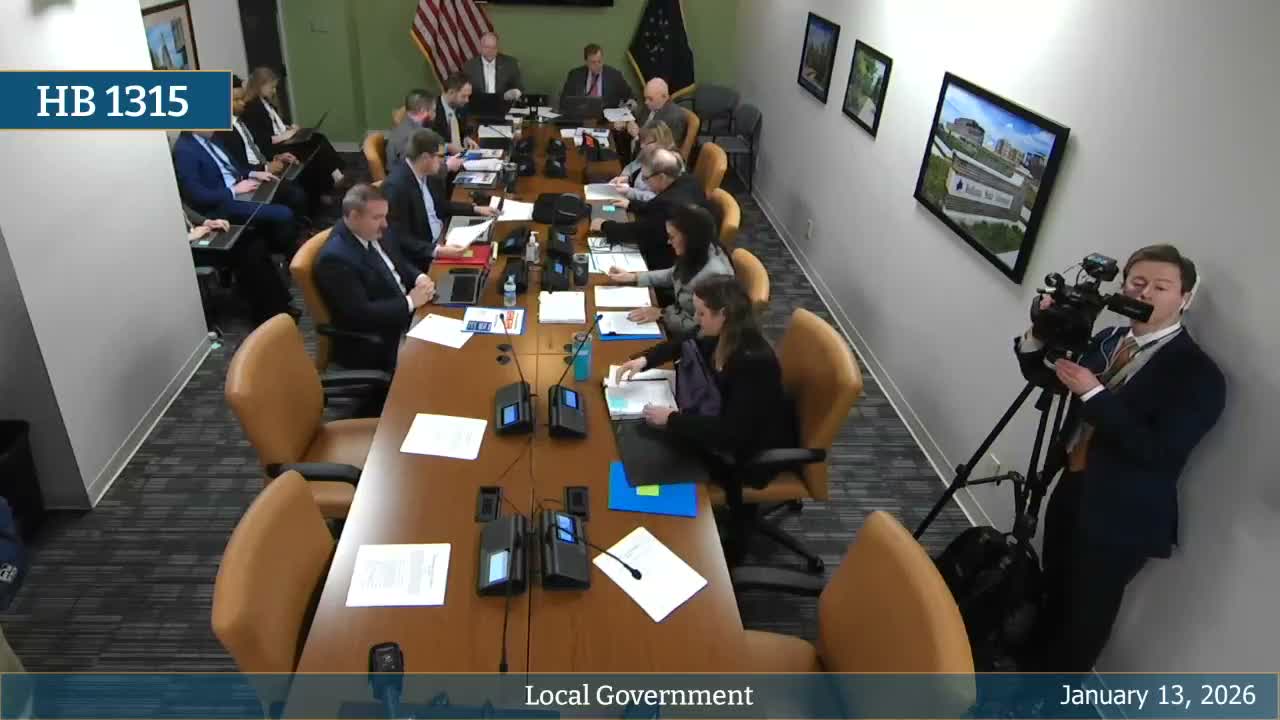
After hours of testimony from trustees, municipal leaders and associations, the House Local Government Committee voted 9–3 to pass House Bill 13‑15 as amended, advancing a locally driven framework to reorganize certain townships beginning 2028 while preserving statutory services.
The House Local Government Committee on Tuesday advanced House Bill 13‑15, a proposal to streamline township government in Indiana, after extended testimony from township trustees, municipal officials, parks groups and policy organizations.
Representative Schonk Wyler, the bill author, told the committee the legislation aims to reduce duplicative township structures and align service delivery with units that have scale and professional capacity. "The goal is straightforward. Protect essential services, reduce unnecessary government overhead, improve accountability, deliver better value for taxpayers," she said during the bill presentation.
Supporters included the Indiana Chamber of Commerce, the Indiana County Commissioners Association, AIM (Association of Indiana Municipalities), the Indiana Park & Recreation Association and conservation and public‑safety groups that said consolidation could reduce administrative overhead and improve service consistency. Natalie Goodwin of the Indiana Chamber said the bill "clarifies authority, improves government's practices and encourages more disciplined stewardship of public resources." Becca McQuaig of AIM said the measure "allows for local input and analysis" and is not a blanket elimination of townships.
Several witnesses cautioned the committee to protect services that rely on township funding. Michael Klitzing of the Indiana Park & Recreation Association warned the legislative fiscal study did not list affected townships, complicating assessment of impacts on joint parks departments. "It makes it difficult to assess the full impact of potential unintended consequences," he said, urging more data or temporary exemptions for township‑funded parks.
Township trustees and some municipal leaders urged care. Christina Neely, a former township trustee from Fayette County, described families who faced different levels of assistance depending on township boundaries and said consolidation could provide "clear accountability and consistency." Kathy LaRue, St. John Township trustee, said her office handled hundreds of township assistance requests each year and warned that wholesale elimination could harm constituents who rely on rapid, local response.
Some witnesses opposed parts of the bill as written. Ryan Hoff of the Indiana Farm Bureau asked that the bill not permit mergers into municipalities without a referendum, calling such a move "taxation without representation" for residents who would pay municipal taxes but not be able to vote for municipal officials. Dan Shackle, speaking for the Indiana Township Association, recommended a performance‑metric approach like Senate Bill 270 rather than the current framework.
Representative Vasquez offered an amendment (adopted by consent) that clarified eligibility thresholds, provided options for voluntary consolidation prior to mandatory reorganization, and included language to prevent the bill from functioning as annexation. After closing remarks from the author, a motion to pass as amended carried on roll call 9–3; Representative Johnson explained his 'no' vote, citing unresolved implementation and service‑continuity questions. Representatives Moed and Smith also voted no.
The committee record shows the bill would trigger reorganizations beginning Jan. 1, 2028 for townships meeting specified criteria, with local planning processes and provisions to preserve statutory township services including township assistance, fire protection, and cemetery maintenance. The amendment added by Representative Vasquez sought to refine eligibility language and guard against annexation concerns.
Next steps: HB 13‑15, as amended, moves from the committee for further consideration by the full House. The committee did not adopt all requested clarifications from opponents in this hearing; supporters and critics signaled a willingness to continue discussions on technical fixes and protections for parks, fire services and funding continuity.