Board hears research and a new Pierce College BAS proposal amid questions on outcomes and workforce alignment
Loading...
Summary
Staff reported 175 approved community-college baccalaureate programs statewide and previewed research on workforce alignment; Pierce College proposed a Bachelor of Applied Science in accounting to serve working adults and military-affiliated students.
Staff updated the board on community-college baccalaureate programs, the system’s research into workforce alignment, and a new program proposal from Pierce College.
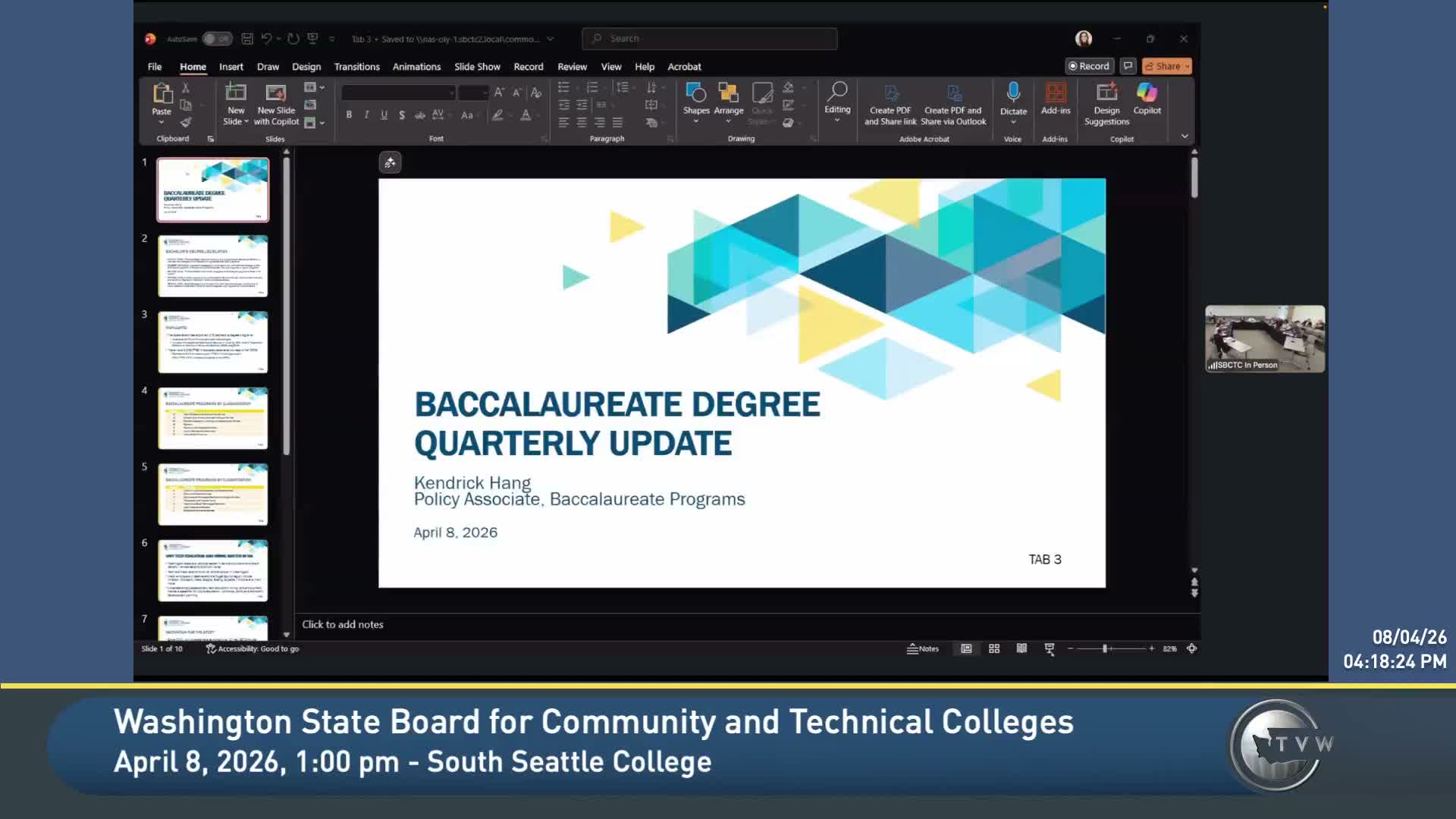
Policy staff outlined the history of state authority for community-college bachelor’s degrees (pilot authority in 2005 expanded over time) and reported that 175 baccalaureate programs now operate across the 34-college system. Staff also described ongoing research to better understand how baccalaureate programs align with regional labor markets, including the role of employer connections, mentorship and placement supports.
Ken Heng, a policy associate, summarized program categories (health professions, computing/information sciences, business and education) and said some programs have shown rapid demand growth; staff are commissioning quantitative and qualitative research to map enrollment, completion and employment trends and to collect advice from industry partners on changing skill needs.
Pierce College presented a proposal for a Bachelor of Applied Science in accounting intended for working adults and military-affiliated students. The proposal includes specialty coursework in government and public-sector accounting to support CPA pathways; staff noted that a typical CPA requirement is about 225 quarter credits and that the BAS would provide 180 credits, with bridge options for students who need additional credits to meet CPA exam eligibility.
Board members asked about transferability, graduate pathways and employment outcomes. Staff said formal placement and outcomes data usually lag by about two years but that many colleges collect informal, real-time placement information and employer feedback to inform program design.
Why it matters: expanding baccalaureate offerings can meet local workforce needs and expand access for students who cannot relocate to a four-year campus; board members probed how to ensure program quality, credential portability and equitable access to placement and mentorship.
Next steps: the Pierce College proposal will proceed through the board’s established review process that includes review by public university partners. Staff said they will return with research findings and dashboards tracking enrollment, retention and employment as they become available.