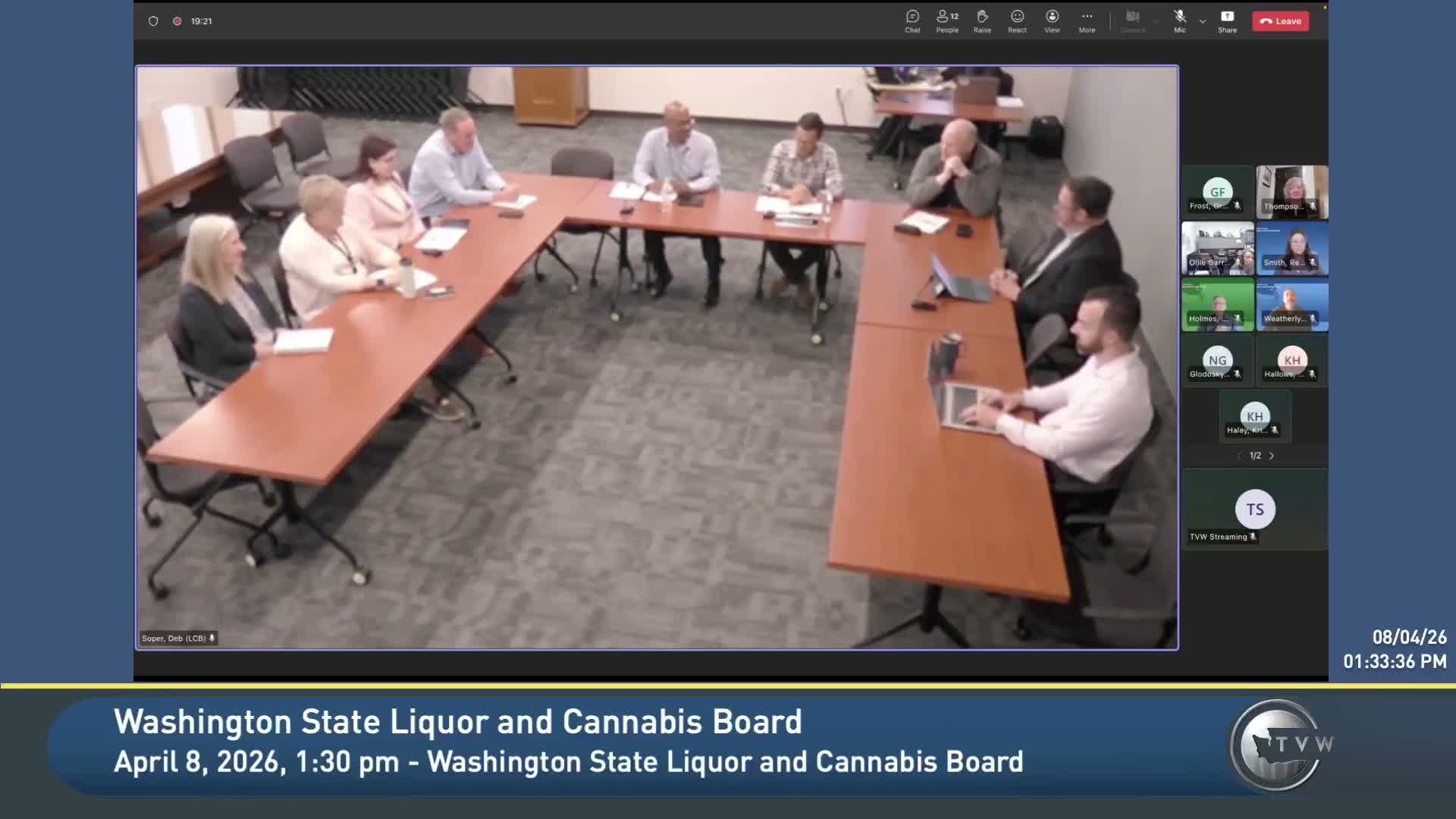
LCB staff say revenue crunch will force implementation of new laws without added funding
Loading...
Summary
At the April 8, 2026 executive management meeting, a senior LCB staff member outlined how a tighter revenue forecast and biennium-end context limited the passage of costly bills and left the agency to implement some passed laws without new resources.
Mark, a senior Liquor and Cannabis Board staff member, gave the board’s April 8 legislative-session briefing, saying the 2026 session played out in a sharply different budget environment than recent years.
Mark said the shrinking revenue picture and end-of-biennium timing led lawmakers to scrutinize fiscal notes closely and often kill bills that carried implementation costs. "We're gonna have to be implementing without new resources," he said, summarizing the constraints the agency now faces.
He reviewed legislation that passed and failed. On alcohol policy, Mark listed incremental changes and cleanup bills that advanced (including a prior contract-kitchen bill and a measure allowing some licensees to lease space); he singled out a temporary-permit/expanded-outdoor-service bill tied to World Cup events as a notable, time-limited change.
On cannabis, Mark said the session produced a mix of outcomes: management-agreement legislation aimed at addressing large retailers and shared-brand arrangements passed, and a bill easing some retail-advertising restrictions cleared; larger proposals — including a move to change the excise tax structure and sweeping reforms around ownership, social consumption and testing-lab oversight — did not pass. He said industry groups and other stakeholders reached differing conclusions about what the LCB should do next, including proposals to move testing-lab oversight to another agency.
Mark urged the agency to pursue earlier stakeholder engagement for any future agency-request bills and to prepare internal proposals for the next cycle. He also flagged that budget forecasts expected in June were likely to show continued constraints.
The presentation included discussion of impacts on licensing, data-sharing efforts to validate medical excise tax exemptions, and the need to prioritize internally which agency requests to pursue.