Lifetime Citizen Portal Access — AI Briefings, Alerts & Unlimited Follows
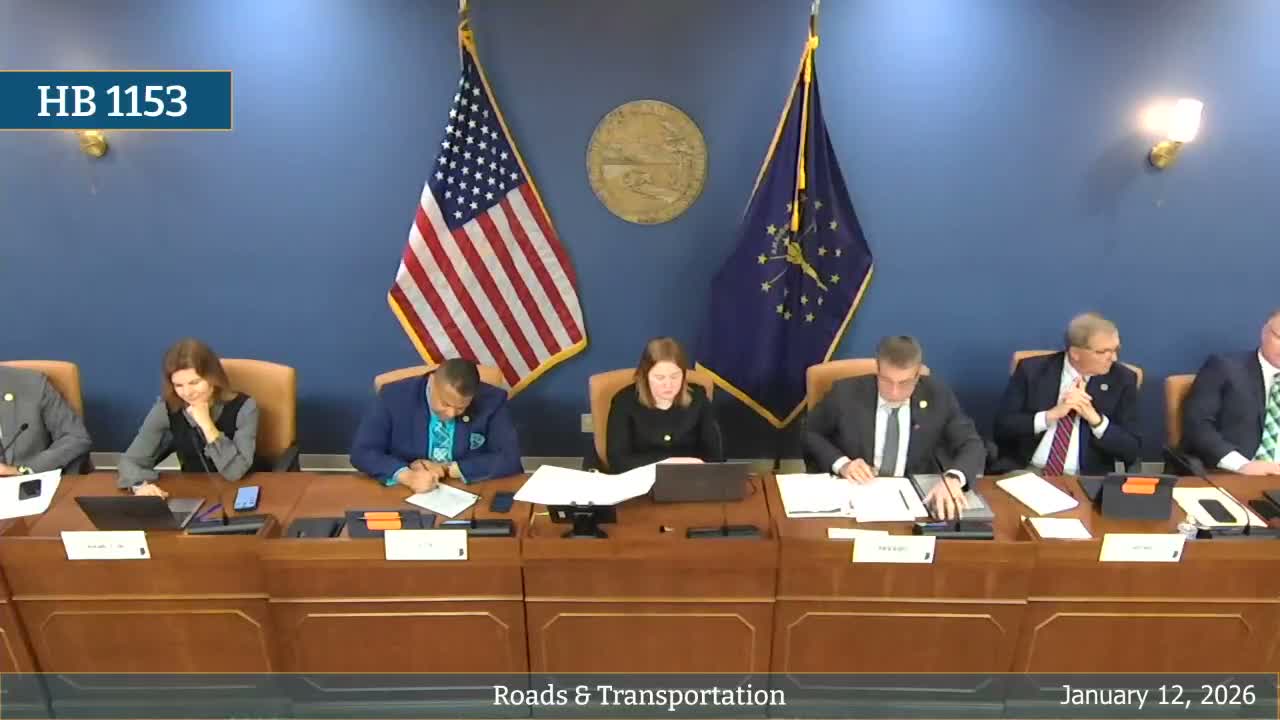
Committee approves amended bill to bar local fuel-source mandates, limits enforcement of utility benchmarking; amendment passes 9–4
Loading...
Summary
The Roads and Transportation Committee passed House Bill 1150 as amended 9–4. The bill prevents local units and HOAs from restricting consumer fuel choice for small equipment, creates airport overlay zoning for safety and, through Amendment 6, prohibits counties/municipalities from adopting or enforcing per-unit utility-usage reporting ordinances; members debated exemptions for multifamily properties and city benchmarking.
The Roads and Transportation Committee passed House Bill 1150 as amended on a 9–4 vote after a lengthy discussion over energy benchmarking, data collection and exemptions for multifamily buildings.
Sponsor Representative Jim Pressell described the bill as two linked items: preserving consumer fuel choice for handheld and small equipment (preventing local or HOA bans on certain fuel sources) and requiring airport-overlay zoning districts to protect landing approaches. "This is very, very similar to 1389 last year," Pressell said, describing the bill's intent to leave fuel choice to consumers while protecting airport approaches.
Amendment 6, taken by consent, makes it unenforceable for a county or municipality to adopt or enforce an ordinance requiring per-unit utility-usage reporting from building owners (a class of ‘‘utility usage data’’ ordinances). The amendment was the focus of the hearing because Indianapolis and other cities have energy-benchmarking programs that require aggregate or building-level utility reporting.
Brian Spalding, president and CEO of the Indiana Apartment Association, urged caution about enforcement and fines for building owners who lack access to per-unit utility data. "Property owners do not possess and in most cases can't get that data from the utilities," Spalding said, noting that Indianapolis has fined some buildings for noncompliance and that gathering the data can be "prohibitively expensive" for utilities and owners.
Mo McReynolds, director of Indianapolis' Office of Sustainability, described the city's Thriving Buildings benchmarking program (adopted in 2021) that requires larger commercial and municipal buildings to report annual utility data and said the program aims to offer technical assistance and incentives rather than penalties. McReynolds said the city proactively issued exemptions to members of the Indiana Apartment Association because per-unit data is often infeasible; he reported 365 buildings participated in the last compliance season out of roughly 2,000 eligible buildings.
Industry witnesses — including lawn and landscape trade groups and the Indiana Home Builders Association — supported the bill's fuel-choice provisions, arguing that small landscaping businesses operate on thin margins and that electric conversions can be several times more expensive than gas tools. Conservation groups urged continued access to benchmarking data as a tool to reduce consumption.
On the roll call, the amendment passed 9–4 (Ayes: Pressell, McNamara, Lindauer, Haggard, May, Heiney, Patterson, Soliday, Lawson; Noes: Dan Treaster, Hamilton, Harris, Andrade), and the committee subsequently voted to pass the bill as amended by the same margin. Several members explained their votes; Representative Mike Andrade said he supported the bill's underlying goals but opposed the amendment granting association-based proactive exemptions for certain owners.
The committee will reconvene to continue work on related items; Representative Pressell said the amendment makes ordinances unenforceable but does not nullify them, allowing voluntary local programs to continue.