Get Full Government Meeting Transcripts, Videos, & Alerts Forever!
Get email alerts on the Workzone Enforcement topic
No spam. Unsubscribe anytime.
INDOT presents early data showing 70% drop in excessive speeding under 'Indiana Safe Zones' pilot; lawmakers seek crash metrics
Summary
INDOT told the committee its Indiana Safe Zones work‑zone speed enforcement pilot reduced excessive speeding by about 70% in camera zones during pre‑ and early live enforcement; members pressed for crash counts and a clear definition of success before expanding fines.
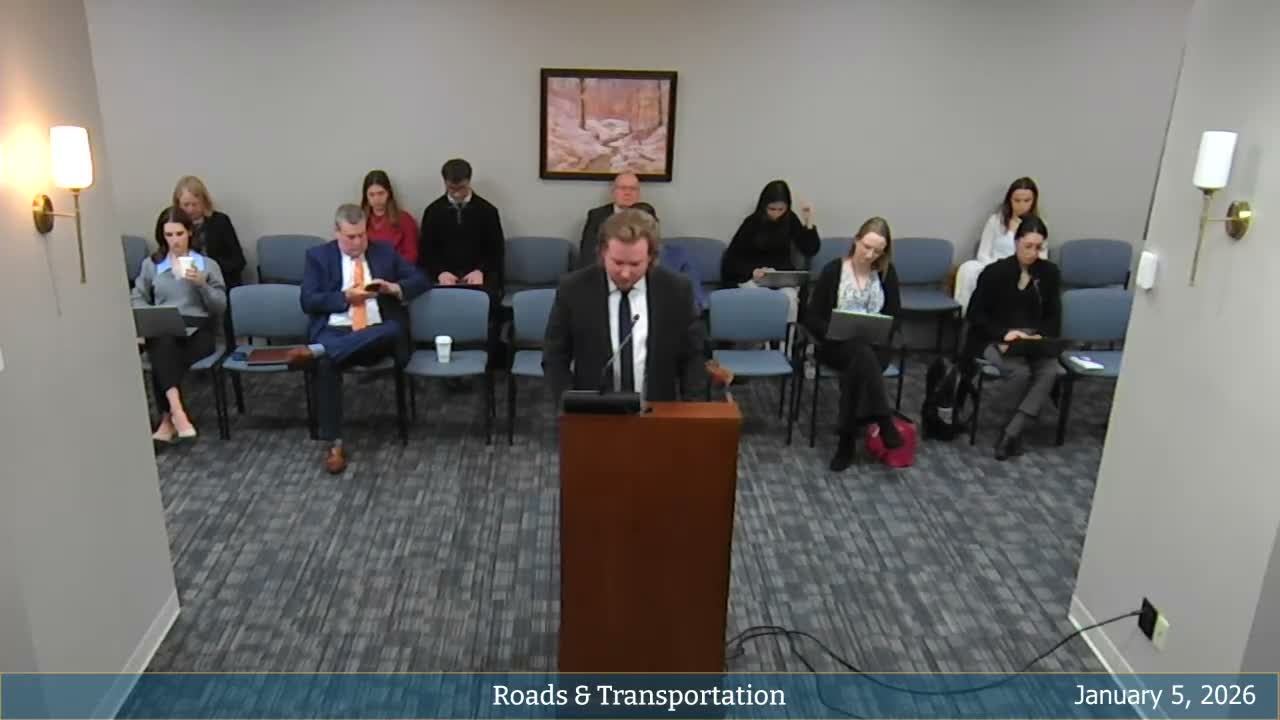
Aaron Wainscott of INDOT described the Indiana Safe Zones pilot, a work‑zone speed control system authorized by the General Assembly in 2023 that launched a pre‑enforcement public‑awareness phase in August 2024. "During this phase, motorists exceeded the posted worksite speed limit by 11 miles per hour or more, received courtesy notices only," Wainscott said. Live enforcement began on May 5, 2025; because live enforcement had been in place for only a short window the agency characterized enforcement and revenue data as an early snapshot.
Wainscott said approximately $4,800 in civil penalties was assessed during the early live‑enforcement period and reported that INDOT saw roughly a 70% reduction in excessive speeding (drivers exceeding posted worksite speed by more than 11 mph) in camera zones. "It's about a 70% reduction in excessive speeding," he said, adding that the metric cited measures speed violations rather than crash counts.
Lawmakers asked for clearer metrics tying speed reductions to crashes and injuries. Representative Craig Haggard said percentages alone can be misleading and asked for absolute crash counts before and after camera activation. "Percentages don't really mean anything because that could be 2 wrecks to 4 or 5—we need the raw numbers," Haggard said. Wainscott acknowledged the concern and said crash and repeat‑offender data are limited in the agency's current report because live enforcement had been active for under two months; INDOT said it will report a fuller year of enforcement data next year.
Program design and oversight Wainscott said the pilot will run five years and sunset in 2028 with annual reporting to the General Assembly. Revenue collected from fines is deposited to the state general fund by statute. INDOT emphasized that the program began with an extended pre‑enforcement and warning phase and that the agency kept the initial enforcement window limited to validate the technology and public outreach before issuing fines.
Next steps Members asked INDOT to provide clearer success metrics and recommended measuring crashes on an apples‑to‑apples basis (same construction zone, seasonal/weather controls) rather than relying solely on percentage changes in speeds. INDOT said a dedicated team is tracking the program and will return more comprehensive enforcement and safety data after the pilot accumulates additional live‑enforcement months.