Get Full Government Meeting Transcripts, Videos, & Alerts Forever!
Get email alerts on the Health Compounding Medspa topic
No spam. Unsubscribe anytime.
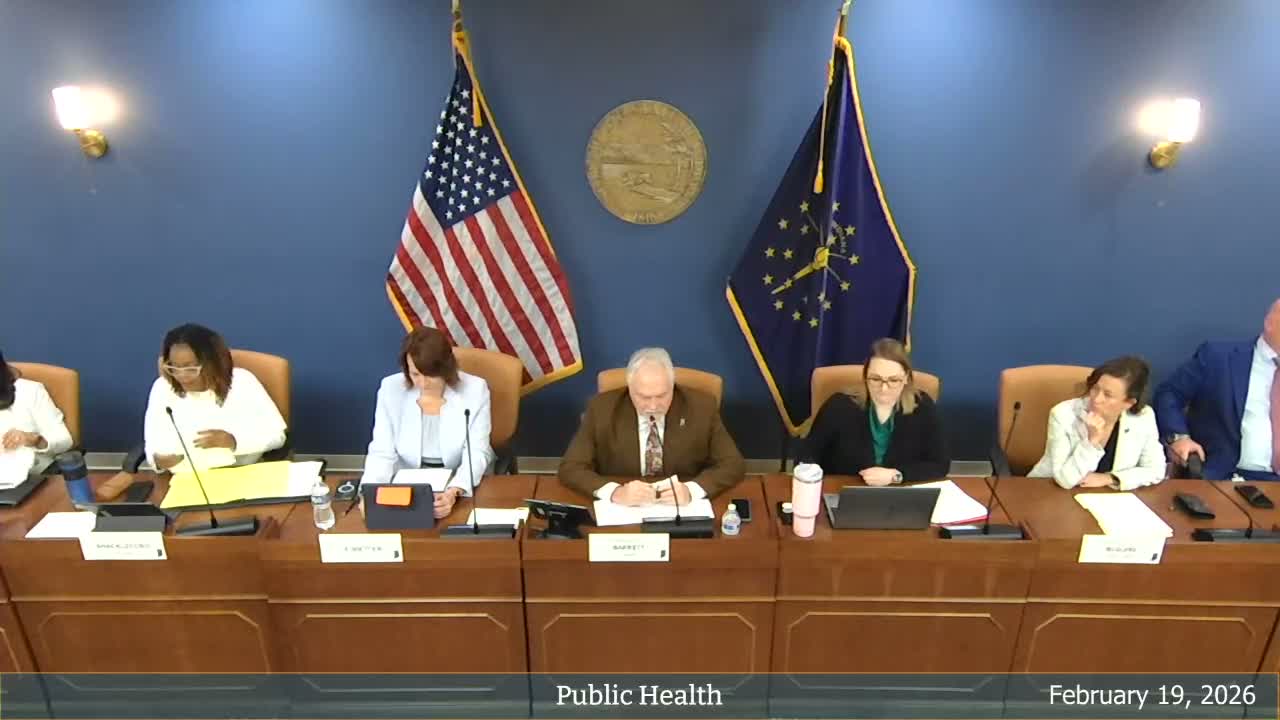
Health committee approves amended Bill 282 to regulate compounding pharmacies and register med spas
Summary
The health committee passed Amendment 14 to Bill 282, clarifying compounding-pharmacy definitions, adding certificate-of-analysis requirements, empowering complaint-driven inspections by the board of pharmacy, establishing med-spa registration beginning in January, narrowing adverse-event reporting to death and inpatient hospitalizations within 15 days, and ordering a biannual compounding study; the amendment passed 12–0.
The health committee approved an amended version of Bill 282 on a recorded vote announced by the chair as 12–0, adopting Amendment 14 as a working framework to clarify oversight of compounding pharmacies and to create a registration system for med spas.
The committee chair said she had earlier been working from an earlier 'senate introduced' draft rather than the committee-passed version and that Amendment 14 was intended to reconcile differences. "I left in a section that was a poison pill to the bill," the chair said, adding that she had removed that language and revised definitions so compounding would not be prohibited.
The amendment narrows how statute will reference ingredient quality by clarifying that "pharmaceutical grade" is not research or veterinary grade and by incorporating content expectations for a certificate of analysis rather than naming specific USP chapters. The chair said the change was a compromise after dispute between large industry parties over how much detail should be required in statute.
The amendment also directs that the board of pharmacy be empowered to inspect compounding pharmacies in response to complaints rather than instituting broad, routine inspection mandates. The chair said limited inspection capacity motivated that choice and asked the committee to consider increasing the board's inspection staff in the next fiscal year, noting Ohio as an example of a state that expanded such capacity.
On med spas, the amendment establishes a registration regime slated to begin in January. The text defines what constitutes a med spa and requires the committee to record the supervising physician — and any collaborating physician where that arrangement exists — so discipline attaches to the licensed practitioner rather than to the facility.
Adverse-event reporting language was narrowed to focus on severe outcomes. The amendment defines reportable events to include death and inpatient hospitalizations, and it extends the reporting window to 15 days to allow flexibility in determining whether an event meets the threshold for required reporting.
The amendment also creates a study on compounding practices to generate biannual reports showing where compounding occurs; the chair said those reports will help the Legislature track activity and oversight needs.
Committee members who spoke in deliberations praised the chair's outreach and said compounding is a long-standing part of medical practice. "Compounding was around before anyone in this room was even born," one committee member said, urging balance between patient options and safety.
After a motion to pass the amendment as amended and a second, the clerk read a roll call. The chair announced the amended bill passed 12–0. The meeting concluded with the chair offering farewell remarks and adjourning.
The amendment is a legislative step toward final language; the chair emphasized it is not the law and said staff and legislators will continue refining the text in the coming days before the bill moves forward.