Star staff and municipal adviser present impact-fee package that would more than double park fee per home
Loading...
Summary
City advisers told the Star City Council workshop the draft impact-fee study supports higher fees to cover projected growth-driven parks, pathways and police costs; the parks fee would rise from $2,050 to about $5,869 per new home and the council set a public hearing for April 7.
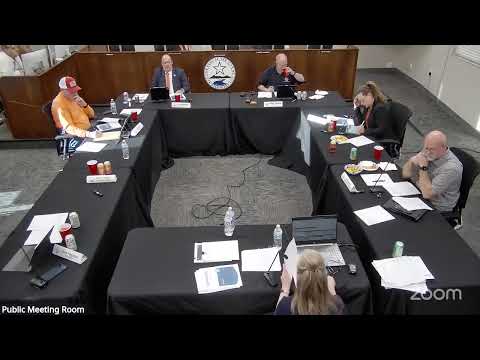
Mayor Trevor Chadwick opened the March 20 workshop by saying the council would not decide the issue at this meeting and scheduled a public hearing for April 7.
The city’s municipal adviser, Christine Stoll of Clearwater Financial, walked the council through a yearlong impact-fee study that pairs demographic forecasts, capital-improvement plans (CIPs) and statutory eligibility rules to calculate maximum supportable fees. Stoll said the report uses U.S. Census, regional Compass data and recent building-permit history, and that the analysis assumes a medium growth scenario that projects a population near 45,816 by 2035.
Why it matters: Stoll said the CIPs list roughly $64 million in potential improvements over 10 years, about $50 million of which the study judged growth-related and therefore potentially allowable to be funded with impact fees. That determination — and the cost assumptions used to price land and facilities — determines how large the fee for new development could be.
"The idea is to make sure that, growth helps pay for itself, but we're not allowed with impact fees to have impact fees pay for things that we would normally have to take care of anyways," Stoll said, explaining the level-of-service and eligibility calculus that removes replacement and non-growth costs.
Key numbers: The study estimates the city will grow by roughly 8,617 housing units over 10 years. Using the consultant’s calculations, the maximum parks impact fee would be about $5,869 per new residential unit; the current parks fee is $2,050, producing an illustrative increase of $3,819 per unit. Stoll noted the figure is the statutory "maximum supportable fee" and the council may set a lower fee by ordinance.
Land-cost inputs and council questions: Council members pressed the consultant about the land-cost assumptions behind park and pathway estimates. Councilman Nielsen asked whether recent sales cited by developers — including examples around $350,000 per acre — were used to set the raw-land assumption. Stoll and staff said the team relied on verifiable, reported sales and BCA-supplied comparables rather than private, unreported transactions; the packet shows a per-acre input in the $185,185 range (Stoll said committee conversations earlier considered higher figures and noted an intermediate $250,000 figure had been discussed).
"We can't use private sales that aren't verifiable," Mayor Chadwick said in response, adding the city prioritized MLS- or reported comparables for raw-land estimates.
Parks, pathways and police: Stoll walked through how each CIP item was scored for growth-related eligibility: parks land and capacity-building projects were largely treated as 100% growth related; some facilities (for example an indoor recreation center) were categorized as mixed (roughly half eligible under the consultant’s example). For police, the analysis ties training needs to the number of sworn officers. Stoll said the plan anticipates about 23 current officers and forecasts higher staffing with growth; a training facility shown in the report is roughly 25,000 square feet and the growth-driven share was presented as a partial eligibility percentage.
Credits and implementation safeguards: Stoll described the credit-evaluation and implementation sections — developers receive credits for constructing improvements that appear on the CIP so the city does not "double-dip," advisory-committee reviews are required annually, CIPs must be updated every five years, and unspent fees must be returned if not spent within eight years.
What’s next: The council set a public hearing for April 7 to take public comment and a formal vote on the ordinances that would adopt the impact fees and CIP changes. Stoll and staff urged councilors to read the full packet, the BCA and consultant letters, and independent reviews before that hearing.
Sources: Presentation by Christine Stoll, Clearwater Financial (municipal adviser); Star City Council workshop discussion, March 20, 2026.
Ending: The council recessed to a short break and will return April 7 for the scheduled public hearing and decision on the impact-fee ordinances.