Get Full Government Meeting Transcripts, Videos, & Alerts Forever!
Get email alerts on the Utilities Notice Requirement topic
No spam. Unsubscribe anytime.
Committee advances bill requiring landowner notice before out-of-jurisdiction water projects
Summary
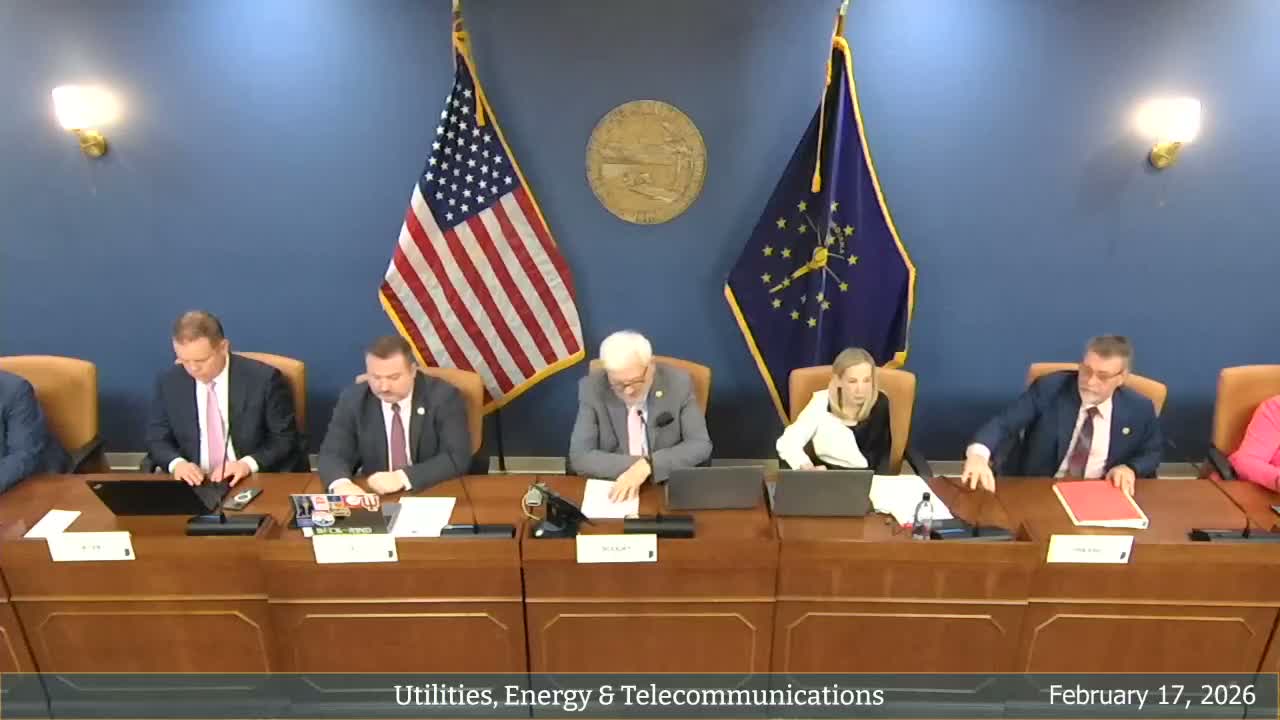
The House Utilities, Energy and Telecommunications Committee voted to advance a bill that would require municipal water utilities to notify landowners and local jurisdictions before extending service or infrastructure beyond a utility’s jurisdiction; the panel adopted an amendment specifying notice contents and a 30-day window to request a meeting, and passed the measure 12-0.
A House Utilities, Energy and Telecommunications Committee advanced a bill that would require municipal water utilities to notify affected property owners and the local jurisdiction when a project would extend service or infrastructure outside the utility’s jurisdiction.
Representative Slager, the bill’s sponsor, told the committee that, as amended, “the bill with the amendment is just dealing with a notification of a water utility operating outside its jurisdiction… notifying those property owners in advance of what’s going on so that the first notice isn't an eminent-domain notice.” He said the amendment also removes a requirement to publish notice in a newspaper and asks the Indiana Utility Regulatory Commission (IURC) to include any resulting project delays in its annual report.
The measure aims to give landowners earlier, clearer notice and an opportunity to engage with the utility before the owner receives an imminent-domain notice. The proposed amendment directed that notices must include the proposed boundaries, the expected completion date, instructions for where to access project information and contact details for the municipally owned utility. Committee members added language requiring that a landowner or county plan commission may, no later than 30 days after receiving the notice, request a meeting with the municipally owned utility to discuss the project.
Jamie Foreman, who identified himself as representing the Indiana Section of the American Water Works Association, said utilities favor transparency but warned smaller utilities could face additional administrative, legal and consulting costs to meet the notice requirements. “There’s concerns as far as additional administrative and legal costs,” Foreman said, adding that delays imposed by new notice steps could jeopardize projects that must meet existing permitting timeframes and potentially require reapplication under IDEM processes.
Representative Matt Pierce questioned whether the bill would produce delays beyond the 60-day notice already in statute, noting that eminent-domain disputes frequently involve additional procedural steps and court resolution of compensation. Foreman reiterated that his concern was how the bill was worded and how added public-notification processes might operate in practice for smaller municipalities.
Committee counsel clarified that the draft requires the notice to include the utility representative’s name and contact information but did not, in its current form, explicitly state the 30-day deadline in the text of the letter; members moved to add language to put that 30-day request-for-meeting window into the notice itself. After discussing and amending the language, the committee took a voice vote on the amendment and then a roll-call vote on the bill as amended. The committee reported the bill out with a recorded vote of 12-0.
The committee’s action sends the measure forward from the Utilities, Energy and Telecommunications Committee; further action will follow the legislature’s normal committee and floor processes.