Get Full Government Meeting Transcripts, Videos, & Alerts Forever!
Get email alerts on the Municipal Utility Notice topic
No spam. Unsubscribe anytime.
Committee hears Senate Bill 6 to require early notice to property owners before municipal utility extensions
Summary
Lawmakers and utilities debated an amendment to Senate Bill 6 that would require municipal utilities to notify property owners outside their service area before installing water or wastewater lines; utilities warned the rule could slow small or urgent projects, and the committee deferred an amended vote until next Tuesday.
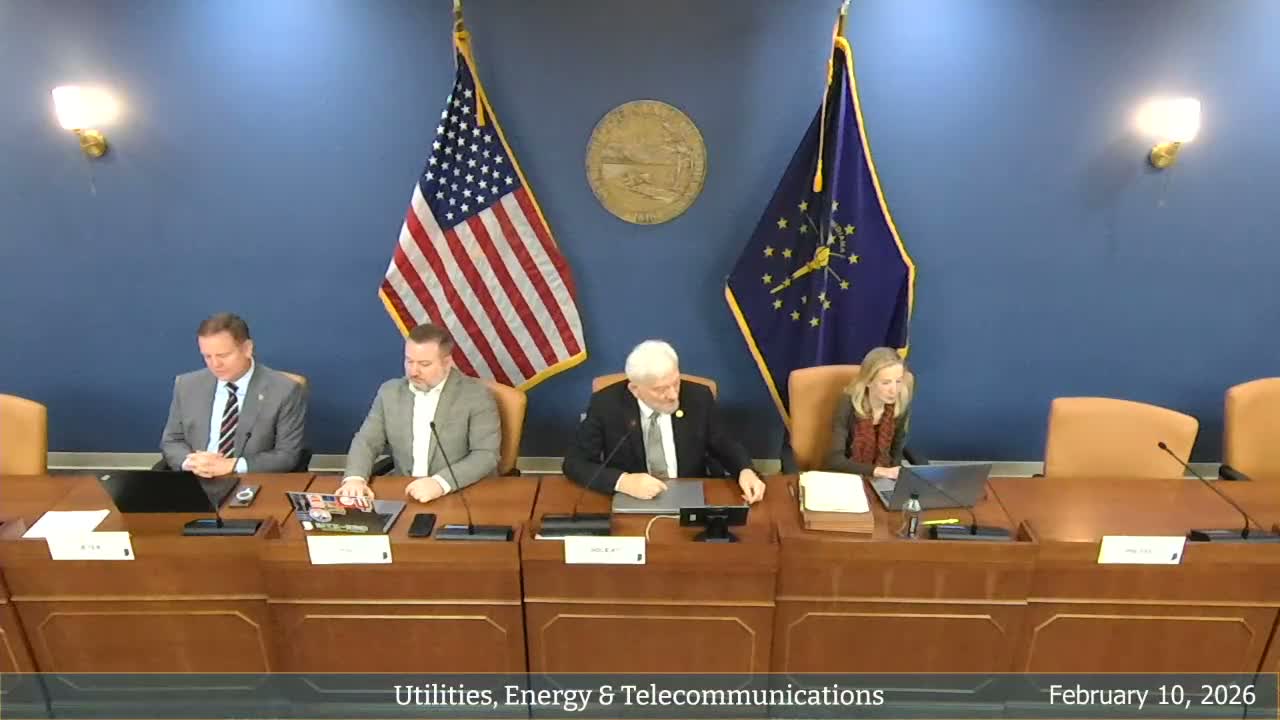
The Utilities, Energy and Telecommunications Committee heard testimony on Senate Bill 6 during a committee meeting, where lawmakers considered an amendment narrowing the measure to municipal utilities and excluding municipal utilities of consolidated cities.
Senator Niemeyer, the bill’s author, told the committee the measure would require municipal utilities to provide direct notice and an outreach meeting for property owners whose land would be crossed by water or wastewater line extensions. "What this sets up is an outreach meeting ... you tell this is your rights," he said, adding that the bill does not remove eminent-domain authority but aims to inform landowners before they receive a legalistic condemnation notice.
Representative Slager, the bill sponsor, said the amendment was intended to focus relief on property owners outside a municipality’s service area or corporate limits. "This is about the people that live the property owners that are outside their jurisdiction or service area, that they're notified," he said, adding the change was not meant to delay projects.
Bridget O'Connor, director of government affairs and regulatory policy for Citizens, told the committee Citizens had conducted advance outreach on the Lebanon extension and already posts project information and contact details. She said wastewater extensions require a Certificate of Territorial Authority and that Citizens typically performs about "30 miles of main extensions per year." O'Connor warned that applying the bill’s notice requirements to every project — including small one-off connections or emergency hookups — could impose a 45–60 day process and delay service: "If this applies to every single one of our projects ... that is concerning."
Christopher Johnson, chair-elect of the Indiana section of the American Water Works Association and superintendent of the Michigan City Department of Water Works, supported greater transparency but urged caution about broad statutory language. He said the current draft could force utilities to include condemnation language in first notices and create an adversarial tone: "I don't even like mentioning the word condemnation if I'm talking to somebody about easement," he said, and warned that the mandate could increase costs, redesigns and delays.
Kerwin Olson of the Citizens Action Coalition said he supported transparency but questioned why some large regulated utilities such as Citizens Energy Group and Indiana American would be exempt: "I don't accept the argument that just because we're regulated by the IURC, we should be exempted," he said.
Several lawmakers sought a middle path. Representative Matt Pierce proposed broadening notice while streamlining the required steps: a friendly first letter, a named contact for questions and an offered meeting for directly affected property owners rather than mandatory countywide hearings or lengthy publication requirements. Counsel noted the current amendment’s language appeared to require both direct mail and a form of publication in some cases and that the precise wording should be cleaned up.
The committee did not take a final vote. Chair Ed Soliday said the panel would revisit the amendment during a short "amend and vote only" session next Tuesday, giving members a week to refine language on who must be notified and how. The hearing record contains testimony and questions focused on balancing direct notice and property-owner protections with avoiding delays to routine or urgent utility service extensions.
The committee adjourned without a vote on the amendment; an amended vote is scheduled for next Tuesday.