Get Full Government Meeting Transcripts, Videos, & Alerts Forever!
Get email alerts on the Hospital Community Benefit topic
No spam. Unsubscribe anytime.
Committee advances hospital community-benefit bill; industry urges refinement on reporting and tax-exemption calculations
Summary
House Bill 13-35, which would require nonprofit hospitals to align community-benefit spending with community health needs and report detailed outcomes (including charity care), passed committee 13-0; hospital representatives supported workforce provisions but asked for clearer accounting rules and lighter reporting for small rural hospitals.
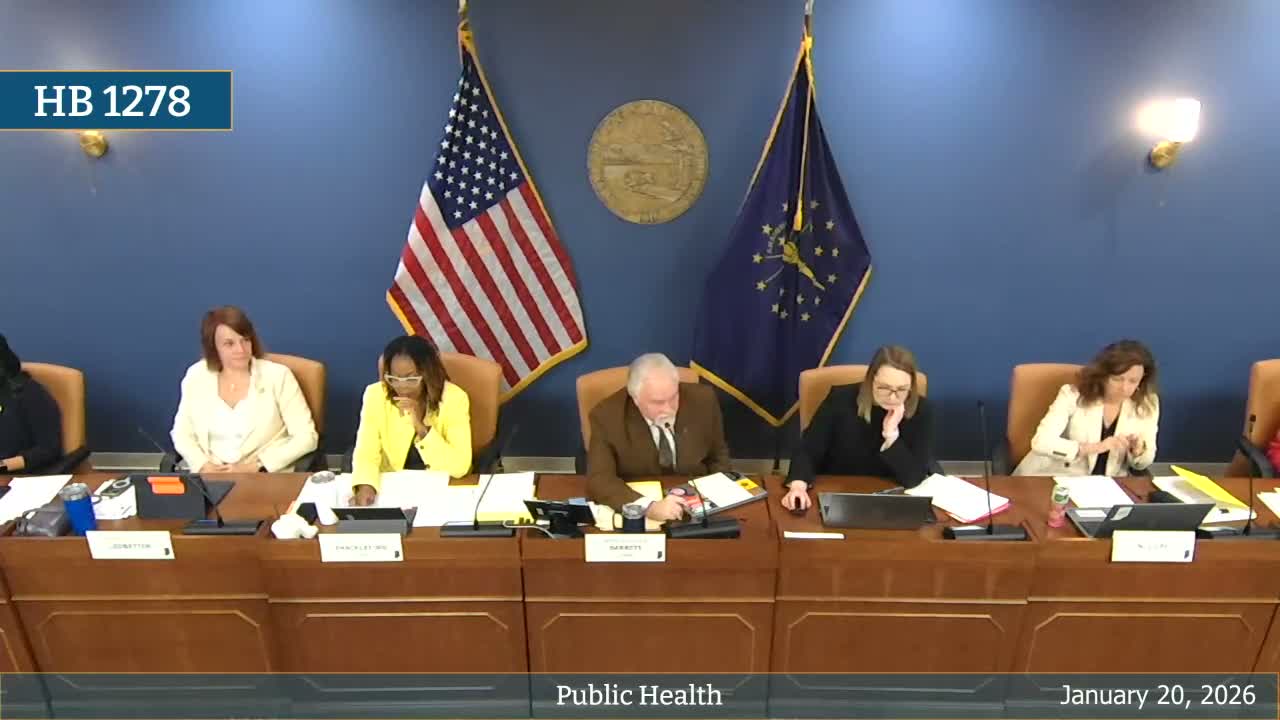
House Bill 13-35 passed the House Health Committee by a 13-0 vote after proponents and hospital representatives debated how community benefit, charity care and preceptor support should be measured and reported.
Rachel Sportwood (transcribed as "Sportwood"), chief of policy for the secretary of Family and Social Services, told the committee the bill ties community benefits to workforce development by recognizing clinical preceptors as qualifying community benefit and that supporting preceptors helps retain practitioners in underserved areas. "Supporting clinical preceptors, including medical, nursing, allied health and behavioral-health preceptors is a legitimate and high-value community benefit," Sportwood said.
David Dunkel, president and CEO of Johnson Memorial Health speaking for the Indiana Hospital Association, said hospitals broadly support the intent but cautioned that hospitals already provide substantial documented community benefits and that overlapping legislation could create conflicting definitions. Dunkel cited a state study that found Indiana nonprofit hospitals provide approximately $3.9 billion in total benefit to communities and warned that smaller rural hospitals may not have preceptors in every clinical department at all times, describing "preceptor fatigue" and reporting burdens for under-resourced facilities.
Representative Carbaugh, the bill sponsor, said amendment language had removed overlapping patient-affordability provisions to avoid duplication and said he would work with the hospital sector to find workable reporting mechanics. Stakeholders from employer groups, United Way and others testified they support the bill’s transparency and workforce intent.
A roll call followed a motion and the committee recorded 13 votes in favor and none opposed. The author said he would draft a second-reading amendment to address technical concerns, including tax-exemption calculations and reporting scope.
What’s next: the sponsor committed to work with hospitals and other stakeholders to refine reporting definitions and the methodology for comparing community-benefit spending to tax-exemption value.