Get Full Government Meeting Transcripts, Videos, & Alerts Forever!
Get email alerts on the Disaster Resilience topic
No spam. Unsubscribe anytime.
Hearing only: Bill would create a temporary resilience task force to study flooding and agency coordination
Summary
House Bill 13-26 would create a six‑month, bipartisan, bicameral task force to analyze gaps in Indiana’s disaster resilience and water management, study the merits of a chief resilience officer and a resilience plan, and report findings to legislative counsel; the committee heard testimony from emergency‑management and flood‑resilience groups but took no vote.
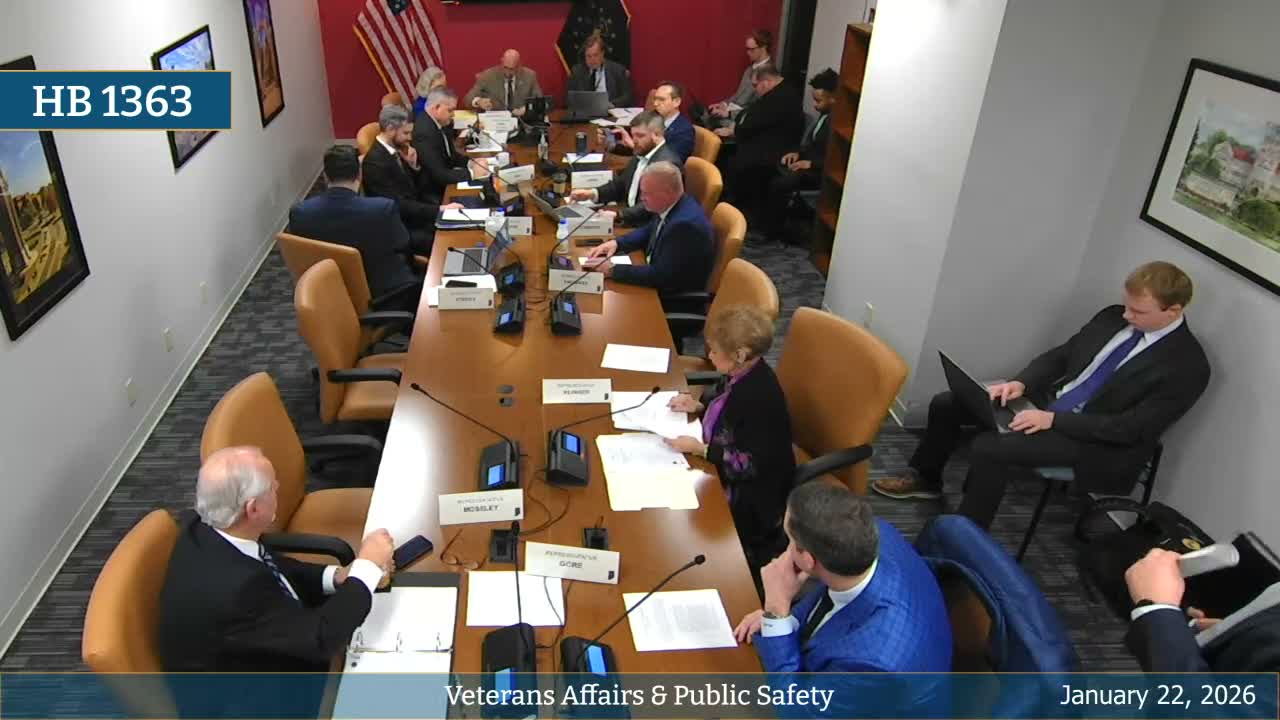
Representative Baird introduced House Bill 13‑26 as a hearing‑only measure to improve preparedness, efficiency and long‑term resilience after increasing severe weather and flooding. He said the bill would not create a new agency or mandate spending but would establish a short task force to assess gaps and coordination across state agencies.
Alyssa Schroeder of the Indiana Department of Homeland Security described existing statewide threat and hazard identification work (THIRA) and county‑level risk assessments that IDHS already produces and submits to federal DHS. Dessie Rybult of Indiana Conservation Voters and Anne Brody of American Flood Coalition Action both voiced support, saying the task force could align state water‑management work (including items tied to Governor Brown’s executive order 2563) and find opportunities to integrate natural infrastructure and reduce redundancy.
Former Florida House Speaker Chris Brows described Florida’s “always ready” approach and urged Indiana to consider models that made mitigation more effective and helped secure federal grants and reinsurance benefits. Committee members asked about where a chief resilience officer might be placed (options included stand‑alone offices, agency placement such as DHS, or cabinet‑level roles), funding for a task force (witnesses said no new funding is required beyond per diem), and whether the task force would address specific local hazards such as beach erosion. Representative Baird closed and the measure was taken as a hearing only.