Lifetime Citizen Portal Access — AI Briefings, Alerts & Unlimited Follows
Crescent City council introduces Prop 218 process and ordinances to raise water and sewer rates after prolonged budget shortfalls
Loading...
Summary
After lengthy public comment, the Crescent City Council introduced ordinances and adopted Proposition 218 notice procedures April 6 to begin a phased five‑year increase in water and sewer rates intended to restore enterprise fund sustainability and cover rising operation and maintenance costs.
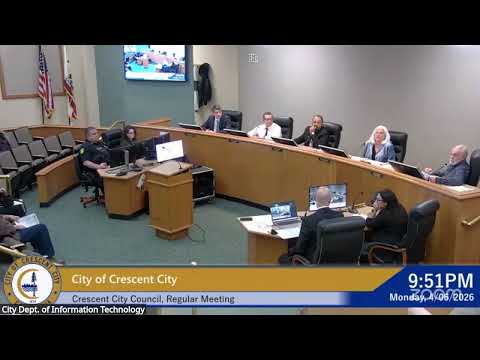
Crescent City officials introduced ordinances April 6 to begin the Proposition 218 protest and public‑hearing process that would raise water and sewer rates over roughly five years if ultimately adopted.
City Manager Eric Weir and rate consultants told the council the city's utility enterprise funds have not kept pace with inflation or rising operating costs. Samantha Ryan of RCAC said the water rate study projects the fund could be short roughly $8.5 million over five years if rates are not changed and recommended restructuring base charges and a phased increase. "Over the 5 years, though, it's looking like the city is gonna be short $8,500,000 if they don't increase their rates," Ryan said.
The RCAC proposal would move the city toward American Water Works Association rate standards, remove included usage from the base charge, lower the per‑unit volumetric charge, and raise the typical residential water bill from about $22.49 per month currently to an estimated $46.18 per month by 2031 in the model presented. The council also heard a separate Willdan Financial sewer study recommending stepped increases to restore reserves and meet debt‑coverage metrics; the initial inside‑city residential sewer bill shown in the study rises from roughly $72 to about $98 in year one of the proposal.
Staff and consultants emphasized that the large, long‑term membrane/RBC replacement project the city has discussed separately (costs discussed in past meetings and grant applications) is not included in the near‑term rate design before the council; the current proposals are focused on operation and maintenance and short‑term capital needs. City staff noted the water fund balance was about $4 million as of 2025 and that without rate changes the fund balance would deplete in the near term.
Residents voiced repeated concerns about affordability for people on fixed incomes, the pace of increases, transparency and the city's fiscal history. Several commenters urged the council to exhaust grant options, consider alternative revenue measures and provide additional audit detail before moving forward. "This is unacceptable," one resident said of the proposed near‑term increases, citing fixed incomes and other rising costs.
City Attorney Martha Rice explained Proposition 218's public‑notice and protest rules: the city must mail notices to property owners and customers, protests must be delivered in writing (no email) and counted by parcel, and a majority protest by parcel would block the proposed increases. Notices are scheduled to be mailed this week and the public hearing to receive protests and testimony is set for June 1; if the council adopts the rate ordinances after that hearing the new rates would take effect July 1.
Councilmember votes to introduce the water and sewer ordinances were 4–1 on both items (one councilmember opposed on each introduction). The council's action introduces the ordinances and Prop 218 resolutions; formal adoption would require further public notice, receipt and tabulation of written protests and a subsequent council vote at the noticed public hearing.
Next steps: mailed Prop 218 notices, a June 1 public hearing to receive testimony and tabulate protests, and possible adoption or retreat depending on the outcome of the protest count and council deliberations.