Get Full Government Meeting Transcripts, Videos, & Alerts Forever!
Get email alerts on the Childcare topic
No spam. Unsubscribe anytime.
Childcare debate: employers, economic groups back tax-credit expansion; providers warn system instability
Summary
House Bill 11‑77 would expand an employer childcare tax credit and allow redevelopment commissions to use TIF for childcare projects; supporters argued the changes are budget neutral and could spur employer investment, while providers and advocates said the sector needs direct stabilization funding and warned the bill risks shifting costs and oversight burdens.
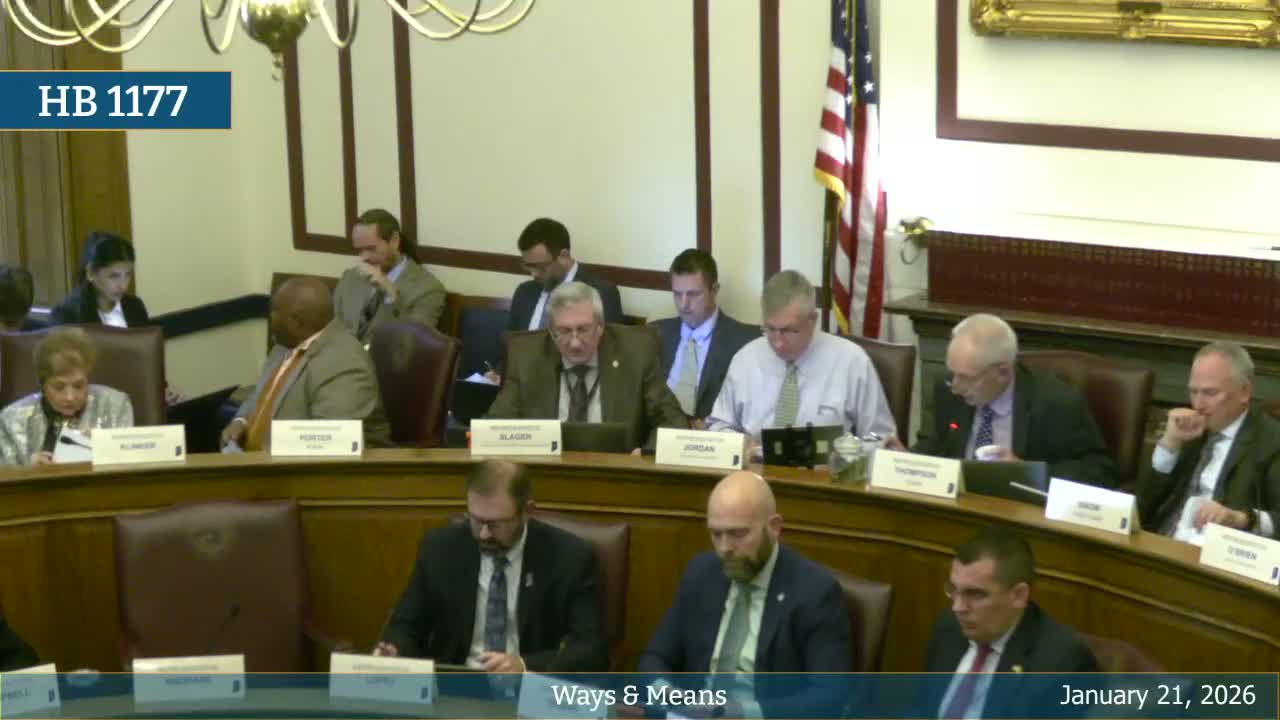
House Bill 11‑77, introduced by Representative Cash, prompted nearly three hours of testimony from business groups, economic-development organizations and childcare providers. The measure would expand Indiana's employer childcare expenditure income-tax credit — raising the employer size threshold (from 100 to 500 employees), allowing operating costs, scholarships and staff training to qualify, and permitting redevelopment commissions to use tax-increment financing to support childcare construction or expansion.
Representative Cash framed the bill as a no-new-cost, non-budget-year step to give employers "skin in the game." "This bill is a great step in expanding the ability of our employers to help solve our childcare concerns," she told the committee. Business and economic-development witnesses — including the Indiana Chamber, local chambers, United Way, and county economic-development leaders — said the change would make the existing credit usable for more employers and would help seed public‑private projects.
Opposing testimony came from multiple childcare providers and the Office of Early Childhood's former nonprofit partners who argued the field is fragile after recent program cuts and closure of hundreds of programs. "Childcare does not have room for financial experiments," Treylan Michael, a childcare provider, told the committee, citing more than 200 program closures in recent months and tens of thousands of children on CCDF wait lists. Providers warned that tax credits that subsidize demand rather than directly stabilizing providers could worsen capacity and add administrative burdens.
Adam Allison, director of the Office of Early Childhood and Out-of‑School Learning, testified the bill is an "option" among many tools and said the current structure of the credit made take-up unlikely; he supported modernizing the credit's parameters. Sam Snyderman of United Way said the changes are budget neutral and could increase employer engagement, but also urged larger direct investments in CCDF to stabilize supply.
Committee members debated multiple amendments (including appropriations and direct funding options). Several amendments failed on roll calls; the committee ultimately held the bill for further consideration rather than advancing it on the record in this hearing. The question of whether to prioritize immediate provider stabilization (direct funding and voucher wait-list relief) or incentives for employer-led solutions was the central policy tension.
The hearing record shows broad interest from economic-development stakeholders and significant worry from providers; the committee left the bill under consideration for possible amendment or fiscal changes before a final vote.