Get Full Government Meeting Transcripts, Videos, & Alerts Forever!
Get email alerts on the Veterans Property Tax Reform topic
No spam. Unsubscribe anytime.
Panel weighs converting veteran property tax deductions into credits and removing caps
Summary
Representative Judy outlined House Bill 11-87 to convert veterans' property tax deductions into direct credits and to consider removing assessed-value caps; veterans groups and the Department of Veterans Affairs testified, offering data and proposing alternatives such as percentage-based relief tied to VA disability ratings.
Representative Judy presented House Bill 11-87 as a package of changes to veterans’ property tax relief, including converting existing deductions (for example a $24,960 assessed-value deduction for wartime veterans and a $14,000 deduction for certain disabled veterans) into fixed-dollar tax credits ($400 and $300 respectively) applied directly to tax bills. She said the policy is intended to be simpler and more transparent for veterans on fixed incomes.
Multiple witnesses testified. Jim Bauerly of the Military Veterans Coalition of Indiana provided a data packet and argued that fixed-dollar credits will erode over time and could produce distributional losses for some veterans in high-tax districts; he recommended a percentage-based method tied to a veteran’s Department of Veterans Affairs disability rating so relief scales with assessed values and inflation. Bauerly cited VA population counts (about 363,907) and described economic-contribution estimates in the millions that informed his testimony.
Judy King, a 100% disabled veteran representing the Big 4 veterans organization, urged removing the $240,000 assessed-value cap so fully disabled veterans do not pay property taxes regardless of county. Jake Adams, director of the Indiana Department of Veterans Affairs, supported converting deductions to credits for clarity and uptake, and also advocated eliminating caps to expand eligibility and reduce administrative burden for county assessors.
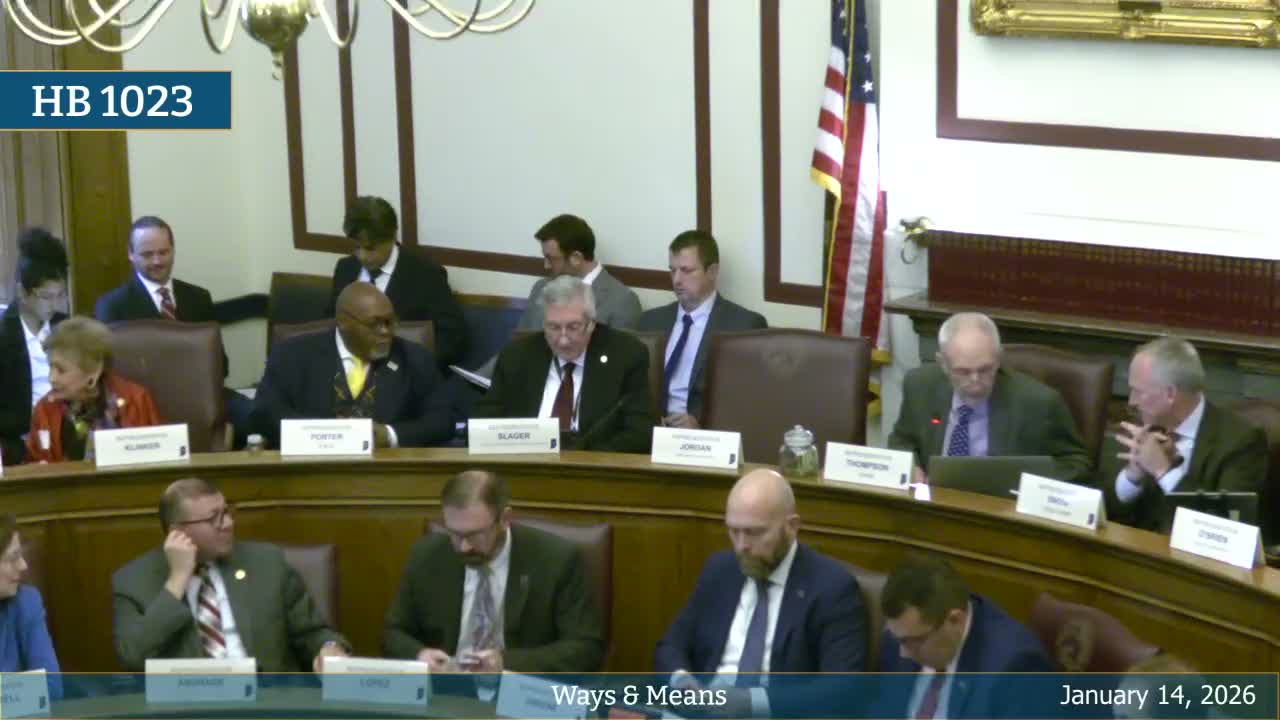
Committee members pressed for details on geographic effects, potential winners and losers under the credit approach, and whether amendments would be drafted. The sponsor said committee amendments were likely; no final committee vote was recorded at the hearing.