Get Full Government Meeting Transcripts, Videos, & Alerts Forever!
Get email alerts on the Public Safety topic
No spam. Unsubscribe anytime.
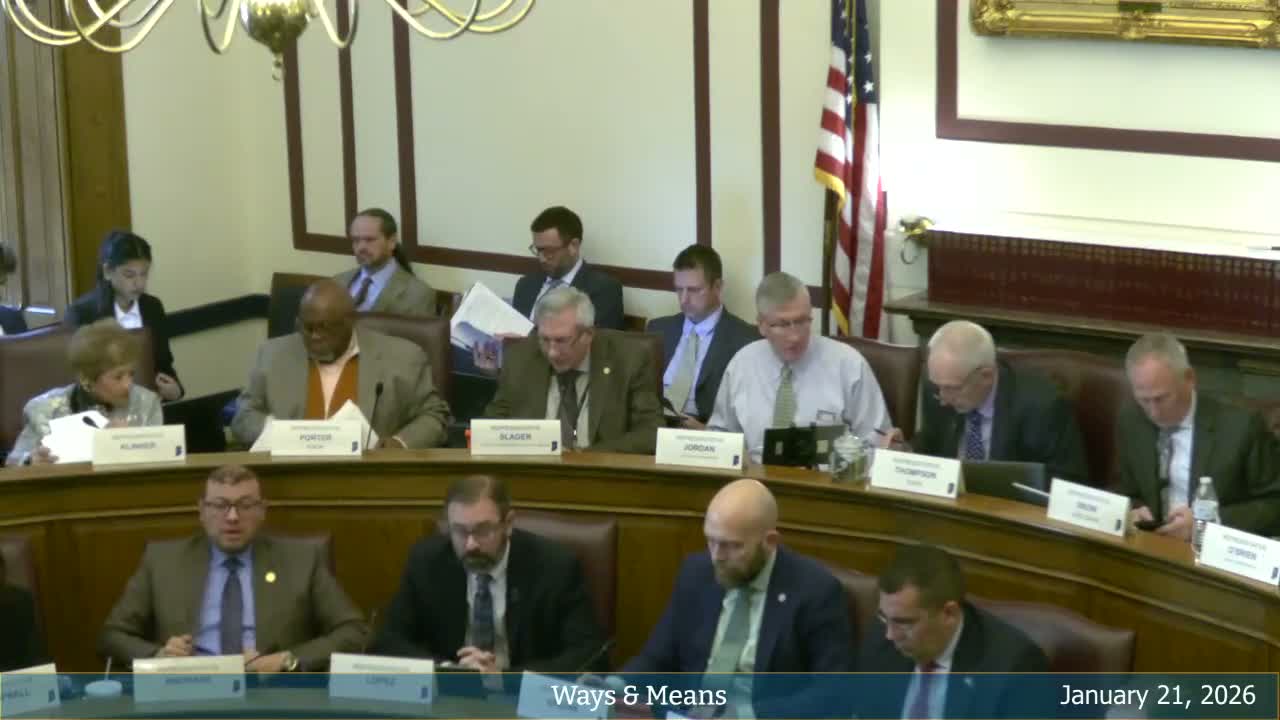
House committee debate highlights consent and command concerns over National Guard police-authority bill
Summary
Representative Bartels' bill to allow National Guard military police bridge training and clarify deployment language advanced out of committee despite concerns from members who asked for local consent provisions; debate centered on whether the bill changes the governor's existing authority to deploy the Guard for law-enforcement tasks.
House Bill 13‑43, sponsored by Representative Bartels, cleared the Ways and Means Committee after intensive debate over the scope of National Guard law‑enforcement authority and the proposed requirement that MPs receive bridge training in Indiana law.
Bartels framed the measure as largely fiscal and administrative: the bill would allow the Guard to provide bridge training so military police returning to Indiana could better understand state-specific criminal-law nuances, and it makes several technical changes related to veterans and the National Guard. "There's a train up of basically Indiana law," Bartels said, adding that MPs undergo a five-month military police course and the proposed training is a state-specific familiarization.
Several members including Representative Delaney and Representative Mayfield objected to leaving deployment authority and the possibility of Guard units performing day‑to‑day policing without local consent unresolved. "My concern is you don't require any consent from local law enforcement or local political leaders for the governor to send national guard forces into their communities," Delaney said, arguing amendments should ensure local consent and coordination before deployment for conventional policing.
Bartels and supporters replied that current statute already gives the governor the authority to order the Guard on state duty for breach-of-the-peace or other emergencies (Representative Judy quoted Indiana Code 10‑16‑7‑7). Bartels said the bill does not expand the governor's authority; it requires additional training when MPs operate in a law‑enforcement capacity.
The committee debated and rejected an amendment that would have required local consent or coordination, by a recorded vote of 9–14. Members acknowledged the fiscal elements were minimal, and the bill passed out of committee 14–8.