Get Full Government Meeting Transcripts, Videos, & Alerts Forever!
Get email alerts on the Urban Agriculture topic
No spam. Unsubscribe anytime.
Senate committee advances study of statewide urban microfarm zones; bill passes as amended
Summary
The Senate agriculture committee voted to advance Senate Bill 164, which directs the Department of Agriculture to study the feasibility of establishing statewide community or urban microfarm zones and report findings by 12/01/2027. Supporters cited food-access, youth programming and existing extension partnerships; the department said it is neutral on the amendment.
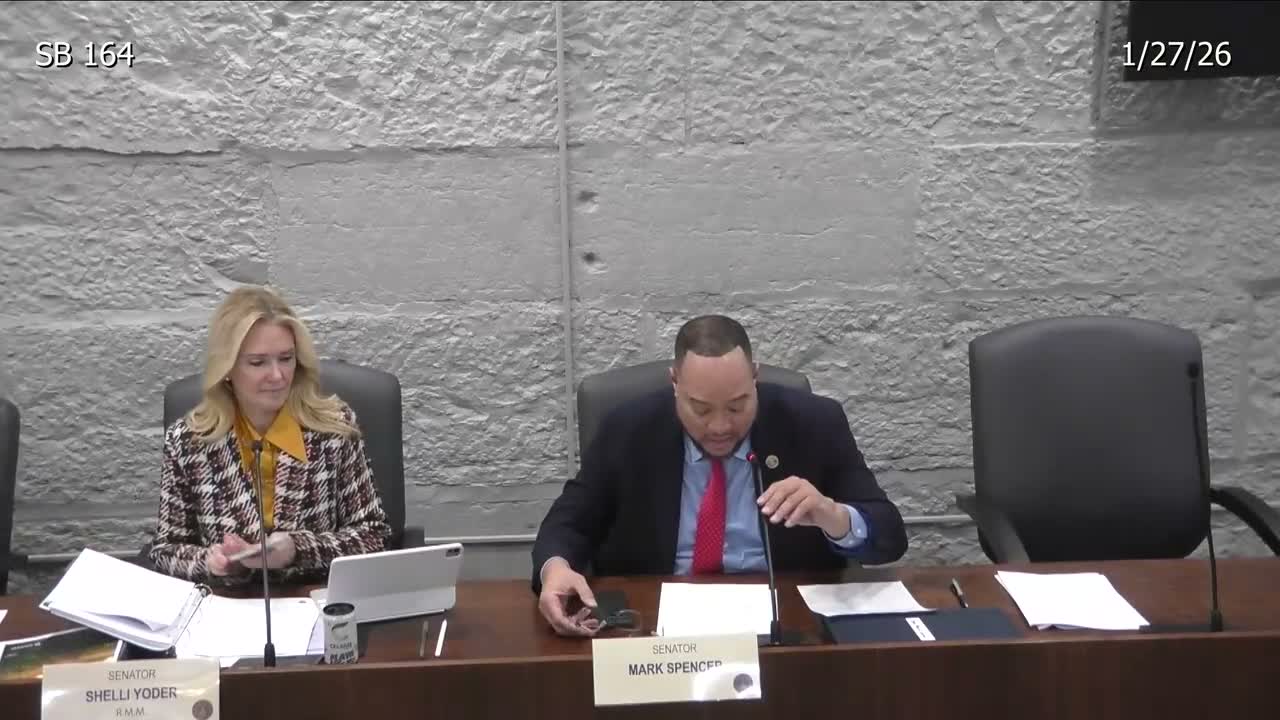
Senator Spencer, sponsor of Senate Bill 164, told the Senate agriculture committee that the bill would require the Department of Agriculture to study the feasibility of establishing community or urban microfarm zones statewide and report its findings to the General Assembly. “It's truly a simple bill that would require our department of agriculture to conduct a study regarding the feasibility and, establishing of a community urban or micro farming zone, statewide,” he said.
Chairwoman Lising presented Department of Agriculture amendment #2, which narrowed some earlier requirements and specified that the study must summarize existing literature, identify zoning templates and best practices for microfarm management, and describe partnership opportunities with Purdue University Cooperative Extension, local health departments, healthcare providers and educational institutions. The amendment also delays the reporting deadline to 12/01/2027.
Supporters told the committee the study would build on existing programs and help expand local access to fresh food. Katrina Hall of the Indiana Farm Bureau said the state already has models and federal support that provide technical assistance, food-safety guidance and business planning for small-scale diversified agriculture. “We rise in support of Senate Bill 164,” Hall said, pointing to Purdue's Ag Innovation Center and federally funded programs that assist emerging operations.
An urban farmer with Faith CDC in Gary, Frida, described a long-running local operation that has produced substantial volumes on a small footprint and runs paid youth programming. “Today, we have produced over 40,000 pounds of fresh produce in less than an acre of land,” she said, noting USDA certification, SNAP participation and on-site hoop houses and grow pods that extend the growing season.
Shannon Anderson of Earth Charter Indiana and Desi Bridal of Indiana Conservation Voters urged the committee to connect the study to school gardens, youth education and sustainability goals; Anderson noted microfarms can reduce food miles and packaging.
Quentin, a Department of Agriculture representative, told the committee the department is neutral on the amendment and that it can facilitate the bill's requirements. He also said the department is already completing a related study tied to an executive order on local-food access, with a release planned for July 1.
After discussion about extension services, county-level variation in funding and options to scale microfarm technologies, the committee moved the amended bill. The clerk called the roll and the committee reported Senate Bill 164 passed as amended with eight yeas and one excused member.
The committee’s action advances the bill out of committee; sponsors and witnesses said the forthcoming study should clarify templates, partnerships and practical steps for communities and schools interested in microfarm or urban agriculture programs.