Get Full Government Meeting Transcripts, Videos, & Alerts Forever!
Get email alerts on the Infrastructure Funding topic
No spam. Unsubscribe anytime.
Committee eases Indianapolis match schedule in SB 179 to make road‑match plan attainable
Summary
A chairman's amendment to Senate Bill 179 modifies Marion County's required matches for an Indianapolis road program (moving a steep 50M annual increase to a staged 70M/80M/90M/100M progression), a change sponsors said preserves city participation; committee approved the change and passed the bill unanimously.
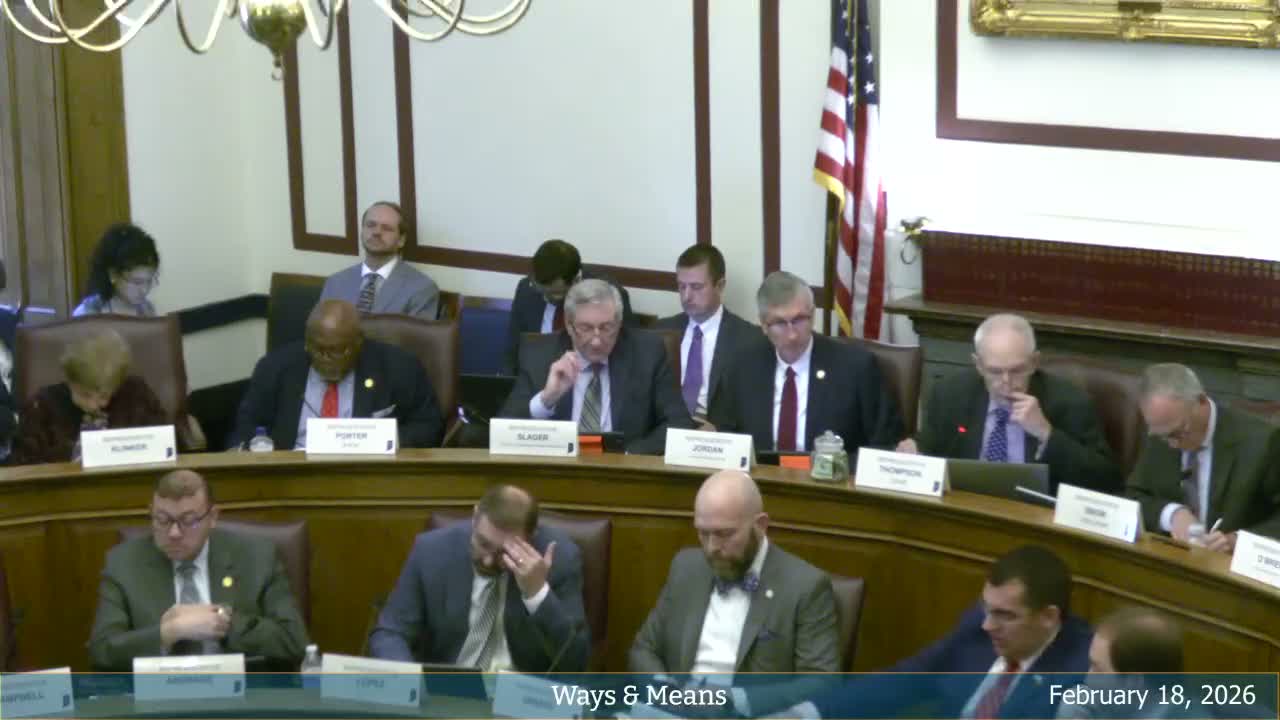
The Ways and Means Committee adopted a chairman's modification to Senate Bill 179 that slows the originally proposed annual escalation in Indianapolis' contribution to a road‑funding match, with sponsors saying the phased approach keeps the city engaged and the program attainable.
The chair explained the original draft required Marion County to add successive $50 million annual contributions that would quickly become financially unattainable; the chairman's modification staggers the increases so the first year after the initial $50 million becomes $70 million, then $80 million, $90 million and ultimately $100 million in later years. "It's kind of a compromise ... the city has to have additional dollars, but I want to keep the city on board," the chair said.
Members discussed whether the added amounts had to be 'new money' or could be existing revenue and focused on enforcement language requiring that if the city fails to match in a subsequent year the program ends. Sponsors emphasized the funding is dedicated to secondary streets and subject to an asset‑management requirement. The chairman's amendment was taken by consent and the bill later passed the committee 24‑0.
Next steps: The modified match schedule will travel with SB 179; implementation details (definitions of 'new money' and permanence of dedicated road funding if the match is discontinued) may be clarified on the floor or in later drafting.
Provenance: based on the chair's description of the chairman's amendment and the final roll call where the chair announced unanimous passage (transcript segments noted in provenance).