Get Full Government Meeting Transcripts, Videos, & Alerts Forever!
Get email alerts on the Health Care Medicaid topic
No spam. Unsubscribe anytime.
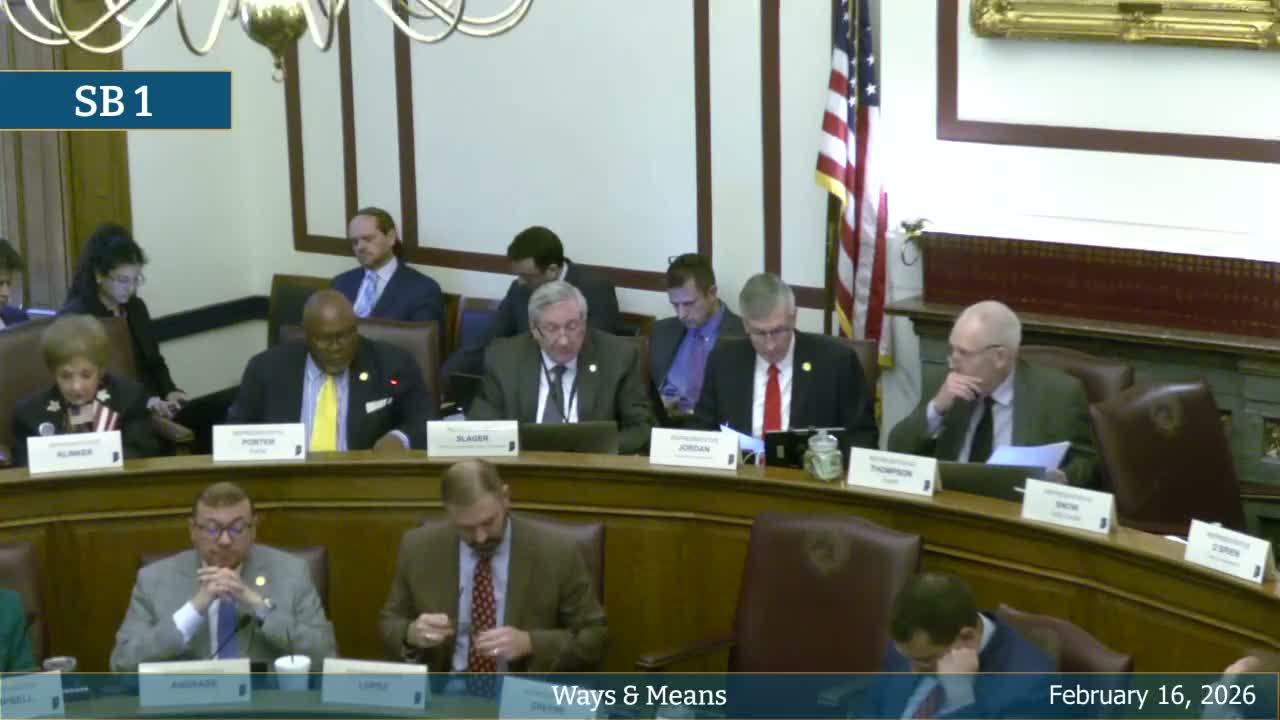
Committee debates Medicaid work‑requirement changes, gene‑therapy encouragement and voting thresholds; Senate Bill 1 passes 13–9
Summary
Senate Bill 1 drew extended debate over Medicaid work requirements, exemptions for inpatient and short-term hardship care, reporting requirements and a sponsor proposal to encourage gene- and cell-therapy access for sickle-cell disease. After multiple amendment votes the committee reported the bill out by a 13–9 vote.
The Ways and Means Committee devoted much of its hearing to Senate Bill 1, which would change Medicaid implementation and contains work‑requirement provisions and various programmatic details. Representative Porter led several amendment efforts during the discussion, ranging from encouraging FSSA to apply for federal models to expand gene and cell therapy access for sickle‑cell disease, to requesting reporting and procedural safeguards for administrative rule changes.
On gene and cell therapy (Amendment 5), Porter argued states should prepare to adopt treatments and models that can improve outcomes and reduce long‑term costs; he said, “sometimes it can be somewhere in the range of $3,000,000 per person” as an example of treatment cost pressures and argued prompt engagement with CMS might save money over time. Several members raised a practical problem: an application deadline (March 2025) had passed, and administration staff said missing the deadline limited the amendment’s immediate effect. The committee debated whether adopting the language still made sense as preparation for future opportunities; on roll call the amendment failed (announced 'It fails 10 to 11').
Members also considered medical‑need exemptions to the bill’s work requirements. Representative Prior offered an amendment to exempt people receiving inpatient hospital services, nursing‑facility care or similar high‑acuity treatment from work reporting while they are in care; members pressed for clearer outpatient/exhaustion language and how exemptions would terminate on discharge. The sponsor agreed to work on technical clarifications and withdrew the amendment for re‑drafting.
Representative Porter repeatedly pushed for increased reporting and legislative oversight — including requests that FSSA provide best estimates of how many citizens might forgo SNAP or Medicaid because of new reporting rules. Members questioned whether administration could produce the requested retrospective estimates and whether the committee could legally require such estimates; the proposal did not carry.
Another sponsor amendment sought to prohibit FSSA from changing the definition of “medically fragile” without first briefing the state budget committee; proponents said clarity was necessary before altering eligibility, opponents said it would limit the administration’s ability to manage costs. That amendment did not pass on roll call.
After considering and voting on multiple amendments — and following members’ criticisms about missing or late information from administration staff — the committee voted to report Senate Bill 1 out of committee. The chair announced the bill “passes out 13 to 9.” Several members explained their votes on the record, with supporters framing the measure as necessary to move fiscal policy forward and opponents criticizing the timing and lack of answers from the administration.
The transcript shows the committee’s debate balanced policy concerns (access to new medical technologies and hardship exemptions) with procedural questions about deadlines, administrative readiness and legislative oversight. The record documents the amendments offered, the key lines of questioning, and the final recorded vote to move the bill forward.
Votes at a glance: Senate Bill 1 — passed out of committee, 13–9 (SEG 1588). Several amendment votes were recorded during consideration; Amendment 5 (gene therapy encouragement) failed 10–11 (SEG 759). Other amendment roll calls and outcomes are recorded in the transcript.