Get Full Government Meeting Transcripts, Videos, & Alerts Forever!
Get email alerts on the Economic Development topic
No spam. Unsubscribe anytime.
House panel rewrites regional tax‑credit program and rejects data‑farm sales‑tax ban after heated floor debate
Summary
The House Ways and Means Committee adopted Representative Lopez’s rewrite of a regional economic development tax‑credit program (amendment 10) and, after debate, defeated an amendment to bar sales‑tax incentives for data‑center projects. The amended bill passed the committee by recorded vote.
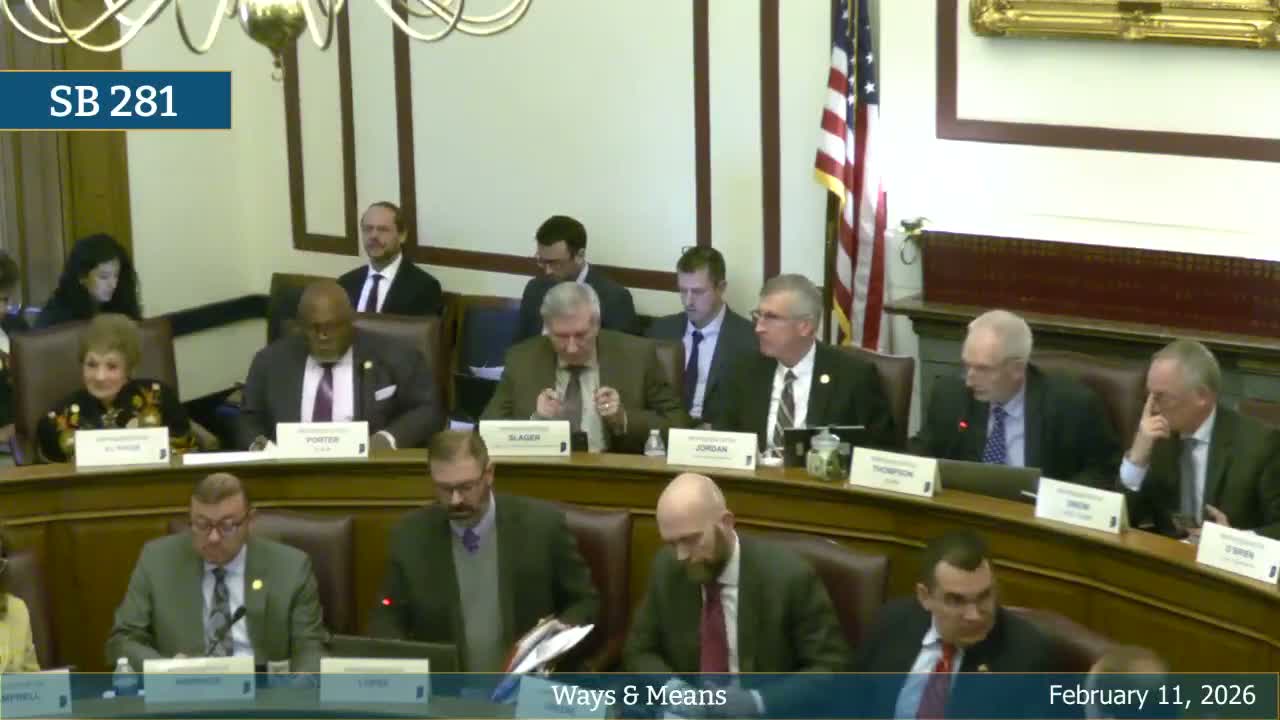
The Indiana House Ways and Means Committee on Wednesday adopted a significant rewrite of a regional economic‑development tax‑credit program and then engaged in a heated floor‑level debate over whether to ban sales‑tax incentives for data‑center ("data farm") projects.
Representative Lopez (S20) presented amendment 10, which reallocated existing tax‑credit authority inside a $300 million cap to create separate pools for small‑town projects and regional strategic investments, clarified language for venture capital credits, and provided a funding and transparency mechanism for an unmanned‑aircraft‑systems test‑site account. "We wanted to create tiers of economic development activity where we were making investments... and to keep dollars local," Lopez told the committee.
The committee adopted Lopez’s amendment by consent and then considered a separate amendment from Representative Delaney (S8) to end state sales‑tax exemptions for data‑center projects. Delaney argued that the long abatements and large sales‑tax exemptions — one announced project drew headlines for a proposed $350 million incentive package — were excessive and that data centers produce relatively few long‑term jobs compared with the forgone tax revenue. "These amounts are simply too great," Delaney said.
Other members replied that local objections and zoning processes often block unwanted projects and that incentives are sometimes necessary to secure projects for communities that actively want them. Representative Roehrig and others said that where a community opposes a project, the local government — not the state — can help stop it. Representative Pryor and Representative Porter raised concerns about water and utility impacts in some districts.
Representative Delaney’s amendment failed on a roll call. After further discussion, the committee moved the amended economic‑development bill and recorded a final passage out of committee 20–0.
What it means: The changes Lopez proposed aim to direct tax‑credit support toward smaller and regional projects and to clarify eligibility for venture and innovation credits. The failure of the data‑center ban leaves the current state framework for sales‑tax incentives intact, though the debate revealed growing legislative concern about scale, duration and local impacts of large data‑center abatements.
Next steps: The amended bill will proceed from the Ways and Means Committee for further floor consideration; members asked for additional fiscal analysis and pledged follow‑up discussion on broader tax‑incentive policy.