Get Full Government Meeting Transcripts, Videos, & Alerts Forever!
Get email alerts on the Medicaid Snap Reform topic
No spam. Unsubscribe anytime.
Sponsor says SB1 will tighten Medicaid and SNAP eligibility; advocates warn of added paperwork and coverage churn
Summary
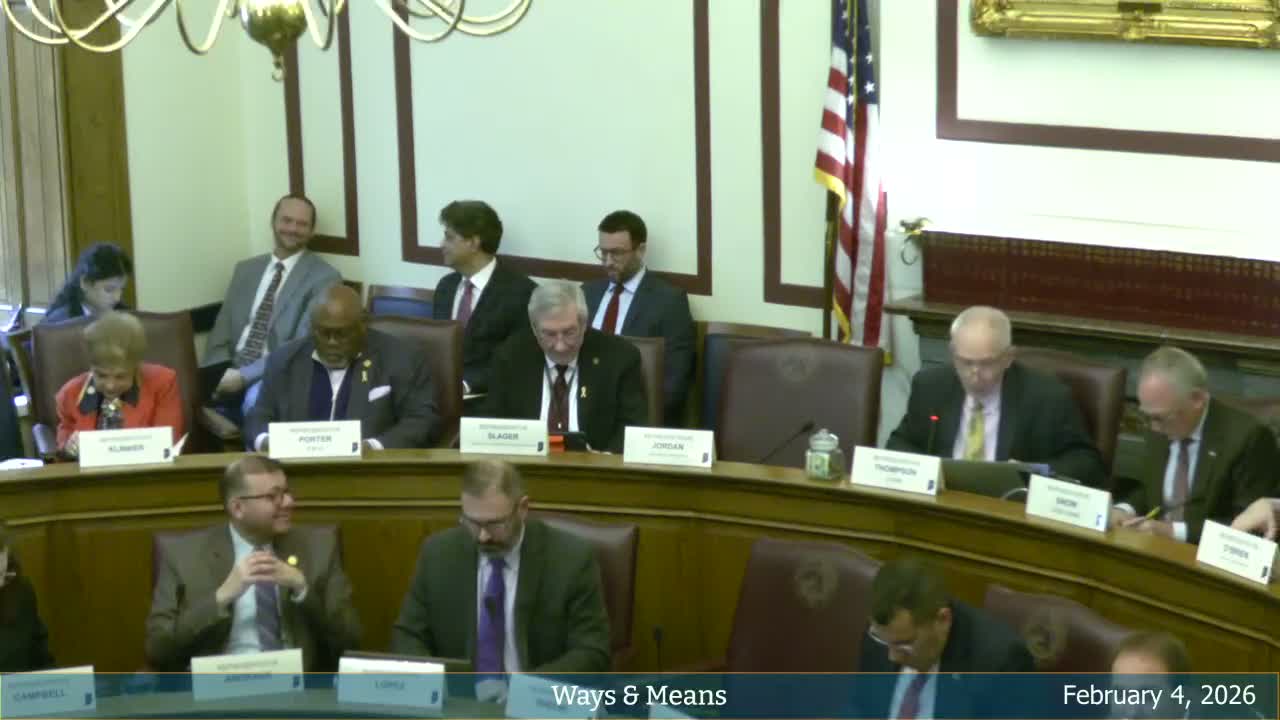
Sen. Garten told the House Ways and Means Committee SB1 would end broad-based categorical eligibility, verify immigration and citizenship for applicants and align state rules with HR1 work requirements. FSSA described operational limits and asked for follow-up; providers and advocacy groups warned the changes could create administrative churn and hurt eligible Hoosiers.
Senator Garten urged the House Ways and Means Committee to pass Senate Bill 1 as a package of reforms intended to "restore trust in Medicaid and SNAP programs" by restoring asset tests, enforcing citizenship verification and aligning state law with federal HR1 work requirements. "If you have $100,000 in your bank account, you should not depend on the taxpayer for your groceries," the senator said in his opening remarks, arguing the bill closes what he called a verification loophole.
The sponsor described three main components: ending expanded broad‑based categorical eligibility (BBCE) so more applicants face asset and income verification; requiring state agencies to verify immigration or citizenship status and to refer applicants identified as present illegally to the Department of Homeland Security; and adopting federal HR1 changes including work requirements for able‑bodied adults and creation of a rural health transformation fund to receive federal grants.
Secretary Mitch Roeb of the Family and Social Services Administration (FSSA) told the committee FSSA supports the bill's aims but flagged operational concerns. He described the scale of the Healthy Indiana Plan (HIP) population (about 565,000 members) and said the agency will need time and systems changes to implement new verification processes and required redeterminations. On EBT security, Roeb noted the cards use older technology and said federal changes to card systems are expected but gradual.
Committee members pressed sponsors and agency officials on key operational questions: whether education counts toward the 80‑hour work expectation (sponsors said existing exemptions are not eliminated and partial‑time schooling can count under federal rules); how the medically frail exemption will be handled (witnesses said HR1 narrows state flexibility and that some prior state tailoring is no longer allowed without CMS approval); and whether provider fraud — often investigated by the Attorney General — is addressed by the bill (witnesses said provider fraud investigations and civil recoveries are handled outside the bill, which focuses on eligibility verification).
Supporters including policy groups argued SB1 is needed to protect the state from new federal penalties tied to payment‑error rates. Witnesses cited recent audits and federal metrics showing Indiana’s Medicaid eligibility error history and higher SNAP payment‑error rates; testimony warned that high error rates would expose the state to large fiscal penalties under the new federal framework.
Opponents included community‑based organizations, medical groups and individual Hoosiers who said the bill, as drafted, would increase paperwork burdens and could have a chilling effect on eligible people seeking benefits. Testimony from service providers and clinical groups highlighted concerns that increasing the frequency and documentation for eligibility checks and narrowing medically frail exemptions could cause coverage gaps for children, seniors and people with serious illnesses. One provider group asked the committee to preserve state options for medically frail determinations and to permit some optional hardship exemptions allowed under HR1.
Members of the committee asked agency staff to provide follow‑up memos on implementation details, household reporting rules and fiscal estimates before any floor votes. The hearing closed with multiple requests that FSSA and fiscal staff send supplemental analyses for members’ review.
The committee did not take a vote; sponsors and staff agreed to supply more technical guidance, memos and clarifying language ahead of the next legislative step.