Get Full Government Meeting Transcripts, Videos, & Alerts Forever!
Get email alerts on the Child Protection Grooming topic
No spam. Unsubscribe anytime.
Committee unanimously advances bill criminalizing grooming patterns, expands location and employment limits for certain offenders
Summary
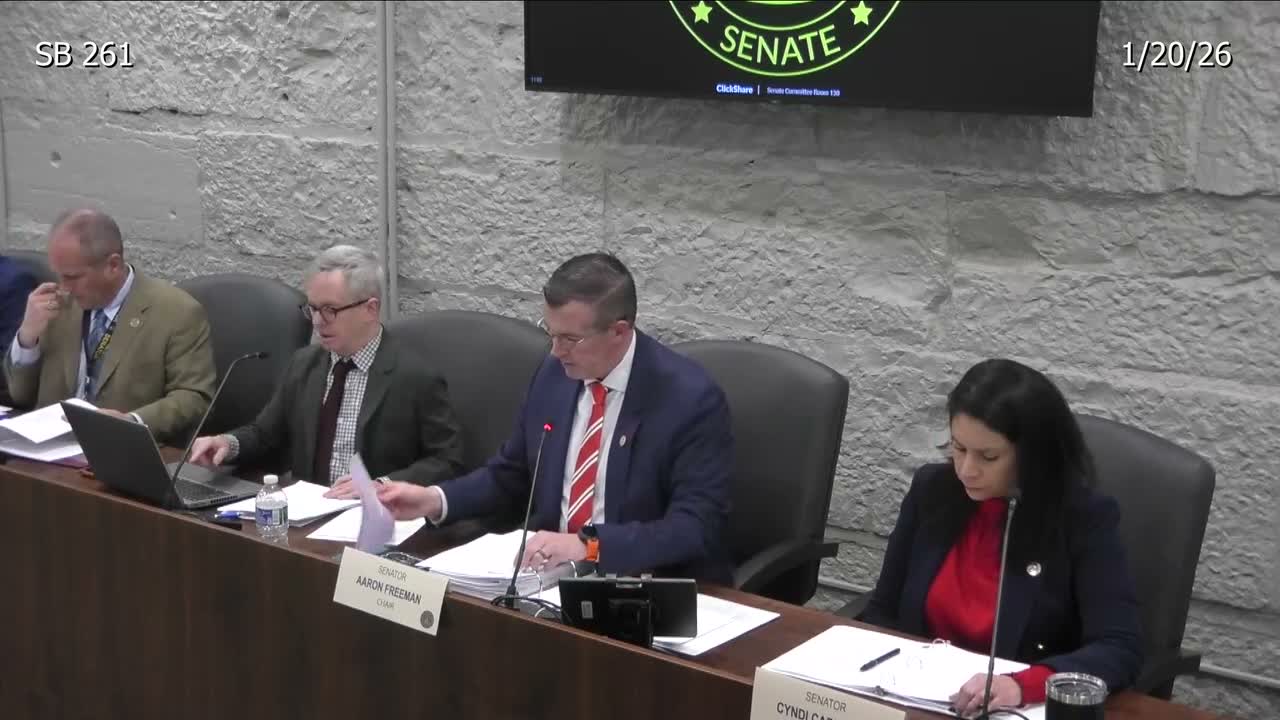
Senate Bill 119, which would criminalize repeated or continuous patterns of grooming a child under 14 and add location and employment restrictions for qualifying offenders, passed the committee 8-0 after extensive testimony from prosecutors, advocates, survivors and defenders.
A Senate committee on Thursday advanced a measure that would create a standalone offense for grooming by criminalizing repeated or continuous contact with a child under 14 when the actor is at least 18, and would add location and employment restrictions for certain qualifying offenders.
Senator Durnell, sponsor of Senate Bill 119, said the bill recognizes grooming as a process that precedes physical abuse and enables earlier intervention. He described amendments adopted by consent that tighten mens rea language and clarify covered conduct.
Courtney Curtis of the Indiana Prosecuting Attorney's Council told the committee that studies show grooming behaviors are present in the vast majority of child sexual-abuse cases and that criminalizing grooming can increase disclosures and permit protective orders before further harm. "If we can stop at that stage, then we can have a protective order between the offender and an individual child," Curtis said.
Multiple victim advocates and survivors recounted grooming as a gradual, manipulative process. Jess Kern of the Raindrops Rising Foundation said her organization served hundreds of survivors in 2025 and urged the committee to close legal gaps that prevent early intervention. "Grooming is not one message or one moment — it is a process," Kern said.
The Indiana Public Defender Council said it was neutral but raised drafting concerns about definitions such as whether a location is "primarily" directed to minors, and suggested refinements to reduce litigation risk. Michael Harris of Indiana Voices opposed the measure as drafted, arguing it would impose broad, time‑blind and retroactive restrictions that could criminalize decades-old conduct and harm families without individualized risk assessment.
After public testimony and sponsor closing remarks, the committee voted 8-0 to pass SB 119 as amended. Sponsors said they will work with stakeholders on second-reading language to address definitional and scope concerns raised by the public defender and others.
Action: SB 119 advanced by committee (vote 8-0).