Get Full Government Meeting Transcripts, Videos, & Alerts Forever!
Get email alerts on the Coroner Training topic
No spam. Unsubscribe anytime.
Committee considers technical updates to coroner training and first-draw blood rules
Summary
House Bill 10-31 would set a 40-hour minimum initial coroner training (plus an 8-hour annual requirement), bar coroners who lack required training from conducting investigations or signing death certificates, and clarify that first-draw blood protocols apply only to admitted patients. The Indiana State Coroners Association supports the changes.
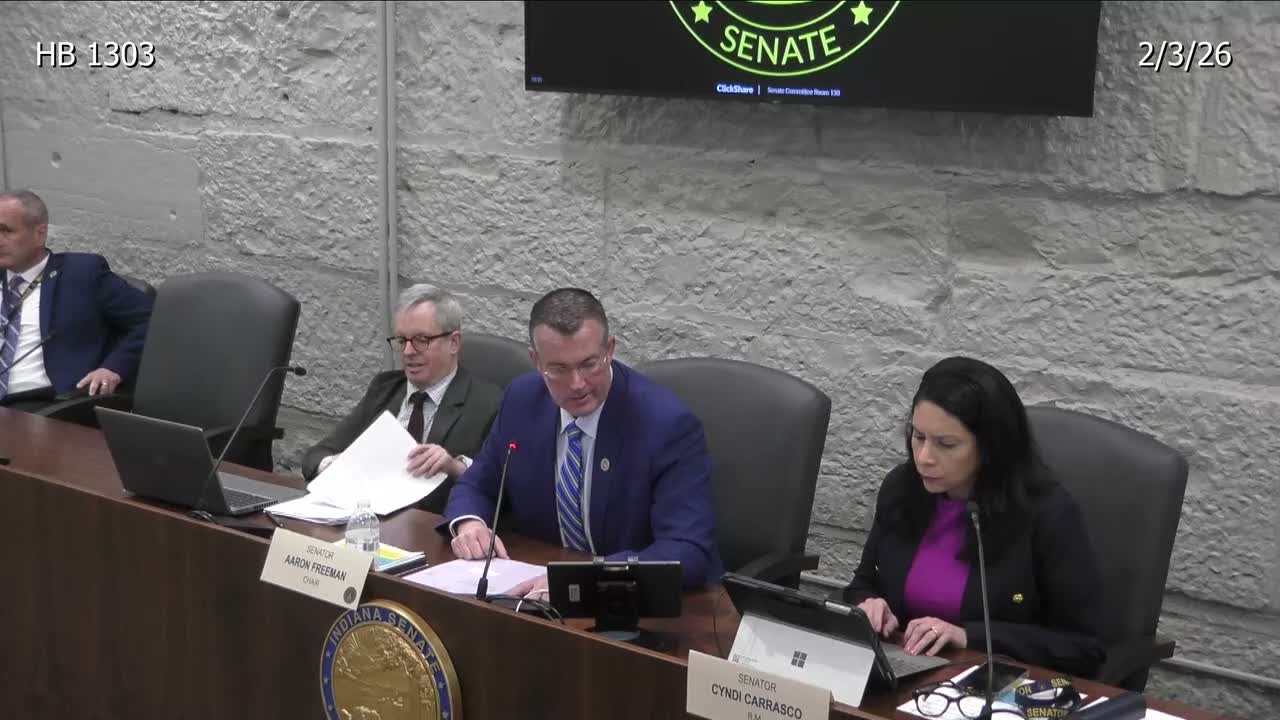
The Senate Corrections and Criminal Law Committee heard House Bill 10-31, which sets minimum training standards for coroners and deputy coroners, clarifies enforcement, and adjusts hospital requirements for retaining first-draw blood samples in coroner cases.
Representative Engleman described the bill's main elements: a 40-hour minimum initial training (in-person instruction and a supervised externship), eight hours of annual continuing education, certification requirements before a coroner may conduct a death investigation or sign a death certificate, and a class B misdemeanor for violations. The bill also clarifies that hospitals must retain first-draw blood only when a patient is admitted or when retaining the sample is clinically appropriate.
Abby Rabin, representing the Indiana State Coroners Association, spoke in support and said Indiana's coroner training program is widely regarded and that the bill strengthens an already robust system.
The committee indicated no immediate objections and left the bill for any technical amendments to be coordinated with stakeholders.