Get Full Government Meeting Transcripts, Videos, & Alerts Forever!
Get email alerts on the Public Defender Staffing topic
No spam. Unsubscribe anytime.
Bill to relax public-defender residency requirements draws support from Marion County defenders
Summary
House Bill 10-25 would remove most county- or city-imposed residency restrictions on public defenders, allowing contiguous-county residency; Marion County officials and the Commission on Court Appointed Attorneys said the rule hinders recruitment and retention and that Marion County has received significant state funding for its public-defender office.
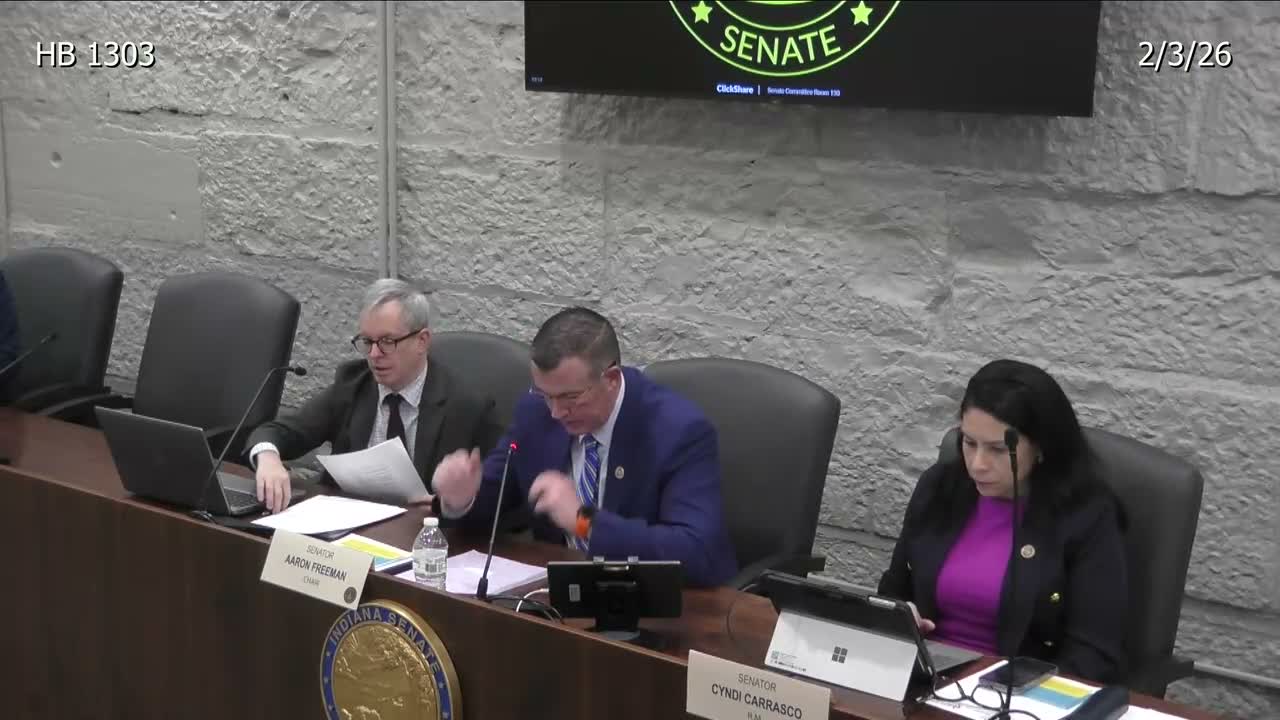
Lawmakers heard House Bill 10-25, which would remove local residency requirements for public defenders while allowing an exception for contiguous counties. Supporters said the change would help recruitment and retention, particularly in Marion County.
Andrew Cohen of the Commission on Court Appointed Attorneys said counties that follow the Commission's standards receive state funding and that Marion County has received more than $150,000,000 to operate its public-defender office since joining the system in 1995. "That gives us, the state, a direct interest in how that office runs," Cohen said.
Ray Casanova, chief public defender for Marion County, described persistent vacancies and operational strain: he said some positions remained open for close to a year, and related that when an attorney left because of residency restrictions, they left more than 100 open cases that other attorneys had to absorb. "Residency requirements are a real and ongoing barrier to staffing," Casanova said, arguing state action is needed because local attempts to secure exceptions were denied.
Committee members asked whether the bill should explicitly exclude courts and prosecutors; sponsors said the judicial branch and prosecutors have different considerations and that prosecutors had asked to be removed from the bill in the House. The sponsor said she is open to refining the contiguous-county language and to working on an amendment.
The committee did not take a final vote and left the bill for additional drafting and amendment.