Get Full Government Meeting Transcripts, Videos, & Alerts Forever!
Get email alerts on the Cybercrime topic
No spam. Unsubscribe anytime.
Committee hears doxing bill that would criminalize posting personal data with intent to threaten
Summary
Senate Bill 140 would make doxing — knowingly posting personal identifying information of a targeted person or someone close to them with intent to threaten or intimidate — a criminal offense. Supporters including ADL and Jewish community leaders called it a needed tool; some witnesses and members urged narrowing of broad language.
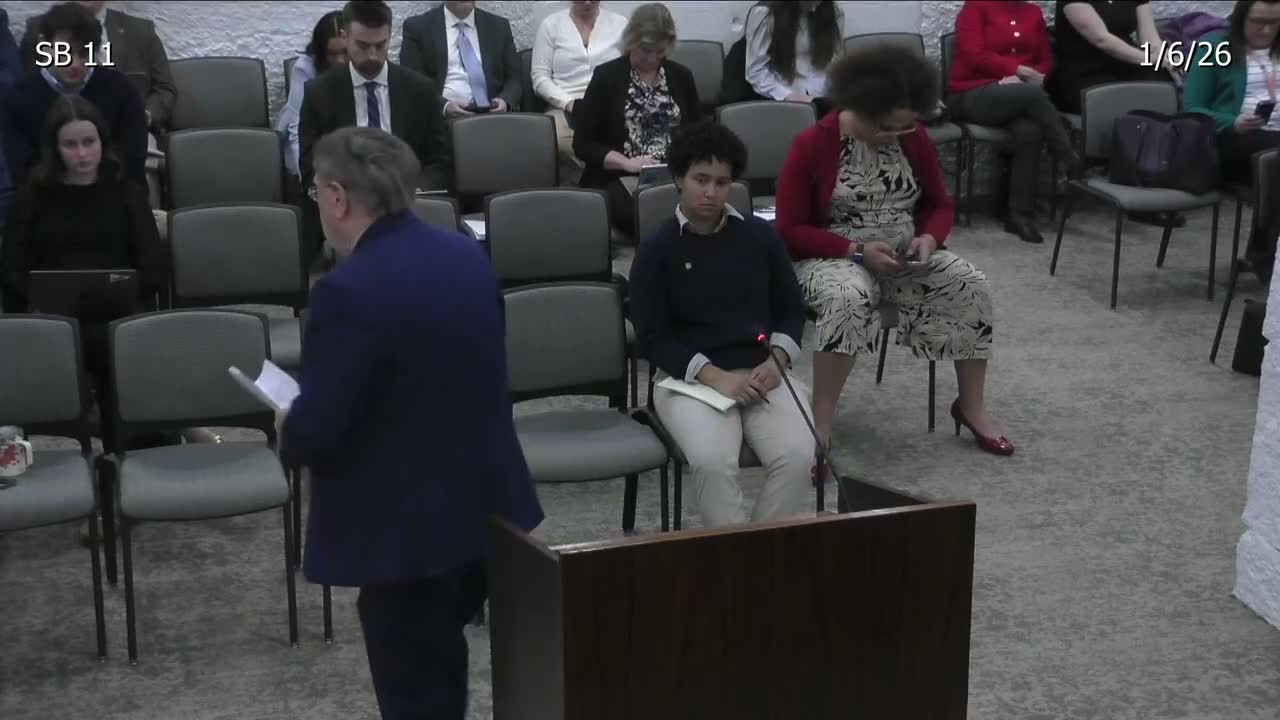
Senator Becker introduced Senate Bill 140 to the Corrections and Criminal Law Committee, describing the measure as a targeted criminal remedy for "doxing" — the posting of personal identifying information with the intent to intimidate or threaten someone or a closely connected person.
"It provides that a person who knowingly or intentionally post personal information of a targeted person or a person closely connected to the targeted person... commits doxing," the sponsor said, explaining the bill includes intent and free-speech carve-outs.
Supporters told the committee the bill is narrowly tailored to target harassment and threats. Miriam Dant of the Anti-Defamation League said digital spaces are increasingly used for harassment and that SB140 "sends a clear message" that intentional dissemination of another person's private information to subject them or their family to harm has a remedy. Madison West of the Indianapolis Jewish Community Relations Council cited recent spikes in antisemitic online harassment and urged support.
Zach Stock of the Indiana Public Defender Council said his group was neutral; he applauded sponsors' willingness to refine overly broad language and emphasized the need to protect constitutional speech while addressing criminal intent.
Members focused questions on how the measure defines "person closely connected" and whether including a 'coworker' category might be too broad. Senator Becker said she would work with colleagues on narrowing the language to apply to people who "work closely with" a target, and emphasized that criminal liability requires intent to intimidate or threaten, not mere publication of information.
The committee did not vote; the sponsor said she will accept amendments before the next meeting.