Get Full Government Meeting Transcripts, Videos, & Alerts Forever!
Get email alerts on the Capital Punishment topic
No spam. Unsubscribe anytime.
Senate committee hears testimony on bill to add firing squad option and confidentiality for execution personnel
Summary
Lawmakers and witnesses sparred over Senate Bill 11, which would authorize a non-chemical execution method (including firing squad) if lethal-injection drugs are unavailable and would keep identities of execution personnel confidential. Opponents cited secrecy, rare need and risk of botched executions.
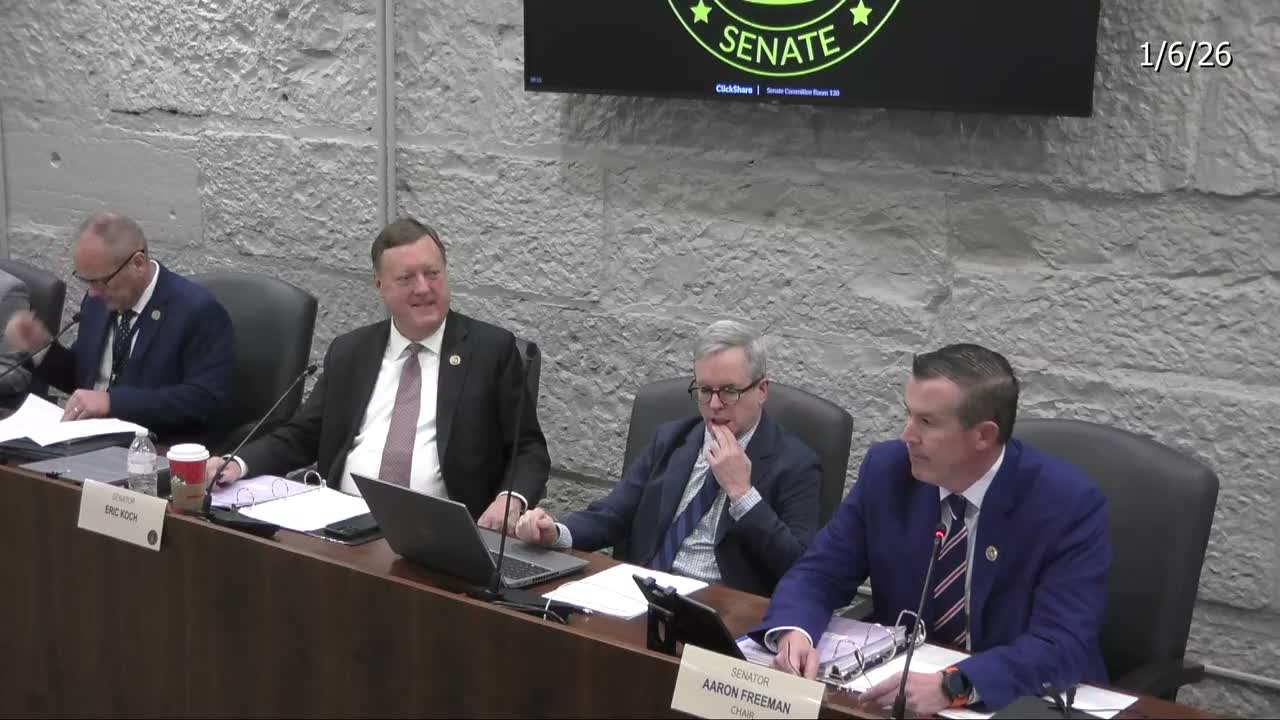
Chairman Aaron Freeman convened the Corrections and Criminal Law Committee as Senator Kevin Young introduced Senate Bill 11, which would permit a non-chemical alternative — including a firing squad — when lethal-injection chemicals are unavailable and allow a condemned person to request a firing squad at least 30 days before execution.
"The convicted person at least 30 days before the scheduled execution date requests execution by firing squad," Young told the committee while defending the measure as a contingency for when chemical drugs are expired, unavailable or refused by manufacturers.
Supporters framing the bill as preserving options emphasized choice. "It's their choice," Young said, arguing the statutory priority would remain for chemical methods where they are available and that conscience protections could exempt staff from participating.
Opponents — a cross-section that included defense counsel, civil-rights groups and death-penalty experts — urged lawmakers to reject or revise the bill. Zach Stock of the Indiana Public Defender Council said the bill "is a solution in search of a problem," noting Indiana has few active capital cases and arguing changes would not materially reduce death-penalty costs. "Trading expensive drugs for inexpensive bullets is not going to meaningfully reduce the cost," Stock said.
Samantha Bresnahan of the ACLU of Indiana warned that the bill's confidentiality provisions are overly broad. "Section 2 of the bill makes confidential the identities of firing squad members, anyone eligible to serve, and any information reasonably calculated to lead to those identities," she told the committee. Bresnahan and others said sweeping secrecy would shield training, qualifications and safeguards and make judicial or public review difficult if an execution raised Eighth Amendment concerns.
Robert Dunham, director of the Death Penalty Policy Project, testified that secrecy and impure drugs have produced accountability problems elsewhere and that no method of execution is "botch-proof." He cited a recent firing-squad case in South Carolina in which sharpshooters failed to strike the intended target and said secrecy blocked independent scrutiny.
Members pressed on questions of need and risk. Senator Brown asked whether federal authorities could instead house or transfer federal death-row prisoners to other states and whether high reported costs for lethal-injection drugs meant states would default to non-chemical methods; Young replied the bill preserves chemical methods where available and that the measure was a pre-planned contingency rather than an attempt to force a default method.
Several witnesses urged amendments before any vote: adding explicit conscience-recusal language for staff, narrowing confidentiality language to protect only narrowly defined personal-safety risks, and clarifying operational protocols to reduce the risk of prolonged suffering.
The committee took no vote and will accept amendments next week; Young said he would be open to changes on conscience protections and procedural safeguards.