Get Full Government Meeting Transcripts, Videos, & Alerts Forever!
Get email alerts on the Animal Protection topic
No spam. Unsubscribe anytime.
Committee approves sweeping animal-protection bill raising penalties and expanding definitions
Summary
House Bill 11 65 would strengthen animal-protection laws across several areas: remove cost-sharing for vehicle rescues, expand abuse/neglect definitions, elevate certain theft and cruelty offenses, add an aggravator for death or permanent impairment, provide enhanced penalties for killing law-enforcement animals, and prohibit certain inhumane euthanasia methods. Prosecutors and animal-care officials urged passage; the committee advanced the bill by unanimous vote.
Representative McNamara introduced House Bill 11 65 as a package of statutory updates to make enforcement and penalties consistent across counties and to give prosecutors more tools against severe animal cruelty.
The bill removes the rule that a private citizen must pay half the cost of forcing entry to rescue an animal from a vehicle while retaining immunity conditions (imminent danger, contacting responders, remaining on scene). It also clarifies companion and domestic animal definitions, adds a sentencing aggravator for offenses that cause death or permanent impairment of an animal, elevates theft of a domestic animal to a higher felony level in repeat or severe cases, expands abuse and neglect definitions (targeting hoarding and domestic-violence–linked cruelty), and strengthens protections and penalties for law-enforcement animals (including elevating serious injury to a level-6 and death to a level-5 where malicious and on duty). The bill also prohibits certain interim euthanasia methods, citing prior inhumane practices by a shelter.
Vanderburgh County Prosecutor Diana Merce described a string of local cases — including prolific hoarding incidents and a case that initially charged only misdemeanors despite severe animal suffering — and urged the committee to pass the bill to provide prosecutors with sentencing tools proportionate to the harm. Merce supplied specific examples (including dozens of animals seized in hoarding cases and instances of animals found dead or decomposed) to illustrate why current misdemeanor-level penalties are insufficient in some cases.
Amy Jo Sites, director of Fort Wayne Animal Care and Control and president of the Indiana Coalition of Animal Welfare Professionals, testified in support and provided enforcement statistics (including thousands of calls for service and hundreds of cruelty investigations), saying state statute gives the stronger penalties needed beyond city ordinances.
Committee members questioned whether the bill struck the right balance on defenses (for example, where a person kills a law-enforcement canine while defending themselves) and on definitions such as 'quality of food' in neglect provisions. Prosecutors and others said prosecutorial discretion, jury instructions and existing defenses would limit unfair prosecutions; senators asked for guardrails and offered to work on second-reading language if necessary.
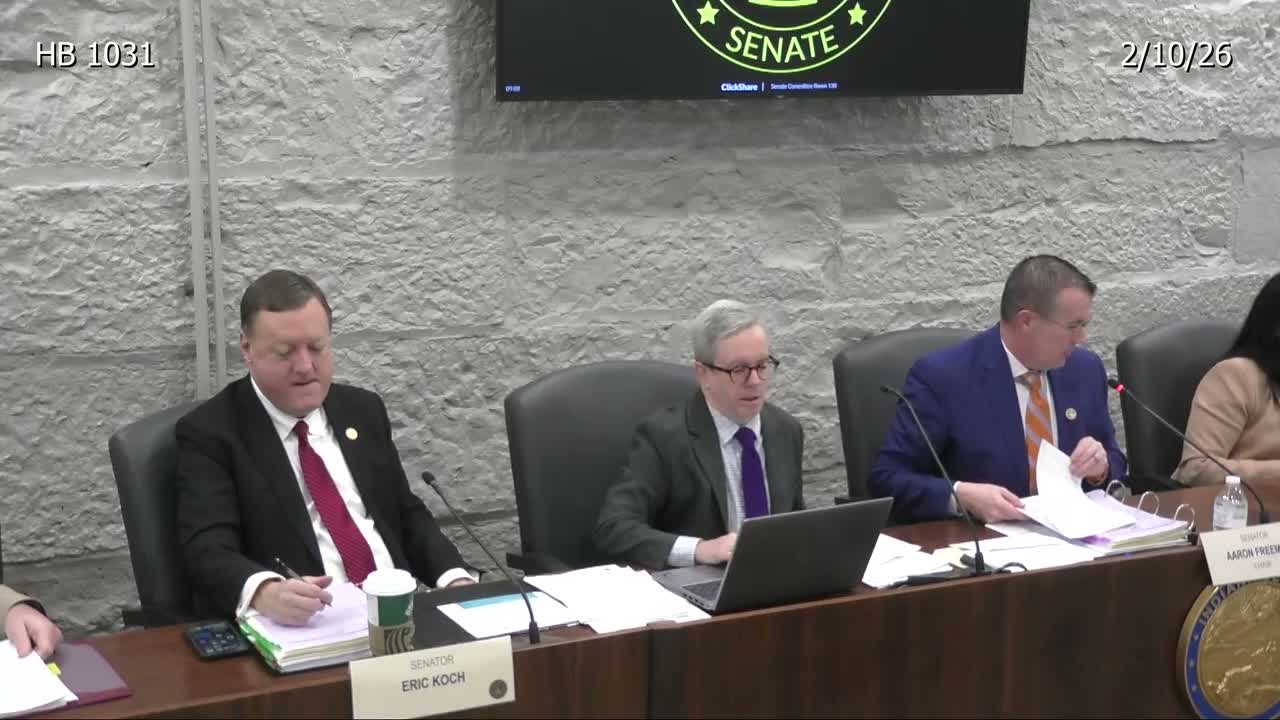
The committee moved the bill as amended and recorded a roll-call vote; the bill passed out of committee by unanimous vote (9–0) and will proceed to the next stage in the legislative process.