Get Full Government Meeting Transcripts, Videos, & Alerts Forever!
Get email alerts on the School Governance topic
No spam. Unsubscribe anytime.
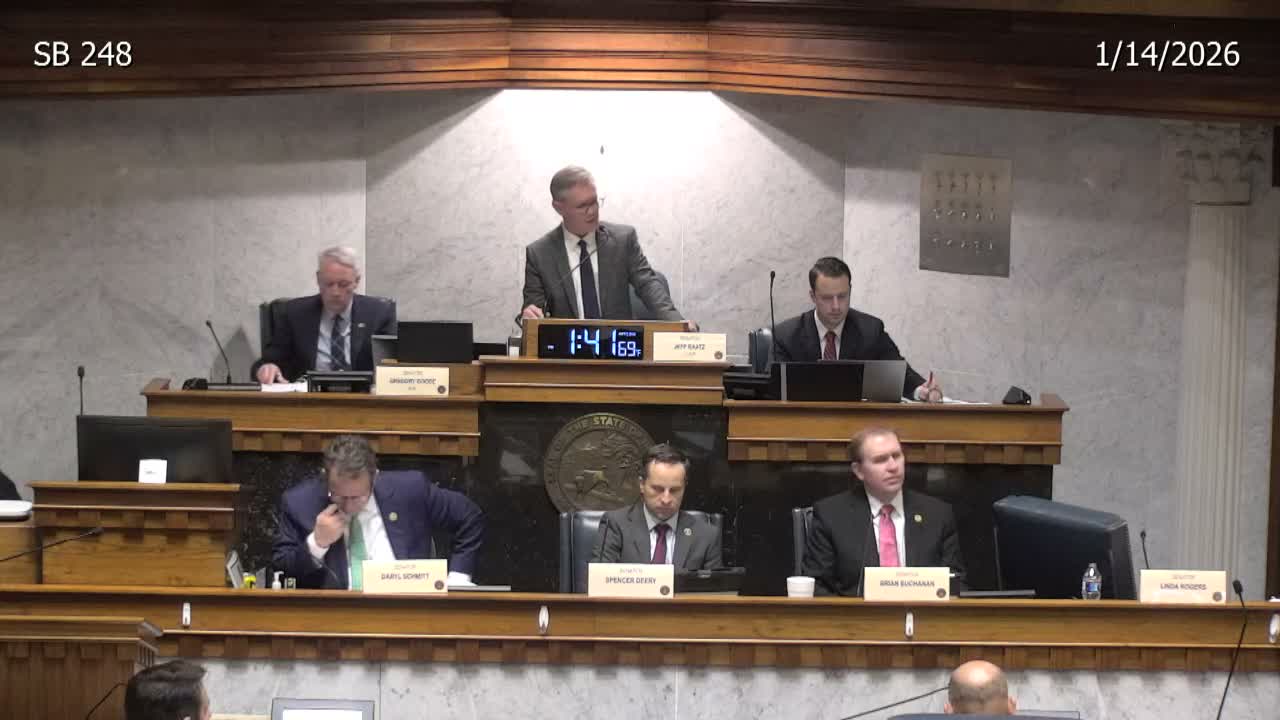
Senate panel hears bill to replace South Bend elected school board with appointed governing body amid broad opposition
Summary
Sen. Linda Rogers presented SB 248 to change South Bend Community School Corporation from an elected to an appointed board; district leaders said recent financial and academic improvements make takeover unnecessary, while teachers, parents and civil‑rights groups warned the measure disenfranchises voters.
Sen. Linda Rogers, sponsor of Senate Bill 248, told the Senate Education and Career Development Committee that the measure would replace the elected South Bend Community School Corporation board with an appointed governing body selected from local nominating commissions and finalized by the state secretary of education. She said the change was aimed at addressing declining enrollment, underused buildings, financial instability and chronic absenteeism in the district.
Why it matters: The bill would remove South Bend voters’ ability to elect their school board and vest appointment authority in a process that includes a nominating commission and an appointment by the state secretary of education. Rogers said the measure is intended to accelerate reforms she described as necessary to improve outcomes for South Bend students.
Rogers urged colleagues to "be part of the solution in helping to turn South Bend schools around," and said she intends to refine the legislation before it is recommitted to tax and fiscal. In her presentation she cited what she said were instances of grade changes and credit granted for minimal attendance, saying, "There is evidence of at least 2,500 grades being manipulated across all the district high schools over the last three years." (Sen. Linda Rogers)
District officials and many witnesses disputed the need for a takeover. Mansour Eid, the district’s interim superintendent, described recent operational and academic improvements and credited local leadership and new initiatives for gains in attendance and reading: "We delivered the historic $9,000 teacher raise and moved South Bend from 200ish in ranking to the top 10 in Indiana," Eid said, adding that the district had increased days with attendance over 90 percent and launched partnerships to improve literacy.
Anav Tamed, the district’s chief financial officer, told the committee the district had realized substantial recurring savings and rebuilt its cash reserves; he said South Bend now reports a fund balance equal to roughly 48.8 percent of expenditures, well above the DUAB threshold. "Today, South Bend is not the South Bend of years past and our trajectory is unmistakably upward," Tamed said.
Representative groups and community witnesses pressed the committee on democratic accountability and transparency. Terry Spradlin of the Indiana School Boards Association urged the committee to wait for state accountability metrics (an updated A–F framework) and the results of planned state support before altering local governance. "This bill is a year too soon," Spradlin said. Rachel Burke of the Indiana PTA described the measure as "a governmental takeover of schools," arguing that appointing a board selected by a state official would strip local voters of their voice.
Several witnesses warned that appointed boards historically have not produced consistent academic gains and raise concerns about politicization and equity. Dr. Gwendolyn Kelly, NAACP state education chair, said appointed boards "do not improve educational outcomes; they remove democracy." Teachers’ and union representatives likewise urged the committee to preserve local control.
Only a small number of witnesses spoke in favor of the bill. Jeff Ray of the Southland Regional Chamber, citing workforce and economic-development concerns, said some employers and site selectors view education metrics as central to relocation decisions and endorsed interventions to accelerate improvement.
What the committee did: The committee heard extensive testimony but did not take a final vote on SB 248; Sen. Rogers said she plans to present amendments in tax and fiscal and seeks to move the bill again the following day. The measure was slated to be voted on the next morning at 8:00 a.m. and to be recommitted to tax and fiscal if advanced.
The hearing showed a clear divide between the sponsor’s stated urgency and broad local opposition: proponents pointed to long‑running problems and the need for outside help; opponents argued the district’s recent operational turnarounds and community remedies make a takeover both unnecessary and undemocratic.