Get Full Government Meeting Transcripts, Videos, & Alerts Forever!
Get email alerts on the Education Policy topic
No spam. Unsubscribe anytime.
Committee hears omnibus education bill with data-science pathway, four‑day week criteria and teacher-pay fixes
Summary
Representative Robert Behning presented House Bill 12-66, a large agency omnibus bill directing a new data science pathway, adding criteria for four-day school-week applications, restoring certain grant uses (TAG) to cover FICA and retirement, expanding teacher residency eligibility, and clarifying literacy salary differentiation. Stakeholders offered mixed reactions on specific sections.
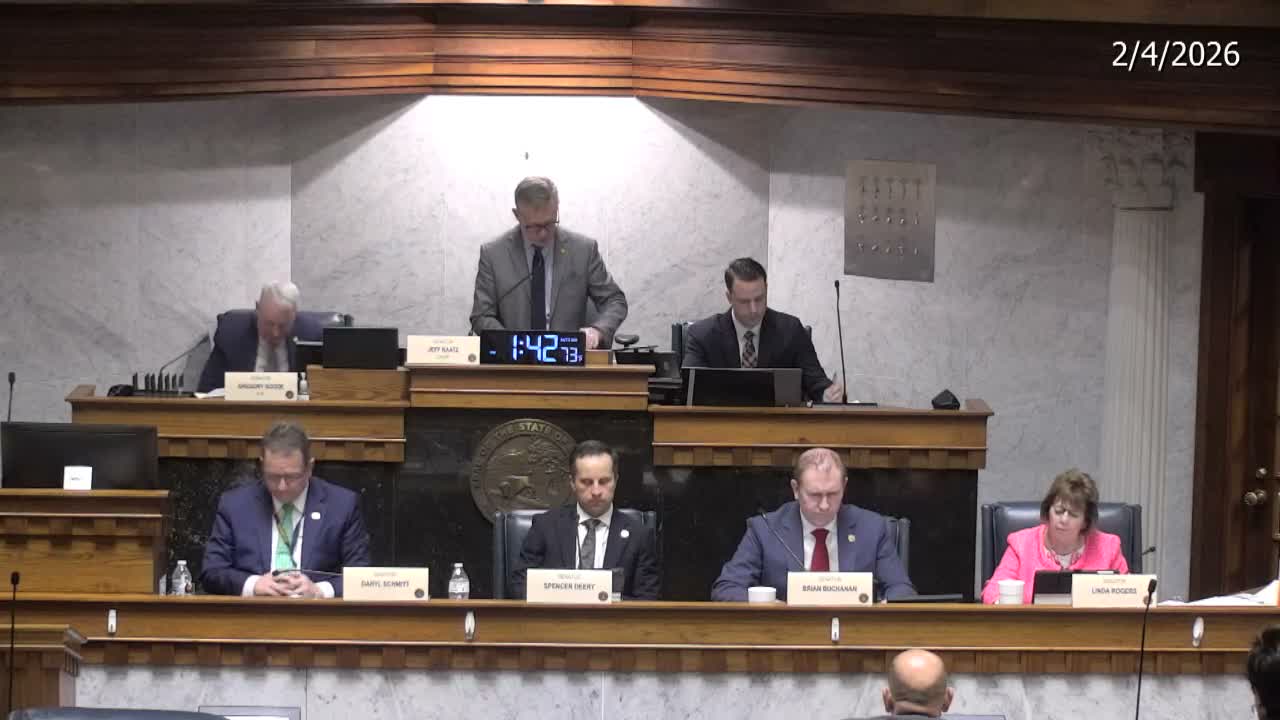
Representative Robert Behning summarized House Bill 12-66 to the Senate Education Committee as an omnibus “agency bill” containing many technical and substantive sections, including a requirement that the secretary of education develop a new data science pathway to prepare students for high-demand technology careers and a directive to establish a process to support persistently underperforming schools by 12/01/2026.
Behning walked the committee through other provisions: aligning CTE references across code, establishing eligibility criteria for four‑day school-week applicants (including transportation for families seeking a 5‑day option, accountability rating thresholds, a minimum teacher starting salary of $45,000, and remediation or enrichment on the fifth day), expanding grant access for the schools for the blind and deaf, clarifying that teachers who earn a literacy endorsement should receive salary differentiation, and restoring the ability for districts to use TAG funds to pay FICA and teacher-retirement contributions.
Union and advocacy witnesses raised targeted objections. Joel Hand of the American Federation of Teachers of Indiana questioned the bill’s interplay with existing fiscal-intervention processes (DUAB) and flagged language that could create separate local facilities boards that exclude elected school-board members. Other witnesses — including school-business and superintendent associations, charter advocates and teacher-preparation groups — largely supported provisions on funding floor calculations, TAG restoration, expanded teacher-residency access and data‑science pathways.
Committee members asked for clarifications about emergency-permit limits for transition-to-teaching candidates, the teacher-residency pilot expansion to accredited nonpublic schools, and how the bill would affect districts seeking a four‑day week. Representative Behning and department staff responded with a mix of technical clarifications and commitments to follow up on drafting details.