Lifetime Citizen Portal Access — AI Briefings, Alerts & Unlimited Follows
Cleveland committee holds proposed ordinance to elevate menacing a health-care worker after hospitals, police and council seek more city-specific data
Loading...
Summary
The Public Safety Committee paused a council-sponsored ordinance that would make "menacing a health-care worker" a first-degree misdemeanor after hospitals and police urged stronger penalties but council members demanded city-specific incident, arrest and conviction data before moving forward.
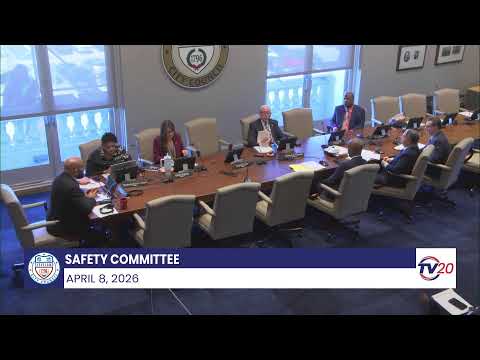
The Cleveland Public Safety Committee on April 1 held Ordinance 1380-2025, which would add a specific menacing offense for health-care workers and elevate the penalty to a first-degree misdemeanor, after hospitals and police urged stronger penalties and council members pressed for clearer, city-specific data and prosecutorial outcomes.
Ashley Withrow, director of the Center for Workplace Violence Prevention and Caregiver Well-being at Cleveland Clinic, told the committee that both national research and Cleveland Clinic reporting show workplace violence "continuing to increase in the health-care setting." She said the proposed change would "provide a clear and consistent framework" and a stronger penalty that could deter threats against caregivers.
The ordinance would amend section 621.07 of the Cleveland Codified Ordinances to define a health-care worker broadly (doctors, nurses, EMTs, paramedics, unarmed crisis responders, aides, laboratory technicians, emergency dispatchers and more) and to make menacing a health-care worker a first-degree misdemeanor where the hospital offers de-escalation or crisis-intervention training. "This would make menacing a health-care worker first degree, misdemeanor, which carries up to 6 months in jail and up to $1,000 fine," council counsel Jennifer Henry O'Leary said while reading an amendment.
Clinic and hospital witnesses described a large number of internal reports. Dallas Moyer, senior project manager at Cleveland Clinic's workplace-violence center, said the clinic's internal safety-reporting system showed more than 6,200 caregiver safety events enterprise-wide last year and that roughly 3,000 were verbal events. Clinic representatives also said Cleveland Clinic Police recorded four citations or arrests for menacing in the system between 2023 and 2025 within Clinic policing jurisdiction. Committee members repeatedly pressed witnesses to clarify which subset of those counts occurred inside the city of Cleveland and to provide arrest and conviction numbers specific to the city.
Orlando Wheeler, commissioner of Cleveland EMS, told the committee that mandatory internal reporting introduced in 2024 increased documented EMS incidents: "We had 4 reported incidents in 2023; 11 in 2024; and 14 in 2025," he said, adding that making reporting mandatory produced the upward trend.
Several council members voiced concern that the problem described by hospitals'high internal-report counts but few criminal filings'could indicate a workplace-culture or reporting gap rather than a legal loophole. "If workers are not reporting because they think nothing will happen, we should fix reporting and victim support as well as penalties," one council member said. Officials from Cleveland Clinic and University Hospitals said they offer de-escalation training and victim-advocacy services and that those programs support caregivers who choose to pursue criminal charges.
Committee members asked for detailed, written data from Cleveland Clinic, University Hospitals and MetroHealth showing the number of incidents in 2025 that occurred specifically within the city of Cleveland, the number of arrests and citations, and the number of filings the prosecutor declined to take. The committee also requested documentation of employer policies on whether staff must report incidents and whether staff who pursue charges are offered paid time to appear in court. The administration agreed to coordinate a meeting with the city prosecutor and counsel to review prosecutorial standards and to help refine the ordinance and amendments.
The committee did not vote on the ordinance; instead it was held for further information and amendment work. Committee members said they would reconvene on the issue after receiving the requested city-specific statistics and after meeting with the prosecutor's office.