Industrial Development Board approves inducement resolution for Second Harvest’s new Donaldson Pike campus
Loading...
Summary
The Industrial Development Board voted to approve an inducement resolution that lets Second Harvest of Middle Tennessee pursue tax-exempt revenue bonds to build a larger food bank campus at 1301 Donaldson Pike. The resolution authorizes the financing process but is not a final bond issuance.
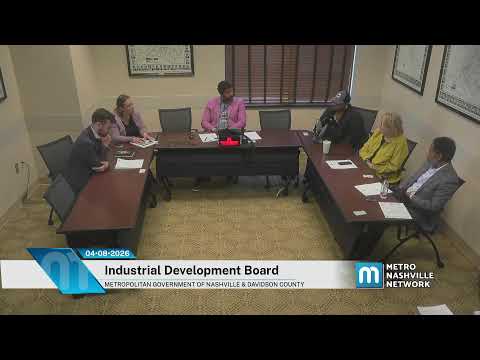
The Industrial Development Board voted to approve an inducement resolution on April 8 authorizing Second Harvest of Middle Tennessee to move forward with plans to finance a new campus at 1301 Donaldson Pike.
Troy Edwards, chief operating officer of Second Harvest, told the board the nonprofit served 46 counties and distributed about 50,000,000 meals last year. He said the organization’s current Metro Center facility — about 98,000 square feet and its home for more than two decades — is routinely at roughly 95% capacity and limits the food bank’s ability to add programs and receive volunteers. “We distributed about 50,000,000 meals last year,” Edwards said, summarizing the scale of need driving the project.
Second Harvest has closed on a 23.5-acre parcel south of the airport on Donaldson Pike and is proposing a campus with doubled warehouse capacity across dry, refrigerated, produce and frozen spaces, a neighbor care center with a choice pantry, culinary job training space, a volunteer engagement area and a community garden. Edwards said the group is discussing traffic-signal improvements and a new WeGo bus stop to improve transit access for neighbors and volunteers.
The inducement resolution is the first of a two-step financing process. Issuance counsel Charles Carpenter told the board the resolution “gives them an official authorization to move forward” but does not create liability for the board or a final commitment to issue bonds. Carpenter added that the inducement also allows the team to hold the TEFRA public hearing required for tax-exempt bond interest. “There is no final commitment by this board. There’s no liability to this board,” Carpenter said.
Board members pressed Second Harvest on repayment and timing. Second Harvest said its capital campaign included about $30,000,000 already pledged, additional asks of roughly $26,000,000 under consideration and that sale proceeds from its current facility were projected in their cash flows. Edwards said the organization’s goal was to break ground this summer, complete construction in 2027 and move into the new facility early in 2028.
Chair Hodge called for the inducement motion; a member moved, another seconded and the board voted to approve the inducement resolution. The motion carried; the chair asked that the record show the chair abstained.
What happens next: the inducement authorization allows Second Harvest and its financing team to complete bond documentation, hold the TEFRA hearing with public notice and return to the board with a final bond resolution and the detailed financing structure for approval.
The board did not commit to a bond issuance amount beyond the paperwork provided; issuance documents in the packet referenced a maximum controlled amount of up to $95,000,000 as part of the planning materials. The inducement approval does not itself obligate the board or the city to issue bonds.