Get Full Government Meeting Transcripts, Videos, & Alerts Forever!
Get email alerts on the School Construction topic
No spam. Unsubscribe anytime.
Abington SD presents updated middle school site and floor plans, timetable and soils testing measures
Summary
Architects showed a revised site plan and interior floor plans for Abington SD’s new middle school, detailing athletic layouts, circulation changes and stormwater controls; the project team outlined permitting milestones, a construction timetable through 2030, and soil‑testing and bid strategies to limit change‑order risk.
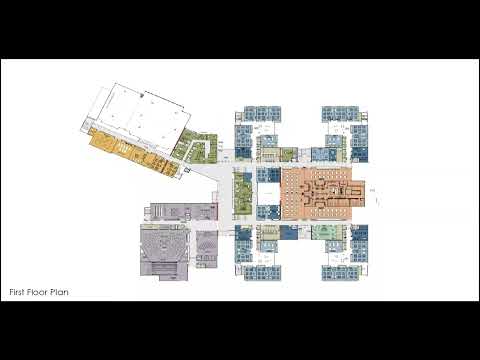
Abington School District officials and their architects presented an updated site plan and, for the first time, interior floor plans for a proposed new middle school at a recent board meeting, and answered questions about permits, schedule, budget risks from subsurface conditions and community access to materials.
"We're gonna locate that on top of where the existing tennis courts and the track are currently situated," Dan D'Amico, project manager with Schrader Group Architecture, said while walking the board through the updated site map. He described new synthetic turf multipurpose fields, an added softball field, relocated baseball fields and constructed wetlands near a stream to manage stormwater. D'Amico said existing play fields in the lower‑right of the site will remain unchanged.
The design separates parent and bus circulation, D'Amico said: most car traffic will use Susquehanna to Jericho with a loop for drop‑offs, while buses will enter from Highland through Tyler and use a dedicated bus loop on the north side. To address a speeding concern on the upper site drive, the team proposed reconfiguring the drive into an intersection with a three‑way stop to slow traffic and provide safer crossings for students.
Inside the building, the architects presented a "learning house" model: four wings per grade with three levels each to keep large enrollment divided into smaller learning communities. D'Amico said each house would have six general‑education classrooms, adjacent special‑education and low‑incidence suites and a central collaboration commons. He also described a performing‑arts wing with a theater that "will seat 550 on the lower level, 200 seats on the top level for a total of 750," and third‑floor art and STEM spaces arranged around an interior courtyard.
Doug Taylor of engineering firm ICS reviewed the land‑development and permitting sequence. He said the team is pursuing concurrent submissions to the township zoning board and the planning commission and expects the conservation‑district environmental review to be the longest lead item, estimating a 9–10 month review window. Taylor gave a broad schedule that includes value engineering, construction documents, bidding and mobilization; he said the team expects to "wrap that new building up around June 2029" and to conclude the full construction phase around 2030, with a potential groundbreaking coordinated with district leadership in early 2027.
Board members and residents pressed the team about cost and subsurface risks stemming from past construction work. One board member noted that an earlier high‑school project incurred roughly $1 million in unforeseen fees from unsuitable soil. In response, the presenter said the project has conducted an extensive soil survey: "that was around 70 different borings... and I believe we had around 25 to 28 within the actual building footprint," and that the team will include allowances and unit pricing for boulder removal to limit large change orders during construction.
A board member asked whether prior fill or dumped material might exist where the new school is planned. Addressed as "Mister O'Donoghue" during the exchange, an official replied that earlier work had uncovered buried construction debris that was sometimes mistaken for bedrock during testing and emphasized further borings and a Phase‑1 historical study to identify any areas needing a Phase‑2 investigation.
Residents asked about amenities and construction impacts. One parent asked whether the proposed concessions building would include restrooms; the team said the concessions building is an alternate in bidding and that, if budget constraints prevent immediate construction, the district will at minimum "put rough ins in place so that we have the ability to construct it later," including provisions for water, sewer and electric. Another resident confirmed that high‑school parking will not be taken for the middle‑school site and received assurance the team is working to maintain separation between high‑school and middle‑school circulation.
The team announced community engagement next steps: a community open house scheduled for April 21, renderings to be posted in May and additional surveys in June. Project updates and a contact form are posted on the project microsite (1asd1future.org); a board member requested the slide deck also be added to the district's BoardDocs site and administration agreed.
Next steps for the project team are to complete design‑development drawings and the conservation‑district submission this month, continue Phase‑1 site investigations, finalize bid‑phase documents and begin the public zoning and planning commission hearings required for land‑development approvals. No formal votes or motions were recorded during the presentation or Q&A.