Get Full Government Meeting Transcripts, Videos, & Alerts Forever!
Get email alerts on the Housing Rent Stabilization topic
No spam. Unsubscribe anytime.
National City approves 10-year rent-stabilization MOU for mobile-home parks
Summary
The City Council voted to adopt a 10-year memorandum of understanding with the four mobile-home-park owners to continue rent-stabilization benefits effective Jan. 1, 2025, capping annual increases at 3% plus CPI (up to 5%) while allowing limited, disclosed pass-through adjustments amortized over time.
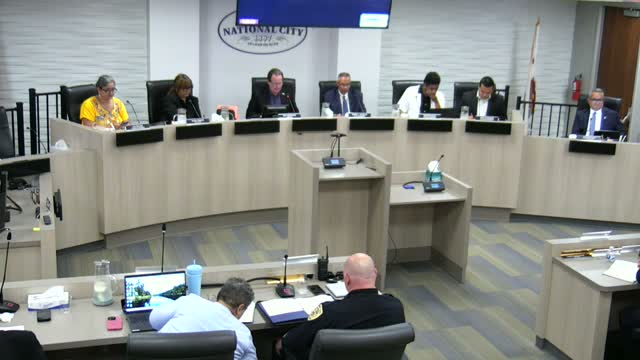
The National City Council on Tuesday approved a 10-year memorandum of understanding with the owners of the city’s four mobile-home parks to extend rent-stabilization protections effective Jan. 1, 2025.
Carlos Geary, the city’s community development director, told the council that the MOU would carry forward the temporary ordinance’s limits — at most one rent increase in a 12-month period, capped at 3 percent plus the consumer-price index up to 5 percent — and would add an agreed process for limited pass-through adjustments for items such as property-tax increases, capital improvements and certain emergency costs, with amortization and notice requirements to reduce tenant shocks.
The MOU was presented as a negotiated, voluntary agreement between the city and all four park owners. Geary said the city reviewed legal risks and financial feasibility and concluded the voluntary MOU offered a durable way to preserve tenant protections while providing a mechanism for owners to receive a fair rate of return.
Tenant advocates and residents described the stakes in personal terms. Sabina Ramirez, who cares for an elderly resident at Happy Hollow Mobile Home Park, said the current space rent there is $1,135.10 and that even modest increases substantially affect residents on fixed incomes: “That is a lot of her fixed income going towards the rent,” Ramirez said, urging the council to protect seniors and people on limited incomes.
Julie Polly, representing the Western Manufactured Housing Association, said the MOU avoids the legal complexity and expense of rent-board proceedings and is widely used in other California jurisdictions. “The MOU is a win for all parties,” Polly said, urging adoption.
Owners’ representatives also supported the arrangement. Kim Engelson, who said she has owned mobile-home parks for 40 years, told the council that privately negotiated agreements reduce litigation costs that otherwise get passed to residents.
Carlos Geary said the city counts four mobile-home parks with 359 spaces, about 176 of which are on leases longer than 12 months and therefore not subject to state rent-control rules. Under the MOU, pass-through events would be itemized, disclosed to tenants and — where appropriate — amortized (for example, spread over five years) so the immediate impact on residents is reduced.
Councilmembers who spoke in favor described the agreement as a balanced compromise arrived at after more than a year of stakeholder meetings. A motion to adopt the resolution passed.
The council directed staff to finalize the MOU language and return with any necessary implementation steps; staff said the city could revisit and amend the agreement if problems arise during the 10-year term.