Get Full Government Meeting Transcripts, Videos, & Alerts Forever!
Get email alerts on the Land Use topic
No spam. Unsubscribe anytime.
Titusville planning commission signs off on recommendations for state‑mandated recovery residences ordinance
Summary
After extensive questioning about inspections, appeals and spacing, the Planning & Zoning Commission voted to forward the draft certified recovery residences ordinance to City Council with several required changes including inspection proof before the 60‑day clock, a graduated distance approach tied to occupancy, and automatic revocation on loss or closure of certification.
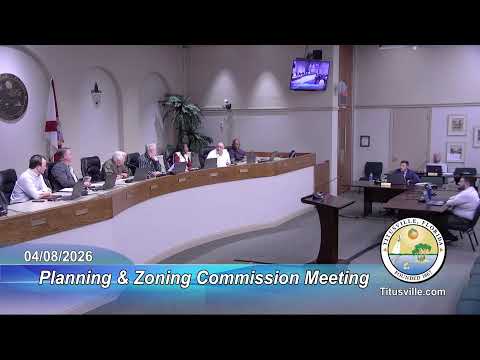
The Titusville Planning and Zoning Commission voted April 8 to forward a draft ordinance implementing a new Florida law for certified recovery residences, but only after adding a list of required changes and clarifications staff must address before City Council consideration.
The ordinance would implement portions of the state statute that require local governments to adopt procedures for review and approval of certified recovery residences and to provide a streamlined process for requests for reasonable accommodation under state law. Staff said the draft mirrors the statute while adding a 1,200‑foot spacing provision and administrative review criteria.
Why it matters: The state law sets a Jan. 1, 2026 deadline for municipalities to adopt implementing rules. The ordinance governs where and how sober‑living and similar group housing may seek local land‑use accommodations and creates local criteria for revocation, reinstatement and appeals.
"This bill requires local governments to adopt an ordinance subject to certain restrictions to formalize and streamline the process for applicants seeking reasonable accommodations," staff read from the packet during the meeting. That summary also noted the draft sets a 60‑day deadline for final written determination and allows the city to request additional information within 30 days.
Commissioners pressed staff on several practical points. Members repeatedly asked that the commission require proof of satisfactory fire and health inspections before the city begins the statutory 60‑day review clock, saying otherwise an applicant could receive administrative approval despite life‑safety deficiencies. "Start right, end right, not start wrong and continue to be wrong," one commissioner said, urging the application process be tied to building and safety inspections.
Elected members also debated the appellate path. Some favored letting a code enforcement special magistrate initially hear appeals; others said the idea of moving an appeal from a legalistic tribunal back to an elected council felt irregular. Staff said the appellate language can be clarified to reflect the intended cascade.
On the spacing rule, commissioners asked whether the 1,200‑foot separation should be measured from property boundary or from the building footprint. Staff clarified the draft measures distance from property boundary "as the crow flies," but several members urged making that explicit in the ordinance.
After discussion the commission approved a motion recommending the ordinance to City Council with conditions. The commission asked staff to: require the application include the documentation listed in the packet (except fee/refund policy), add concurrent building and fire‑safety inspections prior to starting the 60‑day clock, develop a graduated distance standard tied to maximum occupancy, include staffing/security and facility level information, and add an automatic revocation provision if a facility is closed, abandoned or loses state certification. The motion passed on roll call; one commissioner recorded a no vote.
The draft will be presented to City Council on April 28; staff said council may adopt, table or ask for further revisions. The commission’s recommendation and the direction to staff are now part of the record for the council hearing.