Lifetime Citizen Portal Access — AI Briefings, Alerts & Unlimited Follows
Researchers on CDC ZOHU call say hantavirus spillover is nonrandom and predictable at local scales
Loading...
Summary
Presenters at a CDC One Health webinar described ecological and demographic drivers that concentrate hantavirus transmission in rodents and, in turn, increase local spillover risk to people; CDC data show human cases cluster in the American Southwest but occur across the continental U.S.
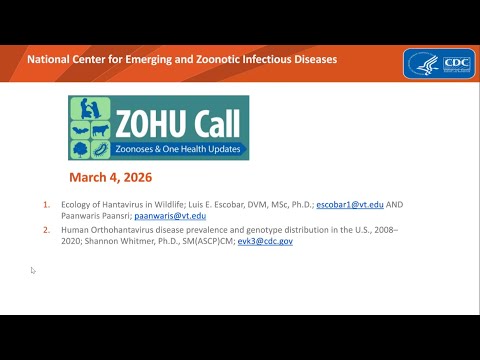
Dr. Luis Escobar, a presenter on the CDC One Health ZOHU webinar, said hantavirus transmission among rodent reservoirs is concentrated in environmentally “optimal” parts of a host’s ecological niche, and that this pattern helps explain where spillover to people is most likely to occur. Escobar said climatic variation such as El Niño can boost primary productivity, increase rodent food and density, and raise hantavirus prevalence in wildlife.
Escobar described three competing hypotheses for transmission across a host’s niche — random distribution, concentration in niche centers, or increased transmission at niche edges — and reported that rodent seroprevalence data for Peromyscus maniculatus in the continental U.S. and in Chile more strongly support the niche‑center hypothesis. “We found that higher abundances of the rodents also occur in the more central areas of the niche when conditions are more optimal,” Escobar said, adding that density‑dependent transmission may link abundance to higher prevalence.
Pamily Pasi, a PhD student presenting local‑scale NEON data, said the National Ecological Observatory Network’s rodent sampling (2014–2019) produced 208 plot samplings across 47 terrestrial sites but that many plots had too few positives for spatial analysis. At one Virginia site Pasi reported 205 capture events and 35 seropositive samples concentrated within 100‑m plots, indicating a compact spatial cluster and suggesting local environmental drivers can create predictably higher spillover risk.
Pasi described seasonal and lagged climate effects: rodent seroprevalence peaked in spring (March–May) and fall (Sept–Nov); higher temperatures and lower precipitation in preceding months were associated with later prevalence increases, and vegetation indices (NDVI) months earlier were also predictive. He also noted demographic patterns: heavier, adult males showed higher seroprevalence and may drive transmission through aggressive or contact behavior.
Dr. Shannon Whitmer of CDC’s Viral Special Pathogens Branch summarized human surveillance and diagnostics. She said CDC diagnostic testing represented roughly a quarter of U.S. hantavirus testing in 2008–2020: CDC received about 1,000 specimens (≈800 individuals) in a analyzed subset and identified about 115 positive specimens; roughly 100 human cases were confirmed at CDC between 2008 and 2020. Whitmer said symptom onset for confirmed cases clustered March–August and that, while human hantavirus disease is most commonly detected in the American Southwest, cases have been recorded as far north as Maine and Vermont and as far east and south as Florida.
Whitmer outlined testing pathways in the U.S.: CDC’s Viral Special Pathogens Branch provides free testing, several state labs run the CDC assay, and commercial labs (e.g., Quest) are expanding diagnostics; she noted some laboratory testing arrangements will change in 2026. On strain distribution, Whitmer said sequencing from human specimens is limited but indicates geographic patterns — for example, Monongahela‑like strains in the Northeast and Sin Nombre variants broadly across the U.S. — while emphasizing that current data are insufficient to link specific strains to specific clinical symptom sets.
In Q&A presenters confirmed methods and uncertainties: Escobar said NEON rodent samples are tested with a broad ELISA for orthohantaviruses; Whitmer and Escobar both said more sequence and metadata are needed to refine strain–host and strain–disease associations; and Whitmer advised that treatment for human hantavirus disease is supportive care, with extracorporeal membrane oxygenation (ECMO) an option for patients with respiratory failure.
The session closed with hosts directing attendees to posted slides and a recorded captioned video to be made available within 30 days and promoting the ZOHU newsletter for resources and future presentations.