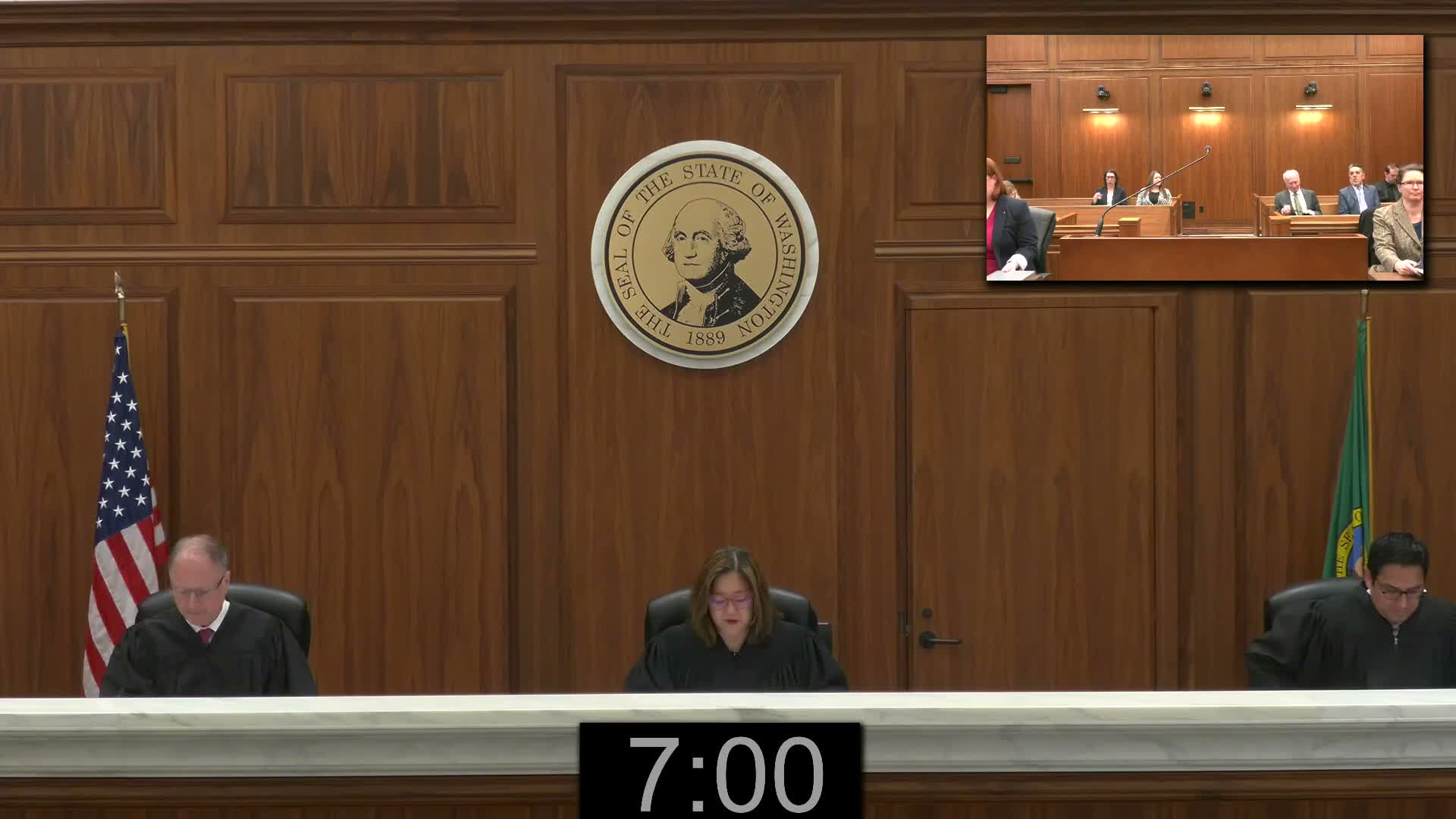
Appellate panel hears challenge to Jorge Rodriguez DUI convictions over two‑step Miranda and field sobriety test use
Loading...
Summary
At an appellate hearing, defense counsel Jennifer Swigert urged reversal of Jorge Rodriguez’s DUI and reckless‑driving convictions, arguing officers used a deliberate two‑step interrogation that undermined Miranda and that persuading him FSTs were 'voluntary' then using his refusal at trial violated due process. The State countered and the panel took the case under submission.
Jennifer Swigert, counsel for appellant Jorge Rodriguez, told an appellate panel that Mr. Rodriguez’s felony DUI and reckless‑driving convictions should be reversed because police employed a deliberate two‑step interrogation that undercut Miranda protections and because the prosecution relied on his refusal to take field sobriety tests (FSTs) after officers told him those tests were voluntary.
"Mister Rodriguez asks this court to reverse his convictions for felony DUI and reckless driving because the police engaged in a deliberate 2‑step interrogation with midstream Miranda warnings and because due process was violated when he was told that the field sobriety testing was voluntary, but then the evidence of his refusal was used against him at trial," Swigert told the panel, reserving three minutes for rebuttal.
Swigert framed the two‑step claim under Missouri v. Seibert and State v. Roden, saying post‑Miranda statements are inadmissible when officers intentionally undermine the warnings by eliciting incriminating information before giving Miranda and then eliciting it again. She argued the record lacks a clear, objective finding that the pre‑Miranda phase was merely investigatory rather than an interrogation of a custodial suspect.
"The confession is not limited to, like, express admissions of guilt," Swigert said, urging the court to treat incriminating pre‑Miranda remarks the same as formal confessions for purposes of the two‑step analysis.
The State, represented by Margot Martin of the King County Prosecuting Attorney’s Office, urged the court to affirm. Martin said the first round of questioning was investigative rather than a full interrogation as contemplated in Seibert and related authorities, and she argued Trooper Rudenko’s later questions were separate and did not confront Rodriguez with prior answers given to Officer DeMarinas.
"You don't have a complete interrogation. You don't have a detailed interrogation. What you have is an officer who's trying to figure out what's going on," Martin told the panel, describing the initial questioning as an effort to assess safety and facts rather than to obtain a complete confession before Miranda warnings.
Panel members pressed both sides on line‑drawing questions. One judge asked what specific incriminating information was elicited pre‑Miranda and whether routine investigatory questions such as "Have you been drinking?" automatically trigger the two‑step rule. Swigert responded that custodial conditions — here, the record reflects Mr. Rodriguez was ordered out of his vehicle — make the difference and that the two‑step concern applies where the pre‑Miranda conduct occurs in a custodial context.
The panel also discussed Meacham and whether FSTs are a "search." Swigert argued the officer's statement that FSTs were "voluntary" created an implicit promise and that using a defendant's refusal against him resembles the Doyle v. Arizona problem of penalizing silence. Martin countered that precedent is ambiguous and maintained the record does not show the deliberate undermining of Miranda required to exclude post‑Miranda statements under Seibert; she also said Meacham is distinguishable because that case involved an arrest for a wholly unrelated offense.
Swigert told the court that the FST refusal was expressly relied on by the prosecutor in closing argument and asked the panel to find either manifest constitutional error or to exercise its discretion under RAP 2.5 to address the issues.
After extended questioning of counsel about preservation, completeness of pre‑Miranda questioning, and the application of Seibert/Elstad/Roden factors (timing, completeness, continuity), the panel thanked counsel and submitted the case for decision.
The court did not announce a decision at the hearing; the case was taken under submission.