Get Full Government Meeting Transcripts, Videos, & Alerts Forever!
Get email alerts on the Land Development Code Amendments topic
No spam. Unsubscribe anytime.
Planning commission debates LDC amendments, street-tree lists and use definitions; tables mobile-vending discussion
Summary
Commissioners reviewed proposed land-development-code amendments on site-plan expiration/administrative timelines, debated definitions for small-scale instructional studios versus indoor recreation, discussed encouraging native street trees and a potential light ordinance, and deferred mobile-vending units for a future meeting.
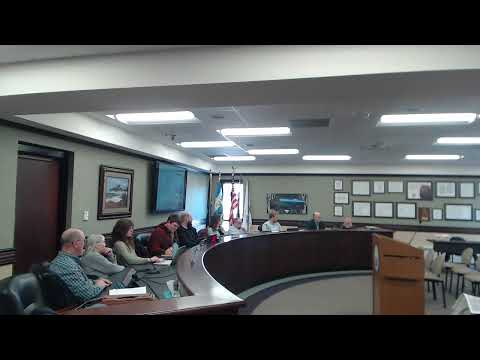
At its April 7 meeting, the Marquette Market and Planning Commission considered several administrative and definitional changes to the City of Marquette land-development code intended to clarify review timelines, lot-type definitions, and use classifications.
Staff proposed amendments to set an expiration and response timeline for revised site plans: applicants would have one year to submit required revisions after commission conditions, and staff would issue written notice if an applicant does not respond within a six-month window. Commissioners asked staff to return with refined language to ensure applicants receive timely notice and to limit staff "babysitting" while preserving fairness and due process.
The commission also discussed whether to define "small-scale instructional studios" as a service establishment (regulated by floor area) or as indoor recreation (regulated by occupancy). Commissioners debated numeric thresholds and examples: some suggested occupancy cutoffs (40–100 persons) while others noted that parking and use patterns vary widely by activity. The discussion leaned toward focusing on whether a use is instructional (studio, class-based) versus recreational (open-access play) and directed staff to return with revised text.
Landscaping and street-tree rules also drew attention. Staff and commissioners discussed trade-offs between the code’s current list of hardy, commonly available cultivars and a desire to increase native-species plantings. Questions were raised about whether columnar Norway maple cultivars behave as spreaders; staff and developer said the cultivar in question functions as an urban street tree and not a spreader. Commissioners asked staff to revise street-tree lists to emphasize natives where feasible and to consider incentives for food-bearing ornamental trees in non-street-planting contexts.
Commissioners also raised the prospect of a light ordinance to address skyglow and set zone-based maximums for exterior lighting; staff described existing code limitations and said a separate ordinance would be a larger project for a later work program. The commission tabled mobile-vending unit changes for a future meeting.
Staff will bring revised language on timelines, mixed-use and studio definitions, and landscaping lists back to the commission for further review in an upcoming meeting.