Get Full Government Meeting Transcripts, Videos, & Alerts Forever!
Get email alerts on the Development Site Plan topic
No spam. Unsubscribe anytime.
Planning commission approves site plan for proposed Tapestry hotel and attached parking deck with conditions
Summary
The Marquette Market and Planning Commission approved a site plan for an 80-room Hilton Tapestry–branded hotel and an attached multi-level parking structure at 10119 South Lake Shore Boulevard, requiring amended plans to meet staff comments and waiving select landscaping/screening items. A nearby dentist urged protections for ADA access and small businesses during construction.
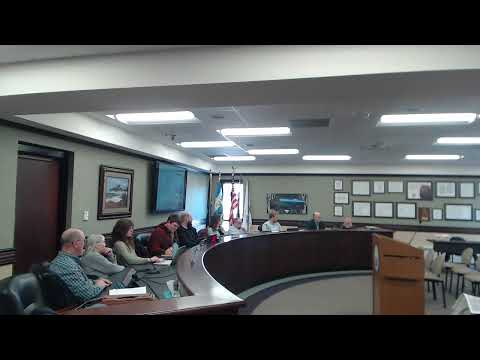
The Marquette Market and Planning Commission approved a site plan for a new hotel and attached parking structure at 10119 South Lake Shore Boulevard after a detailed staff presentation and commissioner questions about phasing, parking and pedestrian access.
Staff presented the application and recommended that the commission require an amended plan to address staff comments before final approval. Developer representative Barry Polson described an approximately 80-room hotel that will join Hilton’s Tapestry collection, include restaurant and event spaces, and be served by a phased parking structure with an enclosed heated lowest level and open upper levels. Polson said the third level of the parking deck will be built only when the later “vault” hotel phase is ready and that an internal alley and rerouted power will provide rear access to the block.
During public comment, Angela Palmak, a dentist with a practice adjacent to the site, asked the commission to require the developer to preserve the Savings Bank Building’s ADA-accessible rear entrance and adjacent handicap parking throughout construction, and to minimize vibration, noise and other disruption that could affect patient safety and small-business operations. Palmak also questioned the use of Brownfield funding that defers future tax revenue to support private development, urging commissioners to weigh public benefit carefully.
Commissioners pressed the developer and staff on how construction staging would affect on-street parking and downtown circulation. The developer said the intent is not to lose Main Street parking and described temporary street closures for utility relocations and crane operations; staff noted that some access and building-code responsibilities (including placement of required accessible parking) fall within later building-permit reviews rather than site-plan review.
The commission reviewed site-plan standards — public health and safety, circulation, landscaping and stormwater management among them — and reached consensus on most items. Commissioners discussed tree-placement conflicts with underground utilities and whether landscaping requirements could be waived when trees cannot practically be planted. Staff indicated the code provides processes for such situations and recommended conditioning the approval on a revised plan that meets staff comments and clarifies planting and screening solutions.
A motion finding substantial compliance with the City of Marquette land development code (section 54.1402(e)) and approving application 01-SPR-0426 with conditions carried unanimously, 8–0. Conditions recorded in the motion required the applicant to submit amended plans addressing all staff recommendations and acknowledged limited waivers related to certain landscaping and electrical-screening provisions as described on the record.
The commission also requested that the applicant coordinate with the DDA and city engineering on driveway alignment, pavement markings and temporary parking arrangements during construction, and that parcel consolidation and deed recording be completed per assessor recommendations before final recording.
The developer and staff said they will provide a more detailed construction schedule to neighboring businesses once permitting steps are resolved. The commission’s approval does not absolve the applicant from later building-code and permitting requirements; those reviews will further determine exact accessible-route layouts and final mechanical/equipment screening.