House Republicans unveil $3.8 billion "North Star comeback" plan, promise $1 billion property-tax rebate
Loading...
Summary
House Republican leaders unveiled a "North Star comeback" budget package that they say would return $3.8 billion to Minnesotans through tax cuts, a $1 billion one-time property-tax rebate and targeted spending for IT modernization and school scholarships; details and timing of many provisions remain to be specified.
House Republican leaders on the House floor announced a "North Star comeback" budget plan that they said would make Minnesota "more affordable" by returning what they described as $3.8 billion to households through a mix of tax cuts and targeted funding changes.
"We are putting real money back into people's pockets by way of the largest tax cut proposal in state history," said Speaker Damoth, describing components that include a one-time property-tax rebate, eliminating taxes on tips and overtime, lowering childcare costs, cutting car-tab fees and using scholarship-granting organizations to deliver funds to schools.
House Republican leader Harry Niska framed the plan around three priorities—protecting family budgets, making government work and building a world-class economy—and criticized House Democrats for blocking what he called "common-sense" changes during the session. "We have 38 days left and so far, when given the opportunity to make progress for Minnesota families, Democrats have chosen obstruction over action time and time again," Niska said.
The plan includes several non-tax elements intended to reduce waste and improve services. Speaker Damoth and other Republican leaders said they will pursue a stronger, more independent office of inspector general to pursue fraud and recover misspent funds. Representative Jim Nash, chair of the state government finance committee, said the OIG bill has been advanced out of committee, moved to judiciary and is now in Ways and Means with an updated fiscal note expected soon; a working group is negotiating differences with the Senate version and continuing to meet.
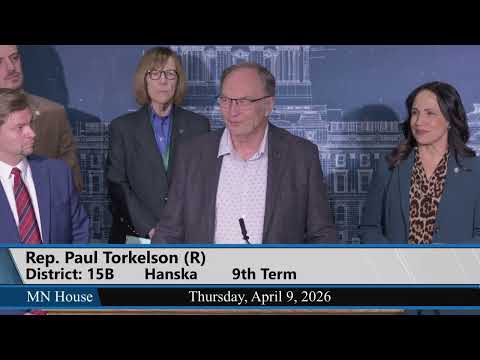
On technology, Paul Torkleson, chair of Ways and Means, described a two-pronged IT modernization approach: roughly $15 million in near-term funds to address urgent failures and creation of a longer-term technology modernization fund. "We're thinking maybe in the $15,000,000 range just to keep things operating in the near term," Torkleson said. He also said many modernization investments may qualify for federal matching funds, in some cases a 90/10 match (90% federal, 10% state), if projects move into the pipeline sooner.
Leaders described the $3.8 billion figure as dependent on repurposing committed but unspent funds — for example, projects funded but not moving forward and balances from other programs — and said any repurposing would require agreement. When asked whether the $3.8 billion is a one-year total or spread over multiple years, leaders said specifics would be provided later.
On education, Speaker Damoth said a $1,700 amount tied to scholarship-granting organizations is one option to deliver additional support to schools "at no cost to the state," and said some school superintendents had expressed interest in accessing such dollars. He cautioned that program design would affect whether funds flow out of state and that details remain to be worked out.
Leaders also said the caucus wants Minnesota to "conform" to federal Medicaid requirements where necessary to avoid losing federal funds, and that aspects such as the length of work requirements would require discussion and negotiation.
Several reporters asked about other bills, including a proposed ban or regulation on prediction markets and recent bills that did not meet committee deadlines; leaders emphasized that they are following procedural timelines and will not grant waivers for missed deadlines without consideration.
The Republican leaders closed the briefing by saying they will continue to refine the proposals, provide bill language and fiscal notes, and seek bipartisan agreement where possible. No formal votes or enacted measures resulted from the briefing; leaders said specific bill texts and eligibility details (for example, for the property-tax rebate) would be provided at a later date.