Get Full Government Meeting Transcripts, Videos, & Alerts Forever!
Get email alerts on the Food Truck Safety topic
No spam. Unsubscribe anytime.
Des Moines fire official outlines stricter checks for food‑truck propane, suppression and egress
Summary
John Tucker of the City of Des Moines Fire Prevention Bureau summarized expanded food‑truck inspections, saying checks now focus on propane cylinders and piping, hood suppression systems, required extinguishers and annual pressure testing adopted under the 2024 International Fire Code.
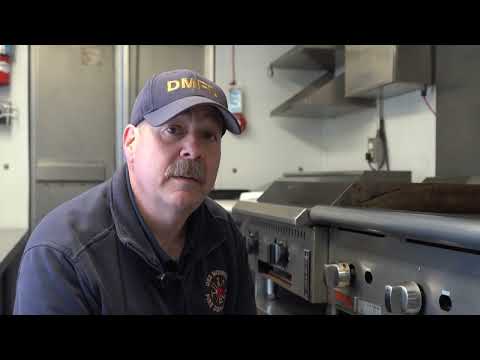
John Tucker, a Fire Prevention Bureau staff member with the City of Des Moines Fire Department, described how the city inspects mobile food vendors and the key safety items inspectors review.
Tucker said the bureau’s annual food‑truck inspections have "exploded in growth," rising from fewer than 50 inspections in 2021 to more than 150 in 2024–2025. He said the bureau’s stated goal is to "collaboratively work with the mobile food vendors and educate them on our inspection process as well as how to work safely in the city of Des Moines."
Inspectors begin with the propane system, which Tucker said must be mounted on the vehicle exterior. "We start by looking at the two 100‑pound cylinders — maximum allowable propane on each food truck," he said, and then check cylinders for dents, gouges, rust and that the valve collar is fully welded. Inspectors verify manufacture dates on tanks; tanks older than 12 years require a vendor visual inspection and stamp. Tucker said cylinders must be securely bolted to withstand vehicle impact and that shutoff valves must be easily accessible.
Tucker said inspectors also check flexible hoses marked "LP gas" and "350 psi max," two‑stage regulators, and that external piping is bolted in place. Where piping passes into the vehicle, inspectors look for solid pass‑through protection so lines cannot rub through the wall; flexible appliance hoses must be of durable construction and securely attached.
On fire suppression, Tucker said hood suppression systems are the primary means of protection and the Class K extinguisher is a required secondary backup for grease‑producing cooking. "This is a secondary backup to the hood suppression system," he said. He described the suppression system’s nozzles and explained automatic activation via a frangible link behind the hood filters that "will break apart at about 400 degrees," and noted an operable manual pull is also required.
Tucker said hood suppression systems must receive a biannual inspection by a fire‑equipment service professional (evidenced by a tag), and that an ABC extinguisher sized 2A:10BC is also required with a City of Des Moines annual tag verifying it is charged and accessible.
He said the city’s adoption of the 2024 International Fire Code introduced a required annual pressure test of the propane system to check for leaks; that test must be done by a certified LP gas supplier or distributor. Finally, Tucker said inspectors verify egress — at least one clear exit, commonly two — and check housekeeping so walkways are free of obstructions and excessive grease.
Tucker framed the inspections as both enforcement and education, saying the bureau’s work is intended to keep mobile vendors and customers safe while helping vendors understand and meet the city’s code requirements. No formal actions or votes were recorded in the transcript.