WSBA outlines sweeping school finance changes and policy updates for districts
Loading...
Summary
Wyoming School Boards Association representatives briefed Albany County School District #1 trustees on the 2026 legislative session, highlighting recalibration (Senate File 81), a K‑12 literacy mandate and several passed bills that will require district policy updates and rule interpretations still pending from the state Department of Education.
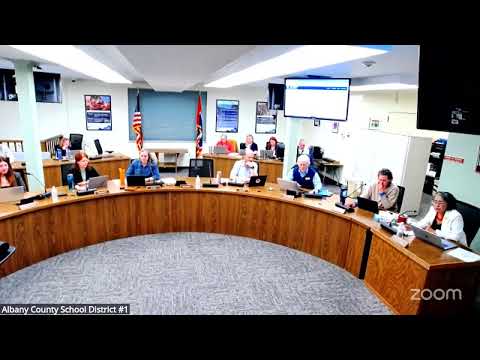
Brian Farmer, executive director of the Wyoming School Boards Association (WSBA), and Nick Belek, WSBA director of engagement, presented the association’s 2026 legislative session summary and answered trustees’ questions about implications for district finance and policy.
Farmer told trustees the session produced roughly 335 bills, 80 of which WSBA monitored, and that about a third of bills touching education typically pass. He and Belek said the session’s most consequential outcomes for districts are the school finance recalibration (Senate File 81) and a K‑12 literacy bill that requires screening, individualized reading plans and professional development. “Rules are being written by the Department of Education,” Belek said, adding that many answers districts want do not yet exist.
Belek walked trustees through a range of passed bills and policy areas to watch: expanded rules about homeschool and part‑time enrollment, data privacy rules that reference FERPA, updates to facility use fee billing (limiting charges to direct incremental costs with itemized receipts), Hathaway scholarship increases, epinephrine device allowances, and a policy prompt on student phone and smartwatch use. He also cited bills tightening penalties for grooming and stalking of minors and other measures affecting school policy.
Trustees pressed WSBA on the practical effects of recalibration — particularly the shift toward categorical spending that may limit district discretion to move funds between instructional and non‑instructional areas. Trustee Jesse Martin asked whether the recalibration statute could be reversed in a future session; Belek and Farmer said statutory changes are possible in future legislatures and noted pending litigation (the WEA case) whose outcome could affect recalibration and interim committee priorities.
Belek emphasized that WSBA is developing resources and clickable materials on its website and will continue interim monitoring; he invited trustees to consult WSBA materials as rules and interpretations become available.
Trustees asked about impacts on non‑instructional services (school resource officers, counselors, nutrition), and WSBA advised that Department of Education rules will determine specific limits. The presentation concluded with an offer for WSBA to assist districts in outreach to legislators and to track interim committee work that will shape how recalibration is implemented.