Community urges preservation as district outlines sale and demolition of Laramie Athletic Fields
Loading...
Summary
At an April Albany County School District #1 board meeting, public commenters and coaches urged the board to reconsider demolition and sale of Laramie Athletic Fields (DTI Stadium). Superintendent Dr. Goldhart said deferred maintenance exceeds $1 million and recommended proceeding with sale and demolition; trustees discussed community alternatives and middle‑school track upgrades.
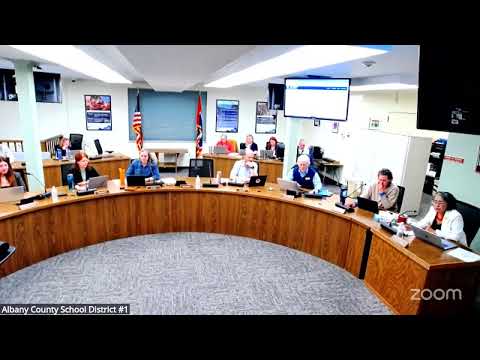
Community members pressed the Albany County School District #1 board on the future of Laramie Athletic Fields on April evening during public comment and a superintendent briefing.
Multiple speakers told trustees the stadium and track are a widely used community resource. Marla Slater, a longtime Laramie resident, said the site provides accessible recreation and supports Special Olympics and other community users. “We need to account for those folks,” she said, noting the track’s role for wheelchair users and other people with access needs.
Jana Heisler White asked the board to expand community involvement in decisions about the site and explore partnerships that could preserve public use, referencing other local examples where school property was repurposed with city or nonprofit partners. Sarah Mason asked whether the district had considered selling or partnering with a nonprofit or the city to maintain public access, and whether there is a cost analysis or timeline for upgrading middle school facilities that would receive displaced athletics.
Eric Boss — who said he started a petition that attracted about 1,420 signatures — read excerpts and cited repair and maintenance figures: roughly $1,000,000 to address stadium repairs and resurfacing, about $800,000 annually for water and upkeep in some years, and the December 10 decision to put the property up for sale and demolish the stadium structure. Joe Adams, a middle‑school and high‑school coach, said losing the track would harm the district’s feeder programs and reduce opportunities for hundreds of middle‑school athletes.
Superintendent Dr. Goldhart briefed the board on the district’s assessment of the site, saying the board approved the sale and demolition after a December public hearing and the School Facilities Commission approved the disposition in February. She said deferred maintenance on the stadium would exceed $1,000,000, that water and grounds costs can be high (the prior year’s water bill was $71,000 and grounds maintenance $65,000), and that the building shows structural failure, significant moisture damage, and mold risks. The district’s recommendation is to proceed with the sale and demolition and reallocate funds toward student‑centered facilities and long‑term facility planning. She said the city had not expressed interest in acquiring the property.
Trustees discussed options and constraints. Several trustees asked whether any offers exist; Goldhart said there has been interest but no formal offers and that one interested party was a nonprofit soccer organization that has not submitted an offer. Trustees noted the petition and community energy and urged community groups and the city to pursue stewardship if they want the site preserved. Others emphasized that the property is classified as excess acreage by the state facilities department and that continued investment would divert limited funds from instructional needs. Trustees also discussed practical options for student athletics, including resurfacing the middle school track and scheduling shared use at existing facilities.
Board members said the question of whether to keep the property centers on finances, liability and state rules that limit the district’s flexibility under the new categorical grant (recalibration) framework. Dr. Goldhart said funding constraints and possible longer‑term state priorities make continued investment in the stadium unsustainable without outside partners or new revenue sources.
Next steps outlined by staff include continuing work with the realtor under the board‑approved contract, dividing lots with the city for sale, obtaining cost estimates for upgrades to middle‑school facilities, and pursuing community dialogue on potential leasing or transfer arrangements; any lessee or purchaser would have to assume liability and insurance. The board did not reverse its December action during the meeting and indicated it will continue discussions with the community while moving forward under the existing realtor contract.
The board also acknowledged the community’s strong interest and encouraged petitioners and other residents to pursue options with city leaders and potential nonprofit partners. No new vote to rescind the December action was taken; trustees emphasized that keeping the property would require the district to forego other educational spending.
The district will provide staff estimates on middle‑school track resurfacing and continue discussions with potential community partners and the city.