Get Full Government Meeting Transcripts, Videos, & Alerts Forever!
Get email alerts on the Rail Crossings topic
No spam. Unsubscribe anytime.
Neighbors split as Encinitas hears medical warnings and longstanding support for Leucadia at‑grade crossings
Summary
A protracted public-comment period at an Encinitas budget workshop featured competing claims: residents and advocacy groups pressed for funding at‑grade crossings in Leucadia, while two local physicians urged pausing construction because wayside horns may reach high decibel levels and pose long-term health risks.
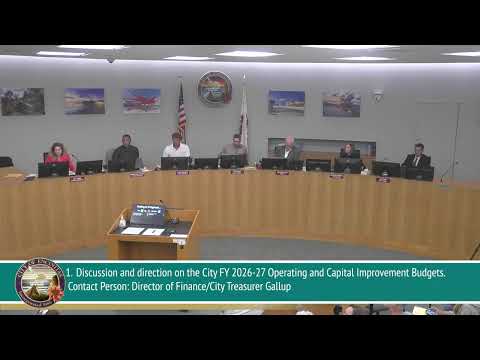
A large portion of public comment at Tuesday's Encinitas City Council budget workshop centered on proposed Leucadia at-grade rail crossings and the related goal of a citywide quiet zone.
Supporters — including neighborhood advocates and longtime residents — urged the council to fund crossings and finish a project that residents said has been decades in the making. Michael Murray of Now Leucadia said his group collected 737 petition signatures supporting at‑grade crossings; other speakers pointed to historical petition drives and local demonstrations as proof of community demand.
Opponents and some health professionals urged caution. Dr. Natalie Muth, a board‑certified pediatrician, said wayside horns used at crossings typically operate at high decibel levels and that repeated blasts could have cumulative health impacts on infants and young children. "Wayside horns have to be 92 decibels or more," she said during public comment, and she asked council members to pause funding until Carlsbad commits to required Cannon Road upgrades so a continuous quiet zone is possible. Dr. Dawn Ionescu, a psychiatrist, added that chronic exposure to horn blasts can worsen mental‑health conditions, disturb sleep and degrade overall wellness for residents who live close to the tracks.
City engineers and staff told the council that wayside horns and quiet zones require regulatory approvals from the Federal Railroad Administration and the California Public Utilities Commission. Engineering Director Dan Nutter said the city is designing the crossings to meet FRA requirements and can install required supplementary safety measures now; he cautioned that FRA/FRA‑waiver timing is not guaranteed and that coordination with Carlsbad is required to extend a quiet zone northward.
Council members did not adopt a moratorium on the crossings during the workshop; instead they debated budget priorities and asked staff to return with permitting and design timelines, and more detailed cost and regulatory information before funding is set in the formal budget. Staff told the council they expect the design and permitting phase to be complete by the end of the calendar year and, absent budget constraints, could be ready for construction in early calendar 2027, subject to approvals and external agency timelines.
The workshop did not resolve the technical or health debates; it left policy choices about horns, waivers and sequencing (wayside horns versus waiting for a wider quiet zone) to subsequent staff reports and future council action.