Waterville volunteers present engineering, insurance plan to save 118‑year‑old Roche De Boof bridge; council seeks clarity on ownership and funding
Loading...
Summary
Save the Bridge Association presented new engineering and insurance analysis proposing rehabilitation and a pedestrian 'bridge‑on‑bridge' option that proponents say could cost $6–7 million; council members and Metroparks said ownership, liability and matching funds remain unresolved ahead of an April 9 ODOT action.
City of Waterville council members heard a packed presentation from local volunteers, engineers and an insurance consultant on possible ways to preserve the town’s 118‑year‑old Roche De Boof bridge and convert it for pedestrian use, but no formal decision was reached on ownership, funding or liability.
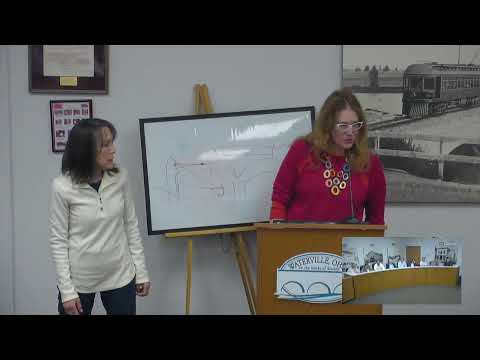
The special meeting opened with Save the Bridge Association president Barb and marketing volunteer Janice Breda summarizing community outreach that organizers say produced an online petition signed by roughly 20% of Waterville residents in recent weeks. The group introduced two technical presenters: Rex Childers, a former local insurance‑agency owner who reviewed liability issues, and Bill Vrimas, a bridge engineer from This Old Bridge who described structural findings and a rehabilitation plan.
Childers told the council that “liability” and “risk” are distinct and that some of the legal concerns cited in the ODOT/feasibility memo focus on the motoring public, not river recreation. He said targeted mitigations — for example, rockfall netting on state abutments along South River Road — could substantially change an insurer’s assessment and reduce owner exposure. Childers said insurance markets will judge probability of harm and that the city and any prospective owner would need a clear inspection and mitigation profile before a standard liability policy could be obtained.
Vrimas said most of the bridge’s 12 arches rated in fair to good condition; he identified isolated severe deterioration in span 12 and multiple failing spandrel (fill) walls. He recommended selective removal or anchoring of collapsed spandrel walls and proposed an adaptive‑reuse approach he called “bridge‑on‑bridge,” which would place a prefabricated pedestrian deck above the surviving arch structure rather than rebuilding all spandrels. That option, he said, would preserve the arches while creating a safe pedestrian crossing.
On costs, Vrimas described a range: ODOT’s demolition/transfer estimate was discussed in the meeting as roughly $4.0–4.05 million; Save the Bridge’s working estimate to create a trail bridge, including prefabricated truss spans, is about $6–7 million; a full rehabilitation replacing spandrel walls was cited as about $9.5 million. Vrimas said a single line item — the prefabricated steel through‑truss pedestrian spans — could cost about $1.5 million. He listed likely grant sources (federal TAP/trail funds, ODNR recreation grants, and a National Park Service program called Save Our Treasures) and warned that most funders require matching contributions or demonstrated local commitment.
Council members repeatedly pressed for documents that presenters referenced — including a 2017 insurance letter and ODOT legal memos — and requested those be shared digitally. Questions also focused on whether ODOT’s feasibility study took enough core samples (the presenters said only two cores were taken) and whether in‑river scour testing was needed; Vrimas said piers appeared embedded in bedrock and recommended further, targeted testing in lower water to verify scour conditions.
Representatives from Metroparks said the agency would assist with planning and grant applications but does not typically take ownership of bridges or heavy infrastructure. Metroparks’ representative, Matt Chillum, said the agency would continue discussions and offered to be part of a consortium but was not prepared to assume long‑term ownership without further study.
Mayor (speaker 1) told the council he would call the governor’s chief of staff and use the new technical information to press for more time; presenters and residents noted ODOT’s announced calendar includes an April 9 sale/action date for demolition. Residents made emotional appeals about the bridge’s historic and community value and suggested interim, low‑cost actions for memory and outreach while technical work continues.
No motion or vote was taken on accepting ownership, funding a project, or seeking a formal extension; the meeting closed on a motion to adjourn that carried unanimously. Council and Save the Bridge organizers said they will continue rapid follow‑up with ODOT, the governor’s office and potential partner organizations in the next 48 hours.
The record shows the meeting focused on three practical barriers to preservation: (1) identifying an owner or administrative consortium eligible to accept ODOT funds under Title 23, (2) closing the insurance/coverage gap during stabilization, and (3) securing sufficient matching funds to qualify for TAP/other grants. Presenters said targeted mitigation and additional testing could materially reduce risk and cost, but council members said concrete ownership, liability commitments and verified cost estimates are necessary before the city could act.